Don't cut the pipes or unbolt the outdoor unit
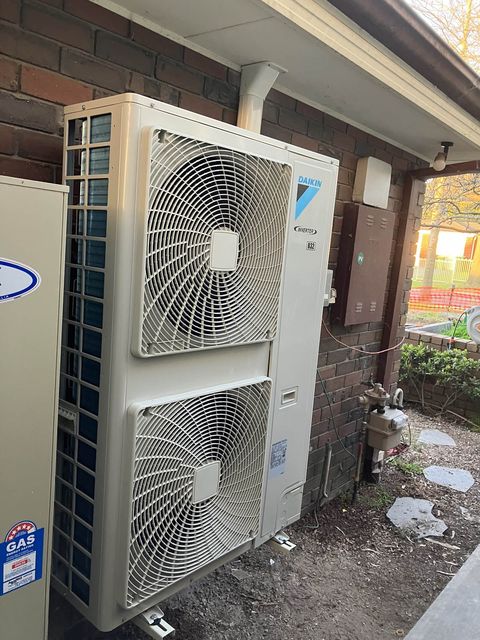
The pipes between the units carry refrigerant. The Australian Refrigeration Council says handling fluorocarbon refrigerant without a Refrigerant Handling Licence is an offence, and Mitsubishi Electric's manual tells owners not to relocate or take apart the unit. Switch it off and leave the rest to a licensed technician.
What happens when an old unit comes out
First, a licensed technician recovers the refrigerant so none of it escapes. The ARC lists older refrigerants such as R22 and R410A among the fluorocarbons it says harm the environment when they're released.
The restricted RSS03 licence lets the holder remove refrigerant before decommissioning a single-head split under 18kW. A multi-split, or anything over 18kW, needs a full RAC01 licence holder.
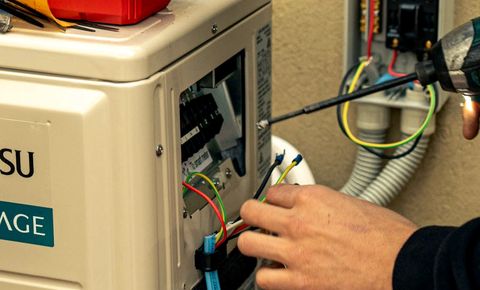
Next the power is made safe. In Victoria, a like-for-like swap in the same spot, without changing the cables, can be disconnected and reconnected by a technician with a Restricted Electrical Worker's licence. New wiring, including for a unit moving to a new spot, needs a licensed electrician.
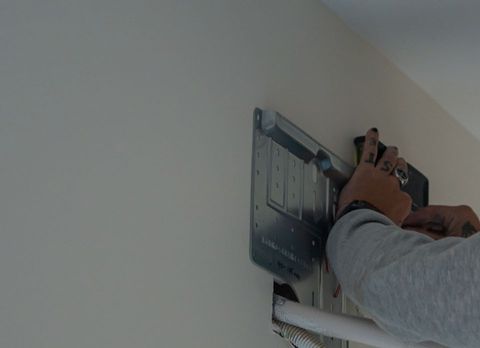
Then the units come down and the wall is dealt with: the pipe hole, the bracket holes and the old pipe cover. Ask about this, because The Good Guys' standard install leaves out removing old units and repairs to walls, ceilings or surfaces.
Where does the old unit go?
Ask what happens to the old unit and the refrigerant recovered from it. Any business that buys, stores or disposes of fluorocarbon refrigerant must hold a Refrigerant Trading Authorisation, so the business you use should have one, and its number belongs on the quote.
Moving a unit to another wall or another house
Relocating a split means recovering the refrigerant, taking both units down, running new pipe and cable at the new spot, then testing and commissioning it again. It's a full install, just with a second-hand unit.
Read the warranty before you book it. Daikin's warranty card excludes equipment re-installed anywhere other than the original location, and Mitsubishi Electric, Rinnai, Gree and Samsung have similar exclusions.
Age matters too. Solar Victoria says a system more than 15 years old typically uses more than three times the energy of a modern reverse cycle air conditioner, so moving a very old unit is rarely worth it.
Replacing an old unit in NSW? Sort the paperwork first
The NSW Energy Savings Scheme includes replacing an existing air conditioner, working or not, with a high efficiency one. Energy NSW says the nomination form must be signed before installation begins, and you won't be reimbursed for work already done. So raise the discount before anything comes off the wall, and see our Energy Savings Scheme guide.
What you can do, and what you can't
You can
- Switch the unit off at the isolator or switchboard and leave it off.
- Find the brand and model number, usually on a sticker on the side of each unit.
- Check the warranty card for re-installation rules before planning a move.
Leave to a licensed installer
- Recovering the refrigerant.
- Making the circuit safe and disconnecting the power.
- Taking the units down, including any on a high bracket or a roof.
- Reinstalling at the new spot, testing and commissioning.
What we'd do
If it were our home
If the unit is old, we'd replace it rather than move it, and have the new installer take the old one away on the same visit. If it's young and still under warranty, we'd read the card before moving it, because a move can end the cover. Either way, we'd want the refrigerant recovered by a licence holder and the removal written into the quote.