
Canberra, Australian Capital Territory
Heating and cooling in CanberraPlan for July first, January second.
In Canberra, air conditioning is mostly a heating decision. The ACT Government says heating makes up about 60% of the average household's energy use, and new gas network connections have been blocked since December 2023. Choose a system for a frosty morning first, then check it copes with the hot afternoons.
What's different about Canberra
Cold, dry and 578 m up
At the Canberra Airport Comparison station (1991 to 2010 averages), July's mean daily minimum is 0.3 degrees and January's mean daily maximum is 28.8 degrees. The coldest reading on record is minus 10.0 degrees, on 11 July 1971.
A frost season that runs long
The ABS counted 117 frosts in Canberra in 2006, from 12 April to 17 November. That was 22 more than the Bureau of Meteorology's yearly average, but it shows how far heating stretches beyond June, July and August.
Climate zone 7
The National Construction Code lists Canberra as climate zone 7, cool temperate. On the energy rating label map, Canberra sits in the cold zone with Hobart and Melbourne, so read the red heating stars, not the blue ones.
Gas is being wound down
Since 8 December 2023, no new gas network connections are allowed in the ACT's residential zones. The ACT's goal is to phase out fossil fuel gas by 2045, and it expects parts of the network to close from the mid-2030s. Evoenergy still has over 140,000 gas customers, so plenty of homes have gas appliances to plan around.
Houses, townhouses and flats
At the 2021 Census, 63.2% of ACT homes were separate houses, 17.2% semis, terraces or townhouses, and 19.4% flats or apartments. About 30.7% were rented.
Some roofs need a check first
Mr Fluffy loose-fill asbestos went into more than 1000 Canberra homes between 1968 and 1978-79. Fibres were found in some heating and cooling ducts and vents, and affected homes carry a safety tag at the meter box and switchboard.
The jobs that come up most in Canberra, and why
Moving off gas heating. With no new connections and a phase-out date set, replacing an ageing gas ducted heater with ducted reverse cycle or a few splits is the job the ACT's gas rules point towards. The ACT Government's buyers guide says old gas ducts are too narrow to reuse for reverse cycle, so the quote should include new ducting.
Heating for apartments and townhouses. With more than a third of ACT homes in medium or high density, single split systems do a lot of the work here. Neighbours are closer, and the noise limits are tighter in multi-unit developments.
Keeping gas heaters safe. Homes still on gas need their heaters checked by a licensed gasfitter. Our page on gas heater servicing in Canberra covers the carbon monoxide side.
Summer cooling, the smaller job. Canberra's long-term averages are 30 days a year at 30 degrees or more and only 4 at 35 or more, though 2006 had 13. Afternoon humidity at the airport averages 37% in January, dry enough that evaporative cooling still suits some homes.
What to look for in a Canberra system
Judge reverse cycle on its heating. The ACT Government's buyers guide suggests an 'H2' coefficient of performance rating for Canberra winters, and says good systems keep working at minus 10 degrees. Ask for the heating capacity at 2 degrees, the colder of the label's two heating test points.
Match the system to the house. The same guide points homes under 180 sqm, or homes that only need some rooms done, towards splits, and bigger homes towards ducted or multi-head. Any ducting should carry at least R1.5 insulation.
Think about next door. ACT residential limits are 45 dB(A) from 7am to 10pm and 35 dB(A) overnight, Monday to Saturday, and a home in a multi-unit development must come in 5 dB(A) under its zone's limit. Where the outdoor unit sits decides most of that.
Loans and rebates in the ACT
The ACT's Sustainable Household Scheme offers low-interest loans through Brighte for upgrades including electric heating and cooling. Applicants must meet the scheme and lending criteria and attend a one-hour workshop.
Concession card holders who own and live in their home may also qualify for a Home Energy Support rebate on reverse cycle heating and cooling. Don't accept a quote until the ACT Government has pre-approved the application. Our ACT scheme guide has the details.
Who can do the work in the ACT
Anyone handling refrigerant needs an Australian Refrigeration Council licence, and the ACT adds its own: electricians, plumbers, gasfitters and gas appliance workers all need a licence. Access Canberra's public registers show whether a licence is current, expired, suspended or cancelled, and list any disciplinary action under the 'Details' tab.
When you send us a job, licence-checked Canberra installers who specialise in that work see it, if we have them near you, and only the one who takes it gets your contact details. If no one in Canberra takes it within 48 hours, installers elsewhere in the ACT may see it too, though your details still go only to the one who takes it.
What we'd do
If it were our home
We'd plan around July, not January. If the gas heater still runs, we'd get reverse cycle quotes now rather than after it dies on a frosty night, and ask every installer for the heating capacity at 2 degrees and an H2 rating. And if the house dates from the Mr Fluffy years, we'd check the meter box for a safety tag before anyone goes up into the roof.
What this work looks like
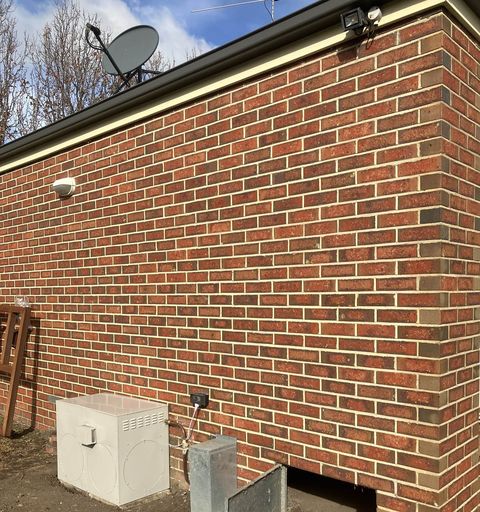
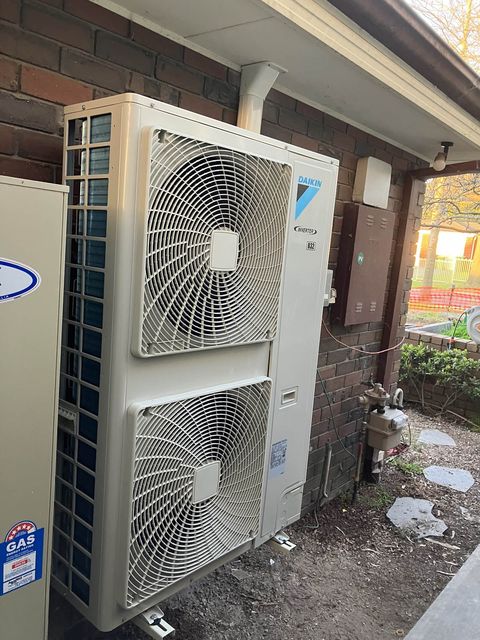
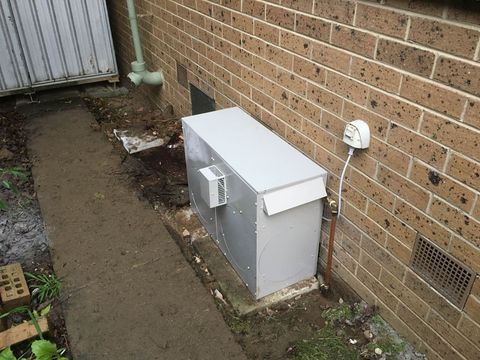
Photos from real jobs in Melbourne, to show what the work looks like. They aren't from an installer near you.
Heating and cooling jobs in Canberra
- Air conditioning installation in CanberraChoosing and installing a system for Canberra's winters, with the ACT licence and scheme steps.
- Split system installation in CanberraSplit systems in Canberra homes: heating-first sizing, outdoor unit spots, noise and heritage.
- Ducted air conditioning in CanberraDucted reverse cycle for Canberra homes: winter sizing, new ducts, zoning and roof checks.
- Reverse cycle air conditioning in CanberraReverse cycle as Canberra's main heater: what to look for, and the ACT schemes that help.
- Ducted heating in CanberraGas ducted or ducted reverse cycle in Canberra: the phase-out, the ducts and the safety checks.
- Gas heater service and safety checks in CanberraGas heater servicing in Canberra: how often, the warning signs, and ACT gasfitter checks.
- Evaporative cooling in CanberraWhen evaporative cooling suits a Canberra home, and what it needs alongside it for winter.
- Evaporative cooler service in CanberraGetting a Canberra evaporative cooler ready for summer: timing, checks and who to call.
- Hydronic heating in CanberraHydronic heating for Canberra homes: choosing the heat source, and checks for older houses.
- Air conditioning service in CanberraWhy Canberra aircon servicing belongs in autumn, and what the visit should cover.
- Air conditioning repairs in CanberraCanberra aircon faults: telling defrost from a breakdown, the first checks, and ACT licences.
Suburbs and areas around Canberra
Questions people ask
Is reverse cycle warm enough for a Canberra winter?
Can I still get gas connected in Canberra?
Does evaporative cooling work in Canberra?
How do I check a Canberra installer's licence?
Ready for the right installer to take a look in Canberra?
Your postcode and three quick questions. Licence-checked local installers who specialise in your kind of job see it, and the one who takes it gets in touch to quote.
Read next
- 01ACT Sustainable Household SchemeHow the ACT loan works for electric heating and cooling, and the rebate some homeowners can add.
- 02Switching from gas heating to electricYour options for leaving gas heating, what the rules actually require, and what to ask before you sign.
- 03Reverse cycle or gas heating?Efficiency, cold mornings, carbon monoxide and the Victorian gas rules, in plain terms.
- 04Heating and cooling in the ACTACT electrical licences, Access Canberra's registers, the isolator rule, Mr Fluffy ducts and pre-approval.
- 05How to check an installer's licenceRun the ARCtick check, read RAC01 and RSS03, and check the state licence too.
- 06Air conditioner size calculatorA rough kW size from your room's measurements, and what that number leaves out.
Where this information comes from
- Wikipedia Canberra, 28 October 2026
- Australian Bureau of Statistics 1307.8 Australian Capital Territory in Focus, 2007 (climate chapter, from Bureau of Meteorology records), 29 November 2007
- Australian Building Codes Board NCC 2016 Volume One, Part A1 Interpretation, Table A1.1 Climate zones for thermal design: various locations, 28 October 2026
- ACT Government (Climate Choices, Sustainable Household Scheme) Heating and cooling your home: a guide to reverse cycle systems (buyers guide), 28 October 2026
- ACT Government (Climate Choices) Preventing new gas network connections, 28 October 2026
- ACT Government (Climate Choices) Canberra's Electrification Pathway, 28 October 2026
- Evoenergy About us, 28 October 2026
- Australian Bureau of Statistics 2021 Census All persons QuickStats: Australian Capital Territory (8ACTE), 28 October 2026
- WorkSafe ACT Mr Fluffy (Loose Fill Asbestos Insulation), 28 October 2026
- ACT Government (Climate Choices) Sustainable Household Scheme, 28 October 2026
- ACT Government, Sustainable Household Scheme Heating and cooling your home: a guide to reverse cycle systems (PDF), 27 March 2023
- ACT Government, Everyday Climate Choices Cooling for your home, 28 October 2026
- Access Canberra (ACT Government) Noise standards, 28 October 2026
- ACT Government (Everyday Climate Choices) Home Energy Support: Rebates for Homeowners, 28 October 2026
- ACT Government (Everyday Climate Choices) Sustainable Household Scheme, 28 October 2026
- ACT Government (City and Environment Directorate, ACT Planning) Construction licences, 28 October 2026
- Access Canberra (ACT Government) Choosing a tradesperson, 28 October 2026
- Australian Refrigeration Council Fact Sheet 13: Who can do what, with Split System Air Conditioners (ARC5919/JVD/0726), 28 October 2026
- Blufire Pty Ltd Blufire's lead engine rules (supplied 29 October 2026) and Privacy Policy, 29 October 2026
We don't publish prices. Every home is different, so an installer's written quote is the only real number. How we write and check these pages.