When to switch it off and leave it off
For a burning smell, smoke or sparks, Mitsubishi Electric says to stop the unit and turn the breaker off. Its instructions also say to stop using it when the breaker trips often, when water drips from the indoor unit and when it makes an abnormal sound. Don't take the covers off or touch any wiring.
Is it really broken? Check these first
Plenty of 'broken' systems just need a setting changed. Check the breaker hasn't tripped, the remote has fresh batteries and is set to the right mode, the filters are clean and nothing is crowding the outdoor unit. Samsung also suggests making sure Timed Off or Sleep isn't switched on.
Give it a moment after switching it back on, too: Mitsubishi Electric's units sit idle for about 3 minutes after a restart, as self-protection.
Our problem guides go symptom by symptom: not cooling or heating, leaking water, smells and noises.
Check the warranty before anyone touches it
A system under warranty may have to be repaired by the brand's own people. Daikin's warranty card says repairs are done in normal business hours by Daikin or a repairer it arranges. Mitsubishi Electric asks owners to contact the Authorised Retailer or an Accredited Repairer within 30 days of becoming aware of a defect.
ActronAir asks owners to contact their installer first, so an installation fault isn't lodged as a warranty call. Whatever the card says, the Australian Consumer Law still applies: goods must be of acceptable quality, and repair services must be provided with due care and skill. Our warranties guide has the detail.
What happens on a repair visit
You describe the fault
When it started, what mode it was in, and any code on the display or controller. Write the code down before you call.
The technician diagnoses it
That means testing, not guessing: the electrics, the sensors, the fans, the drain and, if needed, the refrigerant pressures.
You get the fix in writing
What's wrong, which part it needs, whether the part is in stock, and whether the warranty covers it.
The repair and a test run
After the fix, the system should be run and shown working, in both cooling and heating if it's reverse cycle.
What makes a repair bigger or smaller?
The part matters most. Clearing a blocked drain or replacing a sensor is usually a short visit. A failed fan motor or circuit board can mean waiting for the part to arrive, and a refrigerant leak means finding it, repairing it and testing before the system is recharged.
Parts supply varies by brand and age. Gree's Australian warranty page says it holds a full range of spare parts locally for all the models it distributes. For an older or less common unit, ask how long the part will take before you agree to wait.
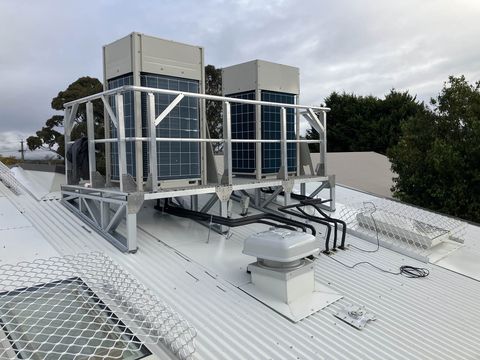
Access adds time too: an outdoor unit on a roof, a head high above a stairwell, or a ducted unit in a cramped roof space.
If it's a big repair on an old system, get a quote for the alternative as well. By Solar Victoria's reckoning, a system past 15 years old typically uses more than three times the energy of a modern reverse cycle one. Our repair or replace quiz helps you weigh up the two.
Who's licensed to repair an air conditioner?
Any repair that touches the refrigerant needs a technician with a full RAC01 licence from the Australian Refrigeration Council. The restricted RSS03 licence doesn't cover service or repair work on the refrigerant.
Each state adds its own rules. Energy Safe Victoria's fact sheet says repairing a reverse cycle air conditioner in Victoria needs plumbing registration, now with the Building and Plumbing Commission, plus a refrigerant handling licence. A Restricted Electrical Worker's licence covers disconnecting and reconnecting like-for-like equipment for a repair, but any new wiring needs a licensed electrician.
In Queensland, the QBCC treats air conditioning repair as mechanical services work that needs a licence whatever the value of the job. In NSW, maintaining or servicing an air conditioning system needs a licence or certificate. Our licence guide shows how to check each one.
Questions to ask before you say yes
- What exactly is the fault, and how did you find it?
- Is it covered by the manufacturer's warranty, and can you do warranty work for this brand?
- Does the repair involve the refrigerant, and do you hold an RAC01 licence?
- Is the part in stock, and what warranty comes with your repair?
- If refrigerant is needed, where was the leak and how will it be fixed?
- Will your RTA number be on the quote and the invoice?
What we'd do
What we'd do
Spend five minutes on the basic checks, then find the warranty card. If it's still covered, call the brand or your installer before anyone else. If it isn't, get a repair specialist who works on your brand and system type to diagnose it, and ask for the fault and the fix in writing. For a major fault on a system past 15 years old, we'd get a replacement quote alongside the repair before deciding.