Melbourne weather that can look like a fault
The hottest days
Melbourne's record is 46.4 degrees, set on 7 February 2009. ActronAir says an air conditioner loses capacity above 35 degrees, giving the example of a 14kW system dropping to 10kW or 12kW. A unit that can't hold the room on a day like that may simply be outmatched rather than broken.
Wind ahead of the change
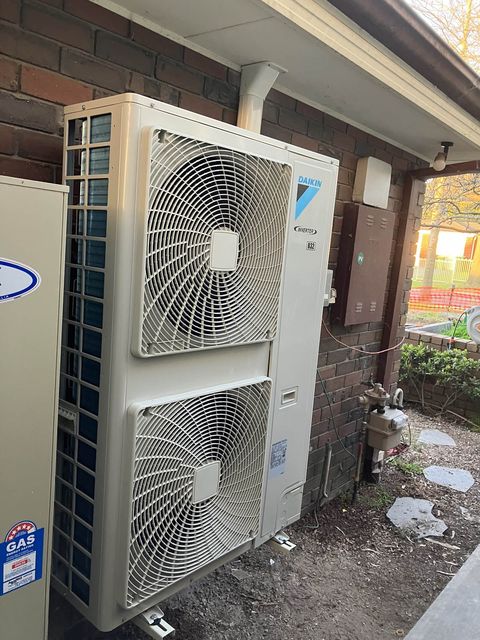
Hot north-west winds blow ahead of a cold front, sometimes at gale force. Afterwards, check for leaves and rubbish piled against the outdoor unit: Daikin says debris around it makes it run less efficiently.
Heat health warnings
Normally Victoria's noise rules stop cooling being heard in a neighbour's habitable room after 11pm. During a Department of Health heat health warning, EPA Victoria says you can use your air conditioner at any time.
Cold, damp mornings
In heating mode, Mitsubishi Electric says the outdoor unit can stop for about 10 minutes to defrost when it's cold and humid outside, and give off white vapour while it does. On a Melbourne winter morning, that's normal behaviour.
Faults that need a technician
Tripping the breaker. A breaker that trips again and again is a reason to stop using the unit, in Mitsubishi Electric's instructions. Don't keep flicking it back on.
Water dripping inside. Usually a blocked or kinked drain. Our guide to an air conditioner leaking water has the checks.
A burning smell, smoke or sparks. Stop the unit and turn the breaker off, then call. Don't take any covers off.
No heating or cooling with clean filters and the right mode. It may be a refrigerant leak, which needs an RAC01 technician to find and fix. The ARC says topping up before the leak is repaired is illegal.
An error code. Write it down from the display or controller and give it to the technician when you book.
Warranty first, then a repair specialist
If the unit is still under warranty, the brand may decide who repairs it, so ring the brand or your installer before anyone else. The national air conditioning repairs page explains how that works.
In Victoria, repairing a reverse cycle system is plumbing work that needs Building and Plumbing Commission registration plus a refrigerant licence. A Restricted Electrical Worker's licence covers like-for-like disconnecting and reconnecting, and the holder must issue a Certificate of Electrical Safety for it. New wiring needs a licensed electrician.
For a big fault on an old system, compare repair with replacement. Solar Victoria says a system more than 15 years old typically uses more than three times the energy of a modern reverse cycle one. Our repair or replace quiz helps.
Quick checks first, then hands off
You can
- Check the breaker, the remote's batteries, the mode and the set temperature.
- Clean the filters, and clear leaves from around the outdoor unit after a windy day.
- On a scorcher, close blinds and doors so the unit isn't fighting the sun.
- Give it time after a restart: Mitsubishi Electric's units wait about 3 minutes to protect themselves.
Leave to a licensed installer
- Electrical faults and breaker trips.
- Finding and repairing refrigerant leaks.
- Fan motors, sensors and circuit boards.
- Drain repairs inside walls or ceilings.
Questions for a Melbourne repair technician
- Is this a fault, or is the system too small for our hottest days?
- Does the repair touch the refrigerant, and do you hold an RAC01 licence?
- If there's a leak, where is it, and how will it be fixed before any refrigerant goes back in?
- Is the part in stock, or are we waiting?
- If you do electrical work, will I get a Certificate of Electrical Safety?
What we'd do
What we'd do on a 40-degree day
We'd do the quick checks, close the house up against the sun, and give the system some time before deciding it's broken. If it's tripping the breaker, leaking inside or smells hot, we'd switch it off and call. For a big fault on a system past 15 years old, we'd get a replacement quote alongside the repair, from a specialist in that type of system rather than whoever's free that afternoon.