What a Melbourne winter asks of a ducted heater
Long, cold nights
July nights average 5.8 degrees at Melbourne Airport and 5.0 at Laverton, on Bureau of Meteorology figures for 1991 to 2020. Even inner Melbourne, at Olympic Park, only averages 7.3. That's a lot of evenings with the heater on.
Colder again in the Dandenongs
Mount Dandenong averages a July minimum of 3.6 degrees and a July maximum of just 8.2. In the hills, the heater is likely to run through the day as well as the night, so its size and its servicing matter even more.
Who runs the gas network
Australian Gas Networks distributes gas across large parts of Melbourne, and AusNet's gas network serves the western suburbs. Your bill names your distributor and its emergency number, which is the one to call if you smell gas.
New homes go electric
From 1 January 2027, new Victorian homes are built all electric, and connecting mains gas to a building that doesn't already have it is prohibited. An existing Melbourne home on gas can keep its gas heater.
Replace with gas, switch to reverse cycle, or add cooling?
A new gas ducted heater is usually the smallest change when the ducts are sound and you're happy to keep heating with gas. Seeley says the more stars a gas heater has, the more efficient it is, so line quotes up on the star rating as well as the size. Our ducted heating replacement page covers the swap itself.
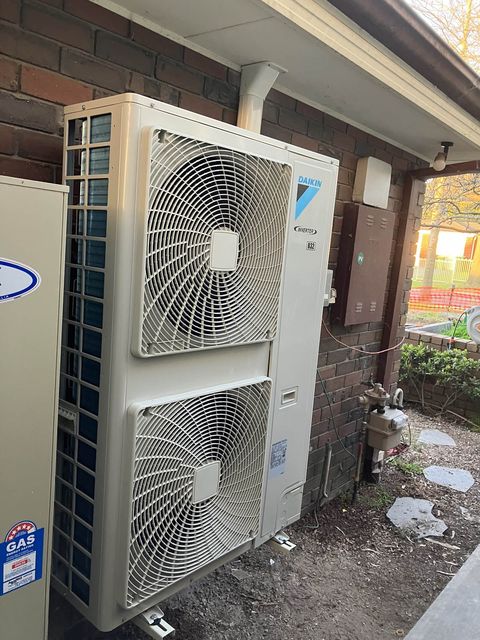
Ducted reverse cycle heats and cools from one system. The ACT Government says gas heats a home quickly, but reverse cycle has much lower running costs. Expect new ducts throughout, because its guide says gas ducts are too narrow to reuse.
Gas heating with add-on cooling keeps the heater and sends cooled air down the same ducts in summer, as 10% of the surveyed Victorian home owners already do. Rinnai says it depends on the heater's age, model, capacity and condition, so read our add-on cooling page first.
What makes a Melbourne ducted heating job bigger or smaller
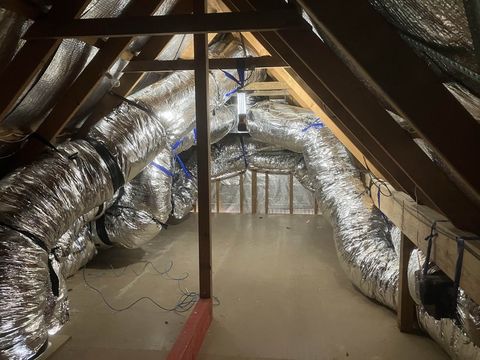
The simplest job is a like-for-like heater in the same spot, on ducts in good shape. Seeley says a ducted gas heater can sit in the roof, under the floor or outside, and moving it adds a lot of work. So do crushed or poorly insulated ducts, extra zones and a switch to reverse cycle.
Tell the installer if the house has been renovated or draught-sealed since the heater went in. Energy Safe Victoria warns that sealing up a home can change the ventilation needed to clear carbon monoxide. Our national ducted heating page explains the systems in more depth.
If someone feels unwell when the heater's running
Energy Safe Victoria says any gas heater can spill carbon monoxide, ducted ones included. Its signs include headaches, dizziness, nausea and feeling unwell only at home. If you suspect it, get everyone into fresh air, turn off the gas appliances, open up the house and call 000 in an emergency. Leave the heater off until a qualified gasfitter has checked it.
Renting out a Melbourne home with gas ducted heating?
A working gas ducted heater that was in place before 1 March 2027 can stay. From that date, if the main living area heater permanently fails and can't be repaired, the replacement has to be energy efficient and electric. For a ducted system, that means an electric unit with a Heating Seasonal Performance Factor of 3.2 or above. See our Victorian rental heating guide.
Questions to ask a Melbourne ducted heating installer
- Did you size this from a heat load on our house, or from the old heater's label?
- What condition are the ducts in, and can you show me photos from the roof or subfloor?
- If we go reverse cycle, which ducts are new and where does the outdoor unit go?
- Could this heater take add-on cooling later?
What we'd do
What we'd do with a Melbourne ducted heater
If it's working, we'd keep it and book its service in autumn. If it's failing, we'd have a ducted heating specialist check the ducts first, then put a new gas heater and ducted reverse cycle side by side on paper before winter rather than during it. On a new build from 2027, the decision is made for you: it'll be electric.