Splits in Melbourne homes
Where one split falls short
In the same JWS survey, 59% of those who passed on reverse cycle heating said larger houses need several splits, and 56% said indoor units only push air so far and struggle with big rooms or interior walls. For a large open-plan house, look at ducted or multi-split instead.
Flats old and new
Melbourne's flats go back to just before World War I and multiplied in the Art Deco 1930s, and towers have risen in the city, Southbank and Docklands since the 2000s. In both, the owners corporation and the building's own systems decide what's possible.
Terraces and tight blocks
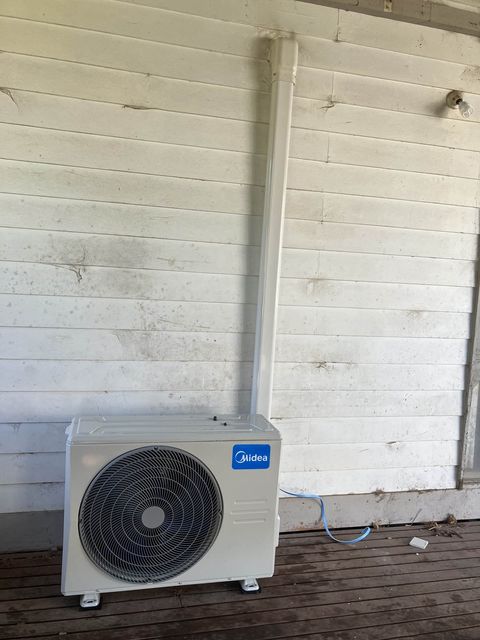
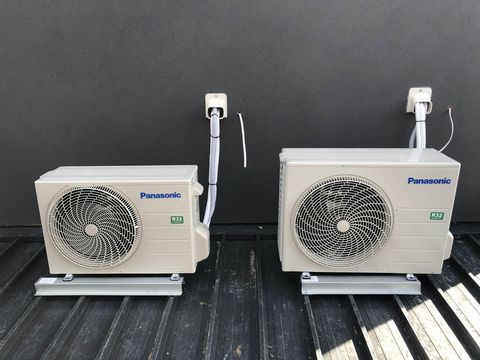
Inner-suburb terraces from the 1850s to the 1890s share walls with next door, so the outdoor unit's spot takes thought. The ACT Government's guide warns against putting an outdoor unit in an enclosed courtyard, and says never to box it in with slat fencing.
Close to the bay
The Galvanizers Association rates the first 50 m inland around a sheltered bay as C4 for corrosion, and 50 m to 1 km as C3. Port Phillip is an enclosed bay with moderate waves, so in bayside suburbs like St Kilda and Brighton, ask about coil protection on the outdoor unit.
Neighbours and night-time heating
EPA Victoria says a split running on heat mustn't be heard inside a neighbour's habitable room after 10pm, and on cooling after 11pm. On a shared wall, keep the outdoor unit away from next door's bedroom.
Choosing a split for a Melbourne winter
Melbourne sits in the cold zone on the energy label, so compare the red heating stars for that zone, not just the blue cooling ones. A split that's mainly a heater should be judged as one.
For size, Rinnai's guide puts most small rooms of up to 20 square metres at 2.5 kW and medium rooms of 20 to 40 at 3.5 kW. Rinnai also says higher ceilings demand more from a system. Treat those as starting points, try our size calculator, and have the installer check the room. The national split system installation page covers install day.
Renting out a Melbourne property?
From 1 March 2027, a new or month-to-month rental agreement needs a fixed energy efficient cooler in the main living area, and from 1 July 2030 every rental does. For a split, that's a cooling rating of 3 stars or more.
An efficient reverse cycle unit that meets the required ratings satisfies the rental heating and cooling requirements together. For heating, Consumer Affairs Victoria wants a non-ducted unit rated 2 stars or above for the property's climate area, so one well-chosen split in the living room can cover both. Our rental heating guide has the detail.
Before you say yes to a Melbourne split
- How many red heating stars does this model get in the cold zone?
- Where exactly will the outdoor unit sit, and how far is it from next door's bedroom?
- Which ARC licence will the installer hold? RSS03 covers a single-head split under 18kW.
- Are you registered with the Building and Plumbing Commission?
- Near the bay: what corrosion protection does this outdoor coil have?
Your part, and the installer's
You can
- Pick the room you most need warm in winter, and start there.
- In a flat, check the owners corporation rules first.
- Once it's running, clean the filters as the manual says.
Leave to a licensed installer
- Sizing the unit from a heat load.
- Refrigerant pipework and commissioning.
- The dedicated circuit and any switchboard work.
- The Certificate of Electrical Safety and plumbing compliance certificate.
What we'd do
What we'd do in a Melbourne flat or house
We'd put the first split in the room that's coldest in winter and choose the model on its heating figures. We'd settle the outdoor unit's spot before the model: clear of an enclosed courtyard, away from a neighbour's bedroom, and with coil protection if it's near the bay. Then we'd hand it to a split specialist who fits these every week.