Why a Melbourne cooler wants a spring check
A long winter off
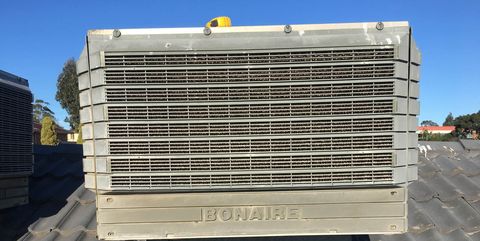
With July averages like 5.8 degrees overnight at Melbourne Airport, a cooler gets no use in winter. One that's sat unused since autumn is worth testing on a mild spring day, so a fault turns up before you need it.
Then sudden heat
Melbourne's hot days often arrive on a north-westerly ahead of a cold front, and days of extreme heat have become more frequent since 2005. A cooler that hasn't been looked at gets no warm-up period.
Two maintenance seasons
Seeley says bleed-system coolers need seasonal maintenance before summer and again after it. For a Melbourne home, that means a spring start-up and an autumn visit before the cooler sits through winter.
Warm air isn't always a fault
Melbourne Airport's January afternoons average 44% humidity, so most hot days suit evaporative. On a muggy one, Seeley says the air already holds too much moisture, and warm air from the vents can be the weather, not the cooler.
Your spring start-up, from inside the house
Turn the water back on
If the supply to the cooler was turned off for winter, it can't wet the pads without it.
Run it on a mild day
Set the wall control to cool, open windows on the far side of the house from the vents, and let it run for a while. Note any smell, grinding, or drips from a ceiling outlet.
Book the visit
If anything seemed off, or it's been two years, book an evaporative service before the first hot spell. Parts are easier to sort before every cooler in the suburb is switched on.
What a spring service in Melbourne should cover
- The tank drained and cleaned, and the float valve checked.
- Every pad checked for crusting and even soaking. On Seeley's figures, Chillcel pads last around 7 or 8 years and aspen or woodwool ones 3 or 4.
- The pump and water distribution tested.
- The bleed or drain valve checked, and the bleed rate confirmed.
- The fan, motor, wall control and outlets tested.
- Any part quoted in writing before it's fitted.
The autumn visit people skip
If your cooler has a bleed system, Seeley wants it looked after at the end of summer as well as the start. Ask your technician what your model needs before it sits through a Melbourne winter. Drain-valve units are simpler: Seeley says they need no seasonal maintenance, though they still need regular checks.
Not sure which you have? The technician will know at a glance. Our national evaporative cooler service page goes through the schedule and warranty conditions.
Who should be on your roof
Someone who services evaporative coolers every week, with the gear to work on a roof and in the ceiling safely. WorkSafe Victoria reports workers falling through plaster ceilings in roof spaces and tells them to use crawl boards across the joists. Strong north-westerly gusts are another reason this stays off the homeowner's list.
From the ground, and up top
You can
- Turn the water supply back on in spring, if it was isolated.
- Run the cooler on a mild day before summer.
- Open the windows furthest from the vents whenever it runs.
- Leave the bleed setting alone. Seeley says the installer sets it.
Leave to a licensed installer
- Anything on the roof.
- Pads, tank, pump and float valve.
- Adjusting the bleed rate.
- Motor and control faults.
What to ask the technician
- Is my cooler a bleed or a drain-valve model, and what does it need each season?
- How are the pads, and roughly how long have they got?
- While you're up there, are the fixings and the roof seal sound after the winter winds?
- Does my warranty require a particular service company?
What we'd do
What we'd do before a Melbourne summer
We'd run the cooler on a mild spring day, then book an evaporative specialist before the first hot north-westerly if anything seemed wrong or it had been two years. For a bleed-system cooler, we'd book the autumn visit too. And on a muggy day, we'd check the weather before ringing anyone about warm air.