Service intervals at a glance
| How often | Who says so | |
|---|---|---|
| Split and ducted reverse cycle | Once a year | Mitsubishi Electric and the ACT Government. Daikin suggests a licensed technician looks it over at the start of every summer. |
| Gas ducted heaters and space heaters | At least every two years | Energy Safe Victoria and Better Health. Seeley says some units need it more often. |
| Evaporative coolers | After the first year, then every two years | Seeley, with more frequent service in harsh environments |
| Filters, which you do yourself | About every two weeks | Daikin, Mitsubishi Electric and Samsung. Check your own manual. |
Why once a year for reverse cycle?
Filters are only the front line. Mitsubishi Electric says that after several seasons the indoor unit needs inspection and maintenance that takes specialised knowledge and skills, and that owners should never try to wash the inside themselves.
A yearly service catches the slow problems before they become breakdowns. Daikin's start-of-summer tune-up includes cleaning the coils, checking the refrigerant charge, tightening electrical connections, flushing drains and inspecting ductwork.
Time it for the season you lean on most. The energy label's climate map calls Canberra, Hobart and Melbourne cold, so there it's worth booking before winter. In Brisbane or Darwin, which the map calls hot, book before summer.
When your warranty sets the interval
Some brands make servicing a condition of cover. Under ActronAir's terms, a home system has to be maintained every 12 months by someone suitably licensed or qualified, and arranging that is on the owner. Gree's card says the warranty is void if regular maintenance isn't carried out at intervals of no more than 12 months by a suitably qualified tradesperson.
Hitachi's FAQ says its warranty doesn't apply if regular service hasn't been done by an appropriate ARC licensed installer. Haier asks for records of all service and maintenance when you make a claim.
Evaporative and gas heating cover can be stricter again. Seeley describes Breezair Supercool's 7 year warranty as coming with a compulsory chargeable service in the fourth year, and Rinnai's extended Brivis warranty needs scheduled servicing by Rinnai.
Keep every service invoice in one place. Our warranty guide covers the other conditions brands set.
Gas heaters: the service is a safety check
Energy Safe Victoria says any gas heater can spill carbon monoxide, old or new, and that a carbon monoxide alarm is a back-up, never a substitute for regular servicing. Symptoms it lists include headaches, dizziness, feeling sick, and people or pets getting sick at the same time. If you suspect carbon monoxide, it says to leave the house and get into fresh air, turn off all gas appliances and open the windows and doors, and call Nurse-on-Call, see a doctor or dial 000 in an emergency. Keep the heater off until a qualified gasfitter has been out to check it.
Gas heaters and rentals
Energy Safe Victoria's advice is to have your heater serviced at least once every two years by a qualified gasfitter, and to check the gasfitter's licence online. Better Health says the same for every type of gas heater, and Seeley adds that some units need servicing more often.
Don't wait for the two years if you see warning signs. Better Health lists a yellow or sooty flame (unless it's a decorative log fire), a pilot light that goes out unexpectedly or pops or bangs when it lights, and soot stains around the heater.
Rental homes in Victoria have their own rule. From 13 October 2026, every rental property needs an electrical safety check every two years, plus a gas safety check every two years by a licensed or registered gasfitter where there's gas. There's more on rentals in our Victorian rental rules guide, and on booking one in our gas heater service page.
Evaporative coolers
Seeley says its evaporative coolers should be serviced after the first year, then every two years, by your installer or an authorised Seeley service company.
The type of cooler matters. Seeley says bleed-system coolers need seasonal maintenance before and after summer, while its drain-valve units don't need seasonal maintenance but still need their maintenance checks.
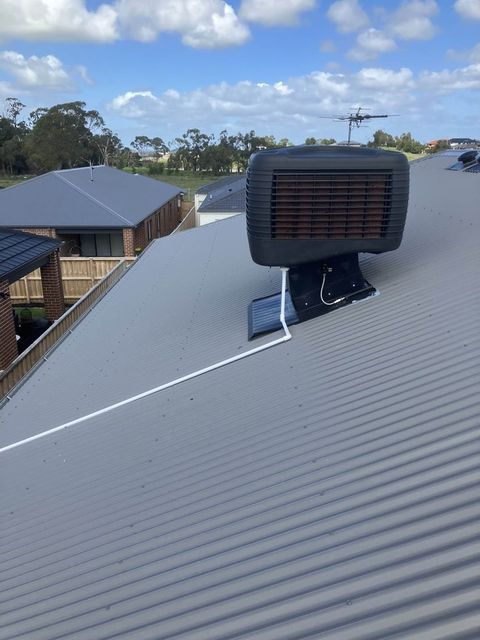
Pads wear out on their own timetable. Seeley says to expect 7 or 8 years from Chillcel pads and 3 or 4 years from aspen or woodwool. Coolers sit on the roof, so this belongs with a technician who looks after evaporative coolers all summer.
Signs it needs a service sooner
- Weak airflow, even with clean filters.
- A musty smell that keeps coming back. Mitsubishi Electric says dirt inside the unit can grow mould and clog the drain.
- Water dripping from the indoor unit.
- The breaker trips often. Mitsubishi Electric says to stop using the unit if it does.
- A new or unusual noise, which Mitsubishi Electric also says is a reason to stop and get it checked.
- On a gas heater, a yellow or sooty flame, soot stains, or a pilot that pops or bangs.
Who should do the service?
For a split or ducted system, choose someone who services refrigerated systems week after week. If the job touches the refrigerant, it needs a full RAC01 licence holder. The restricted RSS03 licence lets someone install single-head splits, but not do service work that touches the refrigerant, a regas included.
Topping up refrigerant shouldn't be a routine part of a service. The ARC says topping up a system before it has been fully tested and all leaks repaired is illegal, whoever does it. A good technician checks the charge, and if it's low, looks for the leak first.
Gas heaters need a licensed gasfitter, ideally one who works on ducted heaters all winter. Evaporative coolers go to someone who services them every week of summer. We match each job with an installer who specialises in that kind of work, and you can see how we check them.
Between services
You can
- Clean the filters on splits and window units about every two weeks, or as your manual says. Our filter guide shows how.
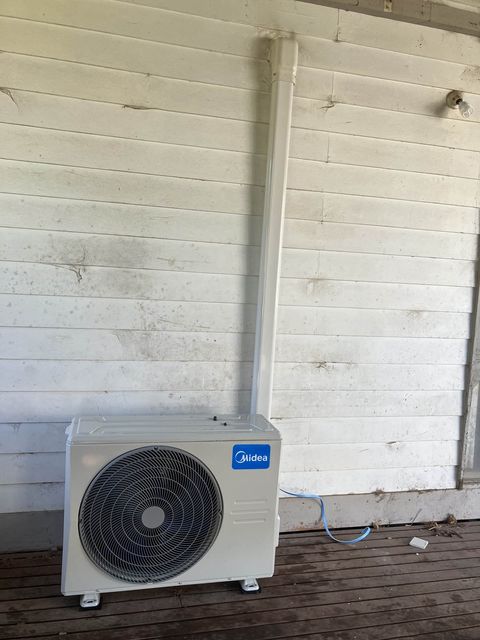
- Keep the outdoor unit clear of leaves, plants and anything stacked against it.
- Check the drain hose outside isn't kinked, pointing upward or sitting in water.
- Note down any odd smells, noises or drips so the technician knows where to look.
Leave to a licensed installer
- Cleaning the coils, fan and drain inside the unit.
- Checking the refrigerant charge and finding any leak.
- Tightening electrical connections.
- Gas heater servicing and carbon monoxide checks.
- Anything on the roof.
What we'd do
What we'd do
Book the reverse cycle service once a year, a few weeks before the season you rely on it most, and have any gas heater serviced every second year at the latest. Read the warranty card once, note any interval it sets, and keep the invoices together. The filters are yours: every couple of weeks while it's working hard.