Power off first, and nothing wobbly to stand on
Switch the unit off and turn off its power supply or breaker before you touch the filters. Mitsubishi Electric's instructions say so, and they also warn against standing on an unstable bench to clean the unit. Use a stable step ladder only if you're comfortable on it, and never wash or spray the inside of the indoor unit.
Cleaning split system filters
Switch off at the power
Turn the unit off with the remote, then at the isolator or the breaker. Wait for the fan to stop.
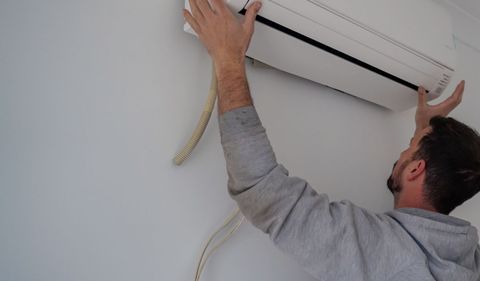
Open the front panel
On most wall splits it lifts up from the bottom edge. Your manual shows where to hold it so the hinges don't strain.
Slide the filters out
Lift each mesh filter slightly, then pull it down and out. If your unit has extra filters clipped on as well, check the manual before you wet those.
Vacuum the dust off
A soft brush attachment on the vacuum lifts most of the dust without stretching the mesh.
Rinse if they're still grey
Use lukewarm water. Mitsubishi Electric says not to use water hotter than 50 degrees.
Dry them in the shade
Let them dry completely, out of direct sun, before they go back in. Mitsubishi Electric's instructions say to dry them well in the shade.
Refit and switch back on
Slide the filters back, close the panel and turn the power on. After cooling or dry mode, Mitsubishi Electric recommends running the fan on its own for a while to dry the inside of the unit.
How often should you clean aircon filters?
The manufacturers mostly agree. Daikin's general rule is every two weeks, and more often in dusty or polluted places. Mitsubishi Electric's operating instructions also say every two weeks, and Samsung says about every two weeks, or more often if you have pets.
Daikin also recommends cleaning or changing filters at least once a month right through summer. Not every source agrees on the interval, though. Solar Victoria's 2021 buyers guide suggested about twice a year, or more if you use the unit a lot.
Our view: follow the manual for your own unit, since that's what the manufacturer wrote for it. If you've lost it, Daikin, Samsung and LG are among the brands that publish manuals online, searchable by model number.
Don't stop when summer ends. A reverse cycle unit draws air through the same filters on heat, so the routine carries on through winter.
Why a clean filter matters
Daikin calls cleaning your filters the most important maintenance task you can do, and says blocked filters can reduce a system's efficiency significantly. By its figures, swapping a blocked filter for a clean one can lower energy use by anywhere from 5% to 15%.
Dirty filters cause problems you can see, too. Mitsubishi Electric says they cause condensation inside the unit, which contributes to mould. That water can end up dripping from the indoor unit, which our leaking water guide covers.
It can also be a warranty point. Hitachi's FAQ excludes damage caused by filter neglect.
Ducted, window and evaporative units
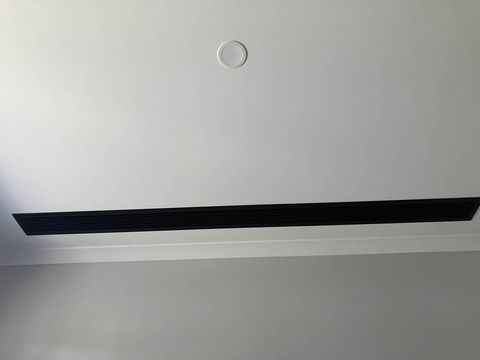
Ducted systems have a return air filter, usually behind a grille in a ceiling or a hallway wall. You can often unclip the grille from a stable ladder and take the filter out. Whether you wash it or replace it depends on the type, so check the manual. Don't go up into the roof space: WorkSafe Victoria has reported workers falling through plaster ceilings while working up there.
With gas ducted heating, the return air filter matters more than people think. Seeley's fault guide for technicians lists a dirty return air filter among the common causes of over-temperature faults. If a ducted heater keeps locking out, Seeley's guide also says not to keep resetting it without finding the cause. Our ducted heating guide has the next checks.
Window and wall units are simpler. Westinghouse says to clean the filter at least every two weeks.
Evaporative coolers on the roof are a different job. Seeley says to keep the pads and reservoir clean and replace pads on the manufacturer's schedule, but that's roof work, so leave it to someone who services evaporative coolers.
What a filter clean won't fix
If the air still smells with clean filters, Mitsubishi Electric says the fan and heat exchanger inside the unit may need cleaning as well, and that dirt inside can grow mould or clog the drain. That's a technician's job. An aircon cleaning specialist strips and cleans the parts you can't reach.
If it's still not heating or cooling properly, Mitsubishi Electric suggests checking the temperature and fan settings, anything blocking the indoor or outdoor unit, and open doors or windows. Past that, it says there's a possibility of a refrigerant leak, which only a licensed technician can find and repair. Our not cooling guide walks through it.
A burning smell is different. Stop the unit, turn off the power at the breaker, and get it looked at before you use it again.
What's safe to do yourself
You can
- Remove, vacuum, rinse and dry the mesh filters, as your manual describes.
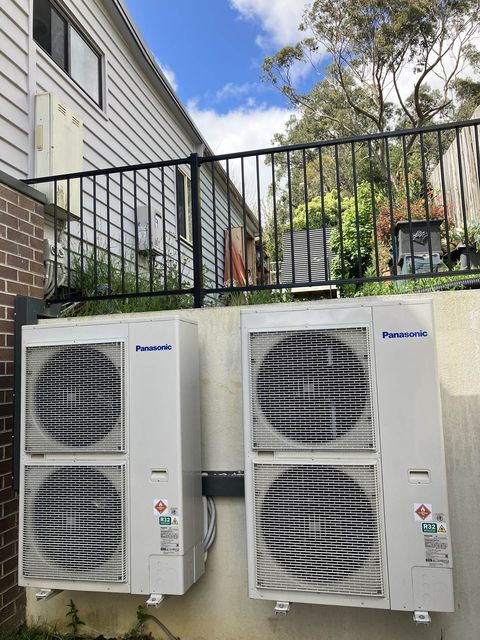
- Keep leaves and debris away from the outdoor unit. Daikin says they make it run less efficiently.
- Unclip a ducted return air grille from a stable ladder, if you're comfortable up there.
- Run the fan on its own after cooling to help dry the inside.
Leave to a licensed installer
- Cleaning the coil, fan and drain tray inside the indoor unit.
- Anything on the roof, including evaporative cooler pads.
- Checking the refrigerant and finding any leak.
- Electrical checks, and anything behind a cover that needs tools.
What we'd do
Where we'd start
Set a phone reminder for every second weekend while the system is working hard, summer or winter, and keep the manual somewhere you'll find it. If clean filters don't fix a smell, weak airflow or a drip, stop there and book a service rather than taking the unit apart.