Gas smells and carbon monoxide come first
If you smell gas, don't touch the thermostat or any other switch. Energy Safe Victoria's advice is to open up the house, put out any flames, turn the gas off at the meter only if it's safe to, keep everyone clear and ring your gas distributor, whose emergency details are on your last gas bill. If people at home have headaches, dizziness or nausea, feel unwell only when they're home, or people and pets fall sick at the same time, Energy Safe Victoria says these can be signs of carbon monoxide. Get everyone outside into fresh air, turn off gas appliances, open up the house if you can, and dial 000 in an emergency. Leave the heater off until a qualified gasfitter has checked it.
Start with the parts you can safely check
Gas ducted heating is the main heater in a lot of Victorian homes. In a 2021 survey of home owners in areas with mains gas, done by JWS Research for the Victorian Government, half said they mostly heated with gas ducted heating. So when it stops on a cold night, most of the house goes cold with it.
Some stoppages come back to airflow or the controller, and you can check both safely. The burner, the pilot, the flue and the gas supply are another matter, and they're for a licensed gasfitter only.
Checks you can safely do
Check the controller
Is the screen on? Is it set to heat, with the set temperature above the room temperature? Make sure a timer or program hasn't switched it off for the day, and replace the batteries if your controller takes them.
Write down any error code
If the controller shows a fault code, note it before you do anything else. Brivis, for example, publishes an error codes document for its gas ducted heaters, and the code tells a gasfitter where to start.
Open enough vents
Seeley's guide for technicians lists too few outlets open, and a dirty return air filter, among the common causes of over-temperature faults. Open the vents in the rooms you're heating rather than shutting off most of the house.
Check the return air grille
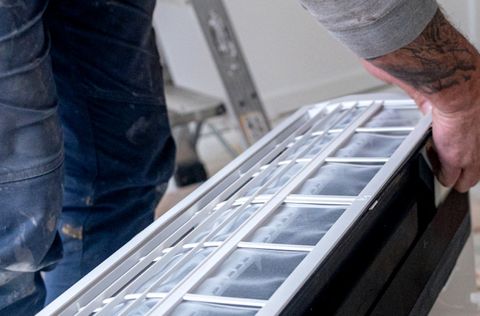
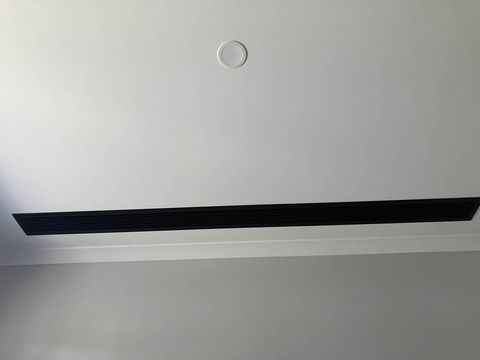
That's the large grille where air goes back to the heater, often in a hallway ceiling or wall. Make sure furniture or curtains aren't blocking it, and if your manual shows how to clean its filter, do that.
Reset once, then stop
If your manual describes an owner reset, try it once. Seeley tells licensed technicians not to repeatedly reset a heater without finding the cause of the lockout, and that advice applies to owners even more.
What if the pilot light keeps going out?
Some ducted heaters have a pilot light (a small flame that stays lit to light the burner) and others light electronically. Your manual will tell you which you have, and whether an owner is allowed to relight it.
A pilot that keeps going out is a warning sign, not a nuisance. Better Health lists a pilot light that goes out unexpectedly, or one that pops or bangs when lighting, among the signs of a faulty gas heater. A yellow or sooty flame and soot stains around the heater are on the same list. Any of those means calling a gasfitter, not relighting it again.
Energy Safe Victoria goes further: if the heater's flame changes from its usual colour, a qualified gasfitter must inspect it and check it for carbon monoxide leakage.
Stay out of the roof space
Seeley says a ducted gas heater can sit in the roof, under the floor or outside the house. If yours is in the roof, don't climb up to look. WorkSafe Victoria has reported workers falling through plaster ceilings in roof spaces, and its advice is not to step on ceiling materials. In Canberra there's a second reason: Mr Fluffy loose-fill asbestos was found in some homes' heating and cooling ducts and vents, and affected homes carry a safety tag at the meter box and switchboard.
Servicing, repairs and replacement
Energy Safe Victoria says to have a gas heater serviced at least once every two years by a qualified gasfitter, and to check the gasfitter's licence online. Seeley adds that some units may need servicing more often. A heater that's gone years without a service and has started playing up is due a service and safety check, not just a reset.
Ask for a ducted heating service specialist who works on your brand. Pressure faults, which Seeley's guide says are mostly caused by blocked flues or blocked pressure tappings, and any carbon monoxide testing are firmly their work.
If the heater is old and the fault is serious, ask about replacing it. Owner-occupiers in Victoria aren't required to switch: DEECA says there's no requirement for existing homes to upgrade gas space heating to electric. Rentals are different from 1 March 2027, when a main living area heater that permanently fails must be replaced with an energy efficient electric one, with some exemptions. Our rental rules guide explains.
Your checks, and the gasfitter's job
You can
- Checking the controller's power, mode, set temperature and timer.
- Opening enough vents and keeping the return air grille clear.
- Writing down any error code before calling.
- Relighting a pilot only if your manual tells owners how, and only once.
Leave to a licensed installer
- Anything behind the heater's panels: the burner, pilot, ignition and controls.
- Flue and pressure faults.
- Carbon monoxide testing and the regular two-yearly service.
- Any work in the roof space or under the floor.
What we'd do
Our take
Give the controller, the vents and the return air grille ten minutes. If that doesn't bring the heat back, stop resetting and book a licensed gasfitter who services ducted heaters every week. And if anything points to carbon monoxide, get everyone out first and worry about the heater later.