Signs the ducts or vents need attention
One room stays cold while the rest of the house is warm. An outlet that used to blow strongly now barely moves the air. The heater shuts itself down partway through the evening. Any of these can point to the ducts rather than the heater.
Seeley's technician guide for its ducted gas heaters says over-temperature faults usually come from restricted airflow, duct restrictions or the wrong fan settings, and it names a dirty return air filter and not enough outlets open among the common root causes. In plain terms, a heater that can't push air out overheats and locks out.
Start with the return air filter
Behind the big return air grille, usually in a hallway ceiling or wall, there's normally a filter that catches dust before the air goes back to the heater. If it's clogged, the whole system struggles. Clean or replace it the way your heater's manual says; Brivis, for example, links an operation manual from its gas ducted product pages on Rinnai's site.
Keep the outlets open, too. Closing a handful of vents in rooms you don't use starves the heater of airflow. If you want rooms off, that's a job for zoning.
Canberra homes: rule out Mr Fluffy asbestos first
WorkSafe ACT says Mr Fluffy loose-fill asbestos went into more than 1000 Canberra homes between 1968 and 1978-79, and fibres have been found in some heating and cooling ducts and vents. Affected homes must display a safety tag at the meter box and switchboard. If you see one, or aren't sure, don't open vents or let anyone work on the ducts until you've had advice from WorkSafe ACT.
Repair a run, or replace the ducting?
A single crushed or disconnected duct can be fixed on its own. Old, brittle, much-patched or poorly insulated ducting is usually better replaced as a set, especially alongside a new heater.
Ask what insulation the new ducts will have. The ACT Government guide recommends at least R1.5 on ducting to cut heat loss, and says to raise it because suppliers may not provide it by default. Ducting through the ceiling also reduces your ceiling insulation, the ACT Government notes, so ask for it to be made good.
Changing systems changes the ducts. The ACT guide says gas ducts are too narrow to reuse for ducted reverse cycle, and Rinnai says adding cooling to a gas heater may need the ducting modified or upgraded.
How an installer handles duct work
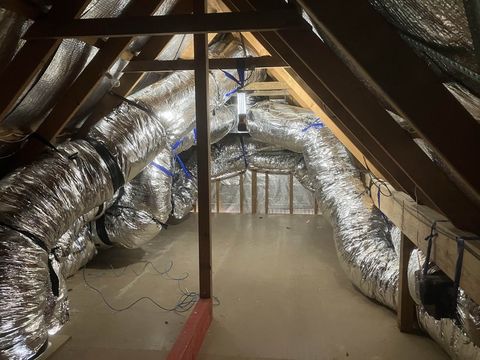
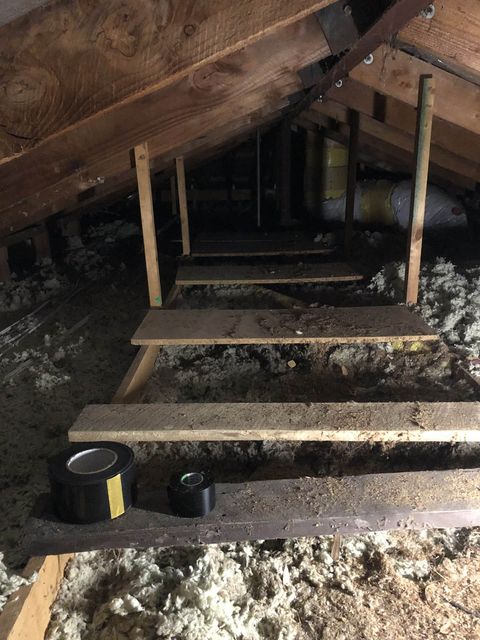
A ducting specialist works through the roof space run by run: checking each connection to the heater and the outlets, looking for kinks, tears and sagging, and measuring airflow at the vents. WorkSafe Victoria reports workers falling through plaster ceilings and tells them to lay crawl boards across the joists, which is one reason this is their job and not yours.
What you can safely check
You can
- Clean or replace the return air filter as your manual says, with the system off.
- Keep outlets open and clear of rugs, beds and furniture.
- List the rooms that are weak, and when.
- In Canberra, look at the meter box for a Mr Fluffy safety tag before you touch any vent or filter.
Leave to a licensed installer
- Anything in the roof space or under the floor.
- Repairing, re-joining or replacing duct runs.
- Insulating ducts and making good the ceiling insulation.
- Rebalancing airflow between rooms.
What we'd do
If it were our home
We'd clean the return air filter and open every outlet first, because it's quick, safe and sometimes fixes it. If a room is still weak, we'd have a ducting specialist inspect the runs before anyone quotes a new heater. And if the ducts are past it, we'd replace them with R1.5 or better rather than patching, so a new heater isn't held back by old ducts.