
Perth, Western Australia
Heating and cooling in PerthDry summer heat, and winter nights that still need a heater.
Perth is a cooling city first, with hot, dry summers that suit both evaporative coolers and reverse cycle systems. Which one fits your home depends a lot on how far you are from the ocean and how you heat in winter. July nights are cool enough that heating still matters, and gas has long been the main heater in many WA homes.
What's different about heating and cooling in Perth?
Perth's summer heat is dry heat. Bureau of Meteorology averages at Perth Metro give a mean maximum of 31.4 degrees in January and 31.7 in February, with average afternoon humidity of 39% and 38%. Dry air is exactly what an evaporative cooler needs, and CHOICE rates evaporative as most effective in hot climates with low humidity.
Your suburb changes the picture. January averages 33.6 degrees at RAAF Base Pearce and 33.0 at Gosnells, but 29.8 at Swanbourne on the coast. On most summer afternoons the south-westerly sea breeze locals call the Fremantle Doctor arrives, and temperatures often drop under 30 a few hours later.
Winter is the quiet season, not an absent one. Perth Metro's July mean minimum is 8.1 degrees, and the city drops below 2 degrees about four times in an average year. A system that only cools leaves you needing something else for those months.
Perth at a glance
Climate zone
NCC 2016 puts Perth in climate zone 5, warm temperate. On the energy label map in the ACT Government's buyer's guide, Perth sits in the average zone, so those are the stars to compare.
Hot days
Perth averages 26 days a year above 35 degrees and five above 40. The WA Department of Health calls it a heatwave when three or more days in a row have forecast minimums and maximums averaging 36 degrees or more.
The coast
The metro area runs about 125 km along the Indian Ocean, from Two Rocks to Singleton, mostly on the flat, sandy Swan Coastal Plain below the Darling Scarp. Within 200 m of a surf beach, the Galvanizers Association of Australia's corrosion guide gives its C5 rating.
Housing
At the 2021 Census, 77.8% of Greater Perth's occupied dwellings were separate houses, 14.2% were townhouses, terraces or semis, and 7.6% were flats or apartments. Just over a quarter (26.6%) were rented.
Power and gas
Western Power runs the South West Interconnected System (SWIS), Synergy is the only electricity retailer for households on it, and about 36% of SWIS customers have rooftop solar. ATCO's gas network covers the metro area, Mandurah included.
The heating and cooling jobs that come up most in Perth
Evaporative cooling and its servicing. In October 2006 the ABS found 71% of WA households used an air conditioner or evaporative cooler, and ducted evaporative (32%) was the most common type, ahead of reverse cycle splits (25%). Roof-mounted coolers need their pads, pump and water system looked after, ideally before summer. See evaporative cooling in Perth.
Reverse cycle, for both seasons. Splits and ducted reverse cycle cool with the windows shut and heat in winter. Seeley, which makes both kinds, says reverse cycle is the more flexible option for humid, coastal and mixed weather.
Gas heater servicing. The same survey found 46% of WA households with heating mainly used gas, against 21% using reverse cycle. Those heaters need a licensed gasfitter's check before the cold weeks.
Coastal outdoor units. Close to the surf, placement and corrosion protection belong on the quote and in every service.
Who's allowed to do the work in WA?
Two sets of rules apply. Anyone handling refrigerant needs an Australian Refrigeration Council licence, and in WA the new switchboard protective device and fixed wiring for an air conditioner count as electrical installing work. That needs a licensed electrician employed by a licensed electrical contractor.
WA electrical contractors must show their licence number, which starts with EC, on their ads, vehicles and business cards, and Building and Energy has an online search to check it. Gasfitting for heaters falls under a Class G permit. The WA licence page and our licence guide go further.
When you're ready, tell us the job and your postcode. Licence-checked Perth installers who specialise in that kind of work will see it, and only the one who takes it gets your contact details. If no Perth installer has taken it within 48 hours, installers elsewhere in Western Australia may see it too.
What we'd do
What we'd do in Perth
We'd settle the winter question first. If you want one system for both seasons, or you live near the beach where the sea breeze takes the edge off most afternoons, reverse cycle is where we'd start, with corrosion protection on the outdoor unit. Further inland, where January runs about four degrees hotter than Swanbourne, evaporative deserves a serious look, with heating sorted separately. Whichever way you go, we'd want a specialist in that system and an EC number on the quote.
What this work looks like
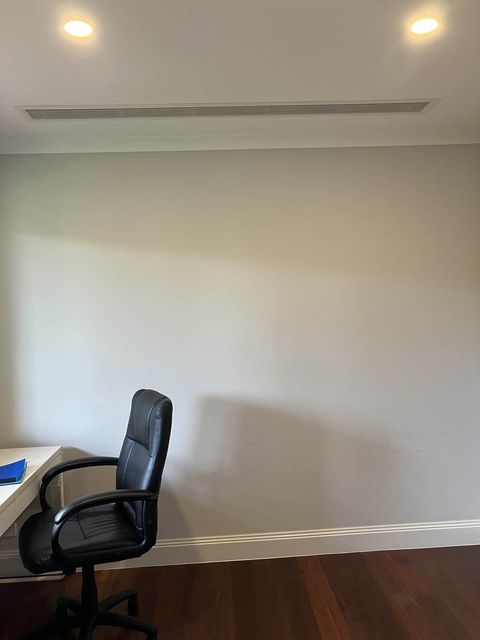
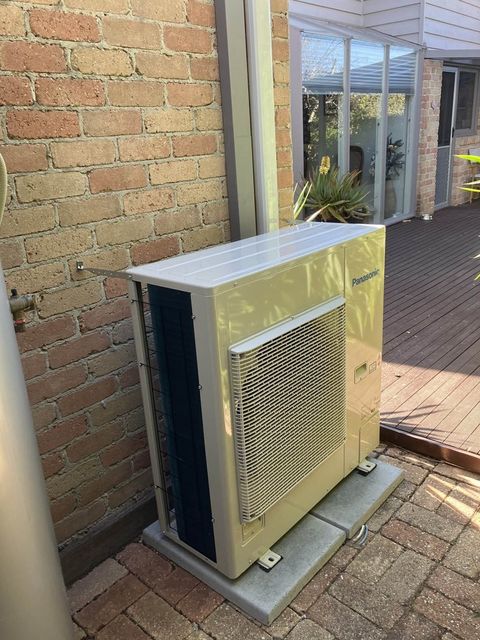
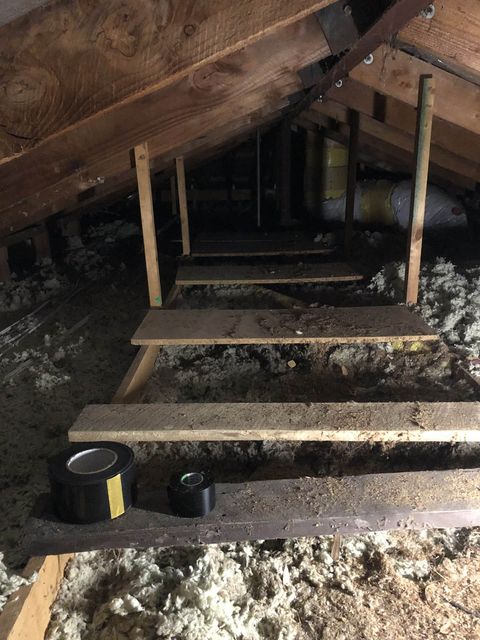
Photos from real jobs in Melbourne, to show what the work looks like. They aren't from an installer near you.
Heating and cooling jobs in Perth
- Air conditioning installation in PerthEvaporative or reverse cycle for a Perth home, how the install runs, and WA's licence rules.
- Split system installation in PerthWhich room, what size, strata and renting, coastal outdoor units, and who can fit a split in WA.
- Ducted air conditioning in PerthDucted reverse cycle in a Perth house: sizing for the heat, roof checks, zones and switching from evaporative.
- Reverse cycle air conditioning in PerthOne system for Perth's summers and winters: what reverse cycle replaces, label stars and sizing.
- Gas heater service and safety checks in PerthHow often to service a Perth gas heater, carbon monoxide warning signs and WA gasfitting permits.
- Evaporative cooling in PerthWhy Perth's dry summers suit evaporative, the windows it needs, and what to ask a Perth installer.
- Evaporative cooler service in PerthWhen to book a Perth cooler service, what it should cover, and the checks you can do from inside.
- Air conditioning service in PerthWhen to book, what a Perth service covers, and why coastal outdoor units need a closer look.
- Air conditioning repairs in PerthHeatwave breakdowns, salt-damaged outdoor units, storm checks and who can repair aircon in WA.
- Commercial air conditioning in PerthSmall Perth shops and offices: sizing for hot trading days, WA licences and commercial warranties.
Questions people ask
Is evaporative or reverse cycle better for a Perth home?
Do I really need heating in Perth?
How do I check a WA installer's licence?
Is there a rebate for air conditioning in WA?
Ready for the right installer to take a look in Perth?
Your postcode and three quick questions. Licence-checked local installers who specialise in your kind of job see it, and the one who takes it gets in touch to quote.
Read next
- 01Evaporative coolingHow evaporative cooling works, where it suits, and what a good install involves.
- 02Reverse cycle air conditioningHow reverse cycle heats and cools, which type suits your home, and what to check for winter.
- 03Evaporative or refrigerated cooling?How each kind of cooling works, why humidity matters, and what each one needs from your home.
- 04Air conditioning near the coastSalt, coil coatings, warranty fine print and where the outdoor unit should go near the sea.
- 05How to check an installer's licenceRun the ARCtick check, read RAC01 and RSS03, and check the state licence too.
- 06Heating and cooling in Western AustraliaWA's electrical contractor rules for new air conditioners, the EC number, gas permits and cooling-off.
Where this information comes from
- Wikipedia (climate tables cite Bureau of Meteorology) Climate of Perth, 28 October 2026
- CHOICE Evaporative cooler vs air conditioner, 27 January 2022
- Australian Building Codes Board NCC 2016 Volume One, Part A1 Interpretation: Table A1.1 Climate zones for thermal design, various locations, 28 October 2026
- Australian Bureau of Statistics 4652.5 Domestic Use of Water and Energy, WA, Oct 2006, 19 April 2007
- Wikipedia Perth, 28 October 2026
- Galvanizers Association of Australia Corrosivity of the Environment: A Quick Guide (categories as defined in AS/NZS 2312.2 and described in AS 4312), 28 October 2026
- Australian Bureau of Statistics 2021 Census All persons QuickStats: Greater Perth (GCCSA 5GPER), 28 October 2026
- Wikipedia South West Interconnected System, 28 October 2026
- Economic Regulation Authority of Western Australia Mid-West and South-West Gas Distribution Systems, 28 October 2026
- ACT Government, Sustainable Household Scheme Heating and cooling your home: a guide to reverse cycle systems (PDF), 27 March 2023
- Seeley International Reverse cycle vs evaporative cooling: what works best in Australian homes?, 28 October 2026
- Government of Western Australia (Building and Energy) Cold comfort in court after unlicensed air-con work, 22 May 2025
- Government of Western Australia Electrical licensing, 22 October 2026
- Government of Western Australia (Department of Local Government, Industry Regulation and Safety) Find a licensed electrician, gas fitter or plumber, 30 November 2024
- Government of Western Australia (Building and Energy) Gasfitters: Scope of work, 23 December 2025
- Australian Refrigeration Council Fact Sheet 13: Who can do what, with Split System Air Conditioners (ARC5919/JVD/0726), 28 October 2026
- Seeley International Pty Ltd Braemar brand page (braemar.com.au redirects here), 28 October 2026
- Blufire Pty Ltd Blufire's lead engine rules (supplied 29 October 2026) and Privacy Policy, 29 October 2026
We don't publish prices. Every home is different, so an installer's written quote is the only real number. How we write and check these pages.