What makes Perth good evaporative country
Low humidity
Perth Metro's average afternoon humidity is 39% in January and 38% in February, and February's average 3 pm dew point is 12.9 degrees. CHOICE says evaporative coolers are most effective in hot, dry climates with low humidity.
Hotter inland
The further from the ocean, the hotter January gets: 33.6 degrees on average at RAAF Base Pearce and 33.0 at Gosnells, against 29.8 at Swanbourne. Inland homes ask the most of a cooler.
The Fremantle Doctor
Near the coast, the south-westerly sea breeze often brings temperatures under 30 a few hours after it arrives, so a coastal cooler may do most of its work earlier in the afternoon.
Already common
In October 2006, 32% of WA households had ducted evaporative coolers, the most common type, so plenty of Perth homes already have the ducts and a roof opening when it's time to replace.
Why the windows matter in a Perth house
Evaporative doesn't recirculate the air inside. Seeley says a door or window must stay open for the cooled air to leave, with the open area at least twice the size of the vent, on the side of the house furthest from it. Security vents can stand in for an open window.
That can feel backwards on a hot afternoon, but a closed-up house gives the cooled air nowhere to go. Seeley's tissue test is a quick check: a tissue held to the fly screen shouldn't stick while the cooler runs.
On the odd humid day
Perth's summer afternoons are usually dry, but not every day. Seeley says that when it's humid the air already holds too much moisture for evaporation to work, and suggests fan-only ventilation mode or running the cooler early or late in the day. The Queensland Government's advice is to turn the water pump off once regional humidity is above 65%.
The roof unit, the water and the wind
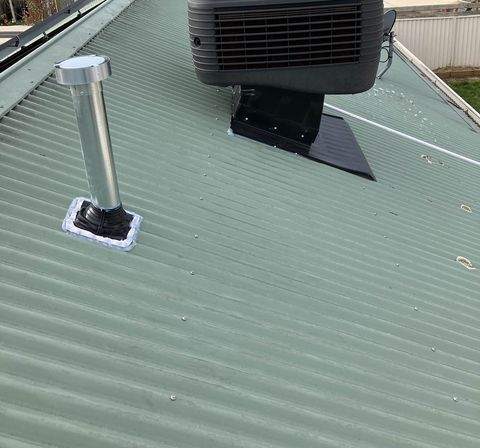
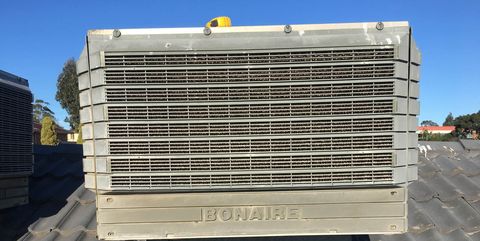
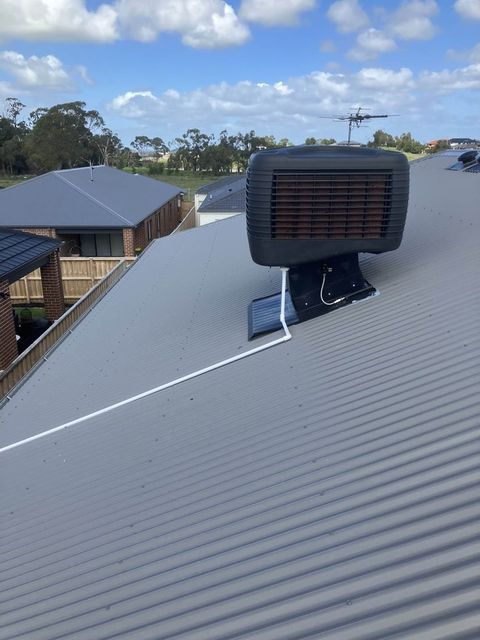
The cooler sits on your roof over a duct opening, with water, power and a drain connected. Seeley says the drain water is high in mineral salts and that the installer sets the bleed rate, the steady trickle that carries those salts away.
Perth isn't a cyclone region, and Lysaght's guide rates a hilltop house in its suburbs as wind region A, class N3. Ex-tropical cyclone Alby still gusted to 130 km/h here in 1978, so ask how the roof unit will be fixed down for your house. The general job is on our evaporative cooling page.
Questions for a Perth evaporative installer
- How many outlets, and where, so every room we use gets air?
- Which windows should we open while it runs, and will that let enough air out?
- How is the roof unit fixed, and does that suit our house's wind classification?
- Who connects the water and power, and where does the drain water go?
- What heating would you pair it with for winter?
- Does buying through you get the brand's full warranty?
Yours to do, and the installer's
You can
- Open windows or doors on the far side of the house from the vents.
- Do the tissue test at the fly screen.
- On humid days, run the fan only, or cool early and late.
- Sort winter heating as a separate decision.
Leave to a licensed installer
- Anything on the roof.
- Cutting the roof opening and running the ducts.
- The water connection, drain and bleed setting.
- Power and the wall control wiring.
What we'd do
If it were our home
Inland, with dry afternoons and heating already sorted, we'd give evaporative a serious look for the fresh air through the house. Close to the beach, or if one system for both seasons mattered more, we'd lean to reverse cycle. Either way, we'd want an evaporative specialist who plans the exhaust windows as carefully as the roof unit.