How each one cools
An evaporative cooler sits on the roof. Seeley says hot outside air enters the unit, is filtered and passes through moistened pads, and the water evaporating takes heat out of the air. A fan pushes that cooler air through the house and out through open windows and doors. Seeley says the air isn't recirculated, so something has to be open for it to escape.
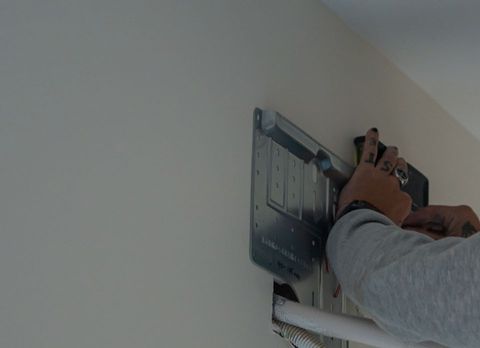
A refrigerated system moves heat out of the room, through refrigerant pipes, to an outdoor unit, and keeps cooling the same air inside. Seeley says reverse cycle is made for closed rooms, with windows and doors shut, and that it covers winter heating as well.
Why humidity decides it
Evaporation needs dry air. Seeley says that on humid days the air already holds too much moisture for evaporation to happen, and states plainly that it doesn't recommend evaporative cooling in humid climates. The Queensland Government advises turning an evaporative cooler's water pump off once regional humidity is above 65%.
Bureau of Meteorology averages show how wide the gap is around the country. In January, average afternoon relative humidity is 25% at Mildura Airport, 36% at Adelaide's Kent Town station, 39% at Perth Metro and 44% at Melbourne Airport. Brisbane City Centre peaks at 59% in February, and Darwin Airport averages 71% in January.
Those are averages. A muggy day still turns up now and then in a dry city, and that's the day an evaporative cooler struggles.
Evaporative and refrigerated, side by side
| Evaporative | Refrigerated (reverse cycle) | |
|---|---|---|
| How it cools | Outside air through wet pads | Moves heat outdoors through refrigerant pipes |
| Windows and doors | Some must be open, or security vents fitted | Kept shut |
| Humid days | Struggles; Seeley doesn't recommend it in humid climates | Copes, Seeley says, across humid, coastal and mixed-weather regions |
| Heating | None: it's cooling only | Heats in winter from the same system |
| Water | Needs a water supply connection | No water supply needed |
| Servicing | Seeley says after the first year, then every two years | Mitsubishi Electric recommends once a year |
| VEU discount in Victoria | Not eligible | Some heat-and-cool jobs can qualify through an accredited provider |
| Victorian rentals | A failed ducted evaporative cooler can be replaced with another | Meets both the rental heating and cooling requirements, the Victorian Government says |
Where evaporative makes sense
Hot, dry summers, a house that's easy to open up, and a household that likes outside air moving through. The ACT Government says evaporative coolers are reasonably effective in the ACT's hot, dry climate, but less effective when it's humid.
It's common where those conditions line up. In a 2021 survey of Victorian home owners in mains gas areas, 23% had ducted evaporative cooling. An ABS survey in October 2006 found ducted evaporative coolers were the most common cooling in Western Australian homes, at 32%.
Because it doesn't heat, an evaporative cooler needs a separate heater beside it, such as gas ducted heating.
Where refrigerated makes sense
Anywhere summers are humid, and for anyone who wants heating from the same system. It's also the one to choose if you'd rather keep the house locked up on hot afternoons, because it works with everything closed.
In Victorian rentals it carries extra weight: the Victorian Government says a reverse cycle air conditioner meets both the heating and cooling requirements in the new rental standards. Our guide to the Victorian rental rules explains the dates.
Leave the roof to the installer
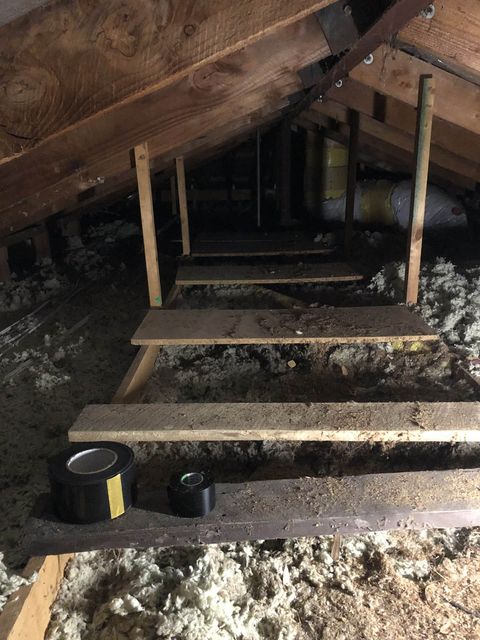
An evaporative cooler lives on the roof, so don't climb up to look at it, change pads or check the water. Even inside the roof space there's a risk: WorkSafe Victoria reports workers falling through plaster ceilings and says never to step on ceiling materials. Anything up there is a job for an installer with the right safety gear.
What you can check, and what to leave
You can
- Look up the humidity where you live before choosing.
- With the cooler running, hold a tissue near the fly screen of an open window. Seeley says it shouldn't stick; if it does, open more windows.
- Open the windows furthest from the vents, so the cool air travels right through the house.
- On a muggy day, switch to fan only and run it on high, as Seeley suggests.
Leave to a licensed installer
- Anything on the roof: the cooler, its pads and the water connection.
- Setting the bleed rate (the steady flow of water drained from the cooler).
- Refrigerant and electrical work on a reverse cycle system.
- Sizing either system for your home.
What we'd do
If it were our home
If we lived somewhere with dry summers, already heated with gas and liked the house open, we'd happily choose evaporative. Anywhere humid, or if we wanted one system for winter and summer, we'd go reverse cycle. Whichever way you lean, ask for someone who works on that kind of system all the time: an evaporative specialist will check how your house can let the air out, and a reverse cycle specialist will size for both seasons.