
Sunshine Coast, Queensland
Heating and cooling on the Sunshine CoastBuilt for sticky summers and salty air.
On the Sunshine Coast, most homes need cooling first and a bit of warmth on winter nights, so a reverse cycle air conditioner usually does both jobs. The local twists are humidity, salt air near the beaches and a storm season that runs through summer. Those three decide how big the system should be, where the outdoor unit goes and how often it needs a service.
What's different about the Sunshine Coast?
Warm, humid summers
Bureau of Meteorology averages at Sunshine Coast Airport put January's mean daily maximum at 29.1 degrees. Afternoon humidity averages 70% in January and 71% in February, so much of what you want from an air conditioner here is drier air, not just cooler air.
Cool nights in winter
July is the coldest month at the same station, with a mean daily minimum of 9.7 degrees. The Sunshine Coast sits in climate zone 2 of the National Construction Code, where the Queensland Government's design aim is cooling for summer and some warmth for winter.
Salt along the beaches
Sunshine Coast Council has put Golden Beach, Bulcock Beach at Caloundra, Maroochydore and Mooloolaba first in line for coastal hazard investigations, because those areas already feel the effects. If your outdoor unit faces the sea, plan for salt.
Storms, lows and the odd cyclone
The council says storms usually come between November and March, east coast lows between January and June, and cyclones between December and April. It rates the risk of a category 4 or 5 cyclone here as very low, unlike North Queensland.
Mostly houses, plenty of apartments
At the 2021 Census, 73.1% of occupied homes in the Sunshine Coast council area were separate houses, 13.0% were townhouses or similar and 12.8% were flats or apartments. Noosa Shire is counted separately, and it has no high-rise buildings.
Electric heating, on the Energex network
The Queensland Government's list of natural gas distribution areas doesn't include the Sunshine Coast. Power comes through Energex, so if you're planning winter warmth, plan on electric, and reverse cycle is the obvious place to start.
Which jobs come up most here, and why?
Cooling bedrooms and living areas. With afternoon humidity around 70% at the peak of summer, those rooms are usually first on the list. One room is a split system job.
Whole-house systems. Separate houses make up most of the housing, and many have the roof space for ducted air conditioning with bedrooms and living areas zoned apart.
Servicing for mould and salt. Mitsubishi Electric says dirty filters cause condensation inside the unit, which feeds mould, while sea air works on the outdoor unit from the other side.
Storm-season faults. Power cuts and tripped breakers come with summer storms, and Samsung lists rain getting in through the wall hole as one reason an indoor unit drips.
Is an evaporative cooler worth it on the coast?
Usually not. The Queensland Government says evaporative coolers become less effective as humidity rises, and advises turning the water pump off once the region's humidity passes 65%. Afternoon averages at Sunshine Coast Airport are above that in January and February, the very months you'd want one.
Seeley, which makes evaporative coolers, says reverse cycle gives more flexibility in humid and coastal regions. Our evaporative or refrigerated guide goes through it.
Concessions and licences
If someone at home has a chronic medical condition that needs cooling or heating, look at Queensland's Medical Cooling and Heating Electricity Concession Scheme. It needs a Pensioner Concession Card or Health Care Card, and you re-apply every two years.
Queensland treats air conditioning as mechanical services work, which the QBCC says needs a licence whatever the job's value. Refrigerant handling needs an ARC licence too. Our licence guide shows where to check both.
What we'd do
If it were our place on the Coast
We'd go reverse cycle, sized from a proper heat load rather than a rule of thumb, because Rinnai says an oversized unit dehumidifies less effectively and that's the last thing you want in a Coast summer. Near the beach we'd put the outdoor unit on the most sheltered wall that still gets fresh air, and book the yearly service before the November storms. Tell us the job and your postcode. Licence-checked Coast installers who specialise in that work see it, and the one who takes it is the only one to get your contact details. If none of the Coast's installers takes it within 48 hours, installers elsewhere in Queensland may see it as well.
What this work looks like
Photos from real jobs in Melbourne, to show what the work looks like. They aren't from an installer near you.
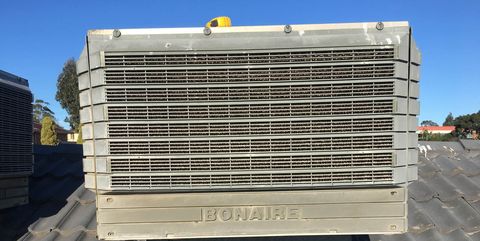
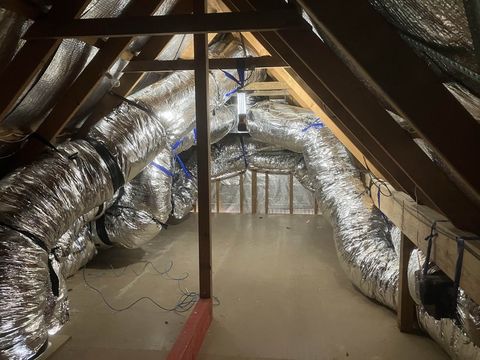
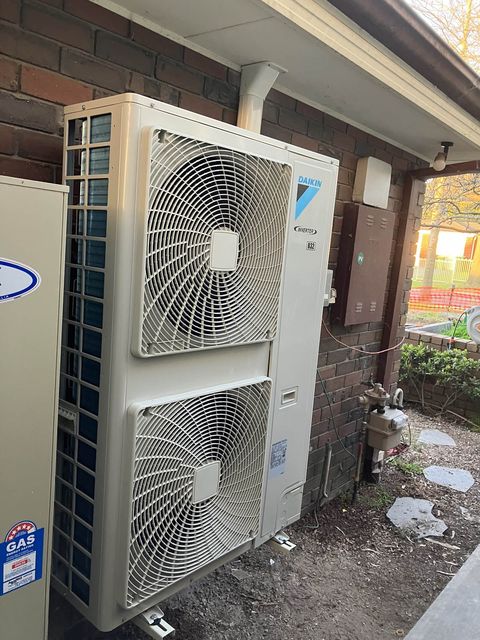
Heating and cooling jobs in Sunshine Coast
- Air conditioning installation on the Sunshine CoastSizing for humidity, outdoor units near the beach, strata approval and Queensland licences.
- Split system installation on the Sunshine CoastSizing a split for a humid room, outdoor unit spots, noise rules and the licence it needs.
- Ducted air conditioning on the Sunshine CoastRoof space, zoning, humidity and duct insulation for ducted systems in Coast houses.
- Air conditioning service on the Sunshine CoastWhy mould and salt make servicing matter on the Coast, and what a proper service covers.
- Air conditioning repairs on the Sunshine CoastStorm-season faults, drips and salt corrosion: what to check before booking a Coast repair.
- Commercial air conditioning on the Sunshine CoastSmall shops and offices on the Coast: sea air, long hours, business-use warranties and licences.
Suburbs and areas around Sunshine Coast
Questions people ask
Do I need heating on the Sunshine Coast?
Does salt air affect an air conditioner warranty?
Can I still join PeakSmart with a new air conditioner?
How do you find someone for my job?
Ready for the right installer to take a look in Sunshine Coast?
Your postcode and three quick questions. Licence-checked local installers who specialise in your kind of job see it, and the one who takes it gets in touch to quote.
Read next
- 01Air conditioning near the coastSalt, coil coatings, warranty fine print and where the outdoor unit should go near the sea.
- 02Reverse cycle air conditioningHow reverse cycle heats and cools, which type suits your home, and what to check for winter.
- 03Evaporative or refrigerated cooling?How each kind of cooling works, why humidity matters, and what each one needs from your home.
- 04What size air conditioner do I need?Rough kW sizes by room, what changes them, and how an installer should check the number.
- 05How to check an installer's licenceRun the ARCtick check, read RAC01 and RSS03, and check the state licence too.
- 06Heating and cooling in QueenslandQueensland's QBCC licence at any value, who does the wiring and gas, and how to read an installer's ad.
Where this information comes from
- Wikipedia (Bureau of Meteorology data) Sunshine Coast, Queensland, 28 October 2026
- Australian Building Codes Board Queensland Climate zone map (National Construction Code, release date Nov 2019, version VC00031.3), 28 October 2026
- Business Queensland (Queensland Government) Building in Queensland's climate zones, 24 July 2025
- Queensland Government Evaporative air coolers, 23 January 2026
- Sunshine Coast Council Coastal Hazard Adaptation Precinct Planning (CHAPP), 28 October 2026
- Sunshine Coast Council Storms and cyclones, 28 October 2026
- Australian Bureau of Statistics 2021 Census QuickStats: Sunshine Coast (LGA36720), 28 October 2026
- Wikipedia Shire of Noosa, 28 October 2026
- Business Queensland (Queensland Government) Your gas supply, 3 June 2025
- Wikipedia Energex, 28 October 2026
- Energex PeakSmart air conditioning, 28 October 2026
- Queensland Government Medical Cooling and Heating Electricity Concession Scheme, 24 June 2025
- Seeley International Reverse cycle vs evaporative cooling: what works best in Australian homes?, 28 October 2026
- Mitsubishi Electric Australia Split-type air conditioners, indoor unit MSZ-AS90VGD, operating instructions (PDF), 26 October 2020
- Samsung Australia What should I do when water drops fall from my air conditioner?, 28 August 2026
- Rinnai Australia Ultimate split system air conditioner size guide, 28 October 2026
- Daikin Australia Pty Ltd Manufacturer's Warranty card (Split, Multi, SKY, VRV and other products), linked from the Daikin warranty page, 28 October 2026
- Mitsubishi Electric Australia Pty. Ltd. Air Conditioning System Warranty card (2025 web version, linked from the warranty page), 28 October 2026
- Queensland Building and Construction Commission Advertising, 30 June 2025
- Queensland Building and Construction Commission Find a licensed contractor, 12 December 2025
- Australian Refrigeration Council Fact Sheet 13: Who can do what, with Split System Air Conditioners (ARC5919/JVD/0726), 28 October 2026
- Blufire Pty Ltd Blufire's lead engine rules (supplied 29 October 2026) and Privacy Policy, 29 October 2026
We don't publish prices. Every home is different, so an installer's written quote is the only real number. How we write and check these pages.