
Geelong, Victoria
Heating and cooling in GeelongTwo seasons, one system, and salt air near the bay.
Geelong homes need real heating in winter and real cooling in summer, so a reverse cycle system that does both is usually the first thing to look at. Bureau of Meteorology figures for Geelong Racecourse at Breakwater average 26.0 degrees on January afternoons and 6.4 degrees on July nights. Near Corio Bay, plan for salt air on the outdoor unit as well.
What makes Geelong different for heating and cooling?
Geelong sits in climate zone 6 under the National Construction Code, the mild temperate zone it shares with Melbourne and Bendigo. That's a proper winter and a proper summer, so a system that only heats, or only cools, leaves part of the year uncovered.
It's dry, too. Around 525.2 mm of rain a year makes Geelong one of the driest cities in Australia, and westerly winds dominate.
Averages don't size a system on their own. Geelong's record high is 47.4 degrees, from 7 February 2009, and its record low is -4.3, from 24 July 1997. ActronAir says an air conditioner loses cooling capacity above 35 degrees, so a good installer allows for the hot days as well as the typical ones.
Geelong at a glance
Temperatures
At Geelong Racecourse (Breakwater), the Bureau-sourced averages for 2011 to 2026 are 26.0 degrees in January, 25.6 in February and a July low of 6.4. The older Geelong Airport table puts afternoon humidity at 55% in January and 68% in July.
Climate zone
Zone 6, mild temperate, the same as Melbourne. Ballarat is zone 7, the colder cool temperate zone.
The bay
Greater Geelong wraps around Corio Bay, the small western arm of Port Phillip. The Galvanizers Association of Australia rates calm harbour foreshores C4 for corrosion and land 50 m to 1 km back from a sheltered bay C3. Within 200 m of rough seas and surf beaches it's C5.
Homes
At the 2021 Census, 86.4% of occupied homes in the City of Greater Geelong were separate houses, 10.5% semis, terraces or townhouses and 2.5% flats or apartments. 28.0% were rented.
Gas
AusNet's gas distribution network serves Geelong. Across Victoria, Environment Victoria and Renew report that 83% of households are connected to mains gas.
The jobs that come up most in Geelong, and why
Moving from gas and evaporative to reverse cycle. Renew's 2021 modelling for Environment Victoria took a 200m2 detached Geelong home with gas heating and evaporative cooling as its basic dual-fuel case. The all-electric versions, heated and cooled by a reverse cycle heat pump, came out significantly cheaper to run. If that's your setup, a whole-home reverse cycle install is worth getting quoted before the old gear fails.
One split for the room you live in. A split system is the smallest step to heating and cooling with one unit. In a 2021 Victorian Government survey, 53% of regional home owners in gas areas used single-unit reverse cycle air conditioners for cooling.
Servicing for both seasons. A unit that runs in February and July earns its yearly service, and near the bay that's the visit where corrosion gets spotted.
Gas heaters and hydronic. Energy Safe Victoria says gas heaters need servicing at least every two years: see gas heater servicing in Geelong. For warmth without blown air, there's hydronic heating.
Renting or letting in Geelong?
More than a quarter of Greater Geelong homes are rented. A working gas heater can stay, but from 1 March 2027, when the main living area heater permanently fails, its replacement must be energy efficient and electric. New and month-to-month agreements need fixed cooling in the main living area from the same date, and every rental from 1 July 2030. Our rental heating guide covers the detail.
Who can do the work, and where VEU fits
Installing a split in Victoria is plumbing work, so the installer needs registration with the Building and Plumbing Commission (BPC) plus an ARC refrigerant licence, and new wiring is for a licensed electrician. See our Victorian licence page.
Some systems that both heat and cool can get a Victorian Energy Upgrades (VEU) discount through an accredited provider. The program is voluntary, there's always a co-payment, and gas heaters and evaporative coolers aren't covered. Our VEU guide explains it.
Tell us the job and your postcode. Licence-checked installers near Geelong who specialise in that work see it, where we have them, and your contact details go only to the one who takes it. If nobody around Geelong takes it within 48 hours, installers elsewhere in Victoria may see it too.
What we'd do
What we'd do in Geelong
If you've got old gas heating and an evaporative cooler, we'd get a reverse cycle option quoted alongside a like-for-like replacement now, while both still work, so the decision isn't made on the coldest night of the year. Within a kilometre or so of the bay, we'd ask every installer what corrosion protection the outdoor unit has and where they'd put it. And we'd book the service each year before whichever season the system works hardest in.
What this work looks like
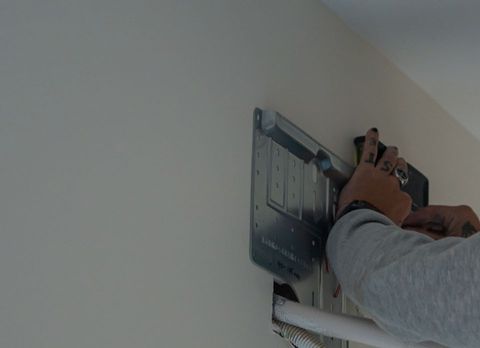
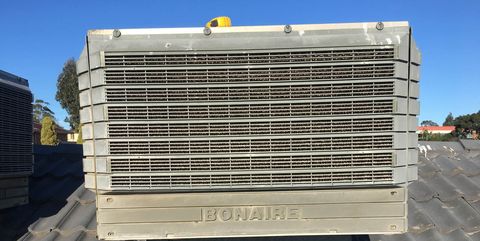
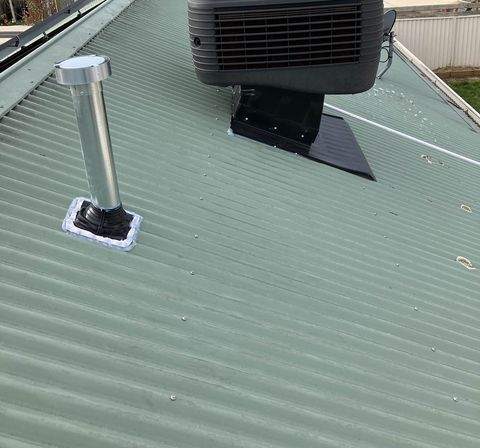
Photos from real jobs in Melbourne, to show what the work looks like. They aren't from an installer near you.
Heating and cooling jobs in Geelong
- Air conditioning installation in GeelongWhole-home or one room: choosing and installing air conditioning in Geelong, including replacing gas and evaporative.
- Split system installation in GeelongSplits in Geelong: heating capacity for July, outdoor units near the bay, and what landlords should check.
- Gas heater servicing in GeelongGas heater servicing in Geelong: how often, what's checked, rental safety checks and the warning signs.
- Hydronic heating in GeelongHydronic heating in Geelong: gas or heat pump, new builds after 2027, rentals and questions for the installer.
- Air conditioning service in GeelongWhen to service air conditioning in Geelong, what the visit covers, and why salt air near the bay matters.
Questions people ask
Do Geelong homes need heating or cooling more?
Does living near Corio Bay affect an air conditioner?
Do I have to get rid of my gas heating?
Is an evaporative cooler still worth having in Geelong?
Ready for the right installer to take a look in Geelong?
Your postcode and three quick questions. Licence-checked local installers who specialise in your kind of job see it, and the one who takes it gets in touch to quote.
Read next
- 01Air conditioning installation in GeelongWhole-home or one room: choosing and installing air conditioning in Geelong, including replacing gas and evaporative.
- 02Reverse cycle air conditioningHow reverse cycle heats and cools, which type suits your home, and what to check for winter.
- 03Air conditioning near the coastSalt, coil coatings, warranty fine print and where the outdoor unit should go near the sea.
- 04Victorian rental heating and cooling rulesWhat a rental's heater and cooler must be now and from 1 March 2027, and what can stay.
- 05Victorian Energy Upgrades (VEU)How VEU discounts work, what qualifies, the 2026 co-payments and the offers to walk away from.
- 06Heating and cooling in VictoriaVictoria's BPC and electrical rules, the two install certificates, and what 2027 changes for gas and rentals.
Where this information comes from
- Wikipedia (climate tables cite Bureau of Meteorology) Geelong, 28 October 2026
- Australian Building Codes Board NCC 2016 Volume One, Part A1 Interpretation: Table A1.1 Climate zones for thermal design, various locations, 28 October 2026
- Wikipedia Port Phillip, 28 October 2026
- Galvanizers Association of Australia Corrosivity of the Environment: A Quick Guide (categories as defined in AS/NZS 2312.2 and described in AS 4312), 28 October 2026
- Australian Bureau of Statistics 2021 Census All persons QuickStats: Greater Geelong (LGA22750), 28 October 2026
- AusNet About our networks, 28 October 2026
- Environment Victoria and Renew Gas-free suburbs for Geelong (briefing paper, November 2021), 28 October 2026
- JWS Research for the Victorian Department of Environment, Land, Water and Planning (tabled in the Parliament of Victoria) Household energy preferences: Research report (August 2021), 28 October 2026
- ActronAir What size air conditioner do I need?, 28 October 2026
- Energy Safe Victoria Heating your home with gas, 10 July 2026
- Seeley International Reverse cycle vs evaporative cooling: what works best in Australian homes?, 28 October 2026
- Daikin Australia Warranty card (linked from daikin.com.au/support/warranty), 5 March 2026
- Victorian Legislation (Chief Parliamentary Counsel) Residential Tenancies Amendment (Minimum Energy Efficiency Standards) Regulations 2025 (S.R. No. 63/2025), 28 October 2026
- Consumer Affairs Victoria Minimum energy efficiency standards: Heating standard, 5 June 2026
- Consumer Affairs Victoria Minimum energy efficiency standards: Cooling standard, 5 June 2026
- Energy Safe Victoria and Victorian Building Authority Air-conditioning systems: Installation and replacements (fact sheet), 28 October 2026
- Building and Plumbing Commission (Victoria) Plumber classes and categories, 23 September 2026
- Victorian Legislation (Chief Parliamentary Counsel) Victorian Energy Efficiency Target Regulations 2018, Authorised Version No. 020 (incorporating amendments as at 30 June 2026), 30 June 2026
- Department of Energy, Environment and Climate Action (Victoria) Electric and efficiency standards for buildings, 5 August 2026
- Victorian Legislation (Chief Parliamentary Counsel) Building and Plumbing Amendment Regulations 2025 (S.R. No. 140/2025), 28 October 2026
- Blufire Pty Ltd Blufire's lead engine rules (supplied 29 October 2026) and Privacy Policy, 29 October 2026
We don't publish prices. Every home is different, so an installer's written quote is the only real number. How we write and check these pages.