Geelong facts that matter for hydronic
How cold it gets
Breakwater's Bureau-sourced averages give a July low of 6.4 degrees, and Geelong's record low is -4.3. That's a real heating season, though milder than Ballarat's: Geelong is climate zone 6, Ballarat the colder zone 7.
Gas on the network
AusNet's gas distribution network serves Geelong. If your home is already connected, DEECA says there's no requirement to switch gas space heating to electric.
New builds
From 1 January 2027, plumbing work that connects mains gas to a building under construction, or to an existing building without gas, is prohibited, with a penalty of 20 penalty units. A new Geelong home with hydronic will run it on a heat pump or another non-gas source.
Detached homes
86.4% of Greater Geelong homes are separate houses, where pipes can run under floors or through ceilings to each room. In a semi or townhouse, ask early where the pipes and the boiler or heat pump would go.
Gas boiler or heat pump in Geelong?
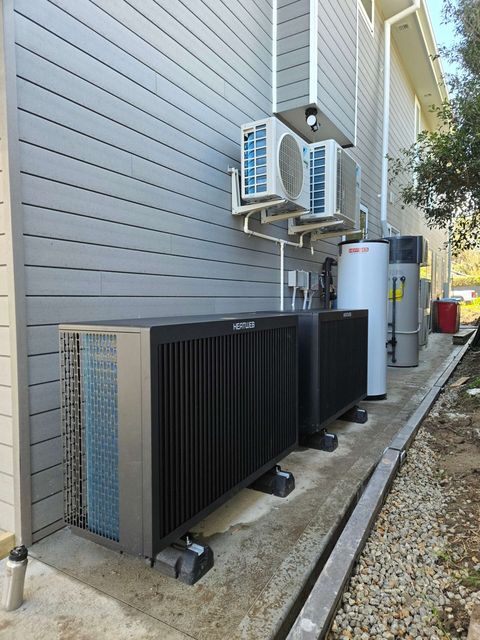
The ACT Government says hydronic systems are usually gas-fired, but can run on a heat pump, a wood heater or solar. Solar Victoria describes a heat pump hydronic system as one that takes heat from the outside air and turns it into hot water for the panels or floor.
The Geelong-specific running cost evidence is Renew's 2021 modelling for Environment Victoria, which found all-electric homes significantly cheaper to run than ones using gas for heating, cooking and hot water. Its electric homes used reverse cycle air conditioning, not hydronic, so treat it as a pointer on gas versus electric rather than a verdict on boilers.
A heat pump puts an outdoor unit on the property, and Victorian noise rules apply: a heat pump used for heating mustn't be heard inside a neighbour's habitable room after 10pm, or before 7am on weekdays.
Why hydronic comes up in Geelong homes
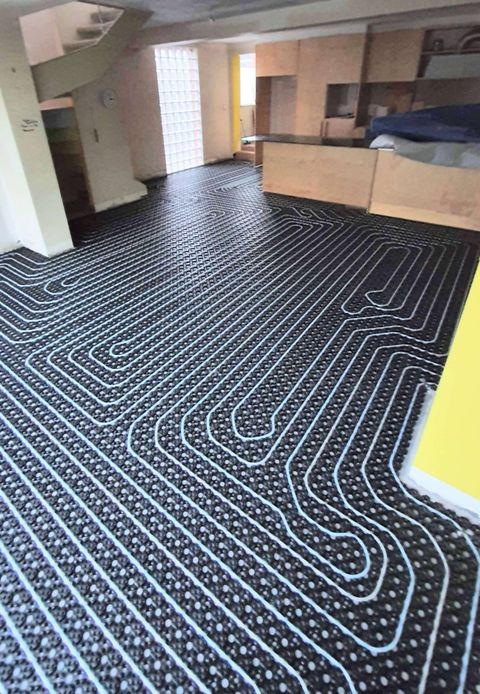
The case for hydronic is the kind of warmth it gives. Panels and heated floors warm a room without blowing air around, Solar Victoria says it can suit people with asthma or respiratory issues, and the ACT Government says you can zone it down to a single room.
It doesn't cool, though. Geelong's February heat still needs an answer, so plan on a split system or two for summer.
What makes a Geelong hydronic job bigger or smaller
Wall panels in an existing single-storey house sit at the simpler end. Heated floors in a finished home mean lifting or building up the floor, which is why they're mostly done in new builds and extensions. Every extra room adds a panel or loop, and a second storey adds pipe runs through walls and ceilings.
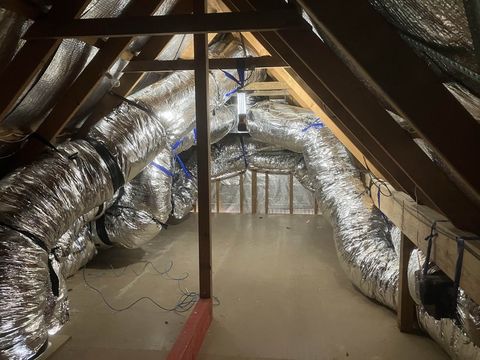
Swapping an old gas boiler for a heat pump adds an outdoor unit, electrical work and, on a two-part unit, refrigerant pipework that needs an ARC licence. Solar Victoria says the pipes need proper insulation to stay efficient, so ask how they'll be lagged where they run under the house or through the roof.
Rentals and servicing
28.0% of Greater Geelong homes are rented. Until 28 February 2027, a hydronic system with an outlet in the main living area counts as an energy efficient fixed heater under Victoria's rental standards, and one in good working order that was in place before 1 March 2027 means a new heater isn't required.
A gas boiler is still a gas appliance. Energy Safe Victoria lists central heating units among the gas heaters that can spill carbon monoxide, and says to have gas heaters serviced at least once every two years by a qualified gasfitter.
Questions to ask a Geelong hydronic installer
- Can I still connect gas at this address, and would you recommend it?
- What heat loss did you calculate for each room?
- If it's a heat pump, where does the outdoor unit go, and how loud is it at night?
- Who does the gasfitting, plumbing, electrical and any refrigerant work?
- How will the pipes be insulated, and what servicing will the system need?
What we'd do
Where we'd start in Geelong
On a new build or an extension, we'd go straight to a heat pump hydronic design, since new gas connections end in 2027. In an existing home with a working gas connection, we'd get a gas boiler and a heat pump quoted on the same room-by-room heat loss, and we'd sort out summer cooling at the same time. We'd give it to a hydronic specialist who designs these systems regularly, because the heat loss work is most of the job.