What a Geelong service needs to look at
Salt near the water
Corio Bay is part of Port Phillip, an enclosed bay with moderate waves, so its shoreline falls in the Galvanizers Association's calm-water bands: C4 at the foreshore and C3 from 50 m to 1 km back. Within 200 m of a surf beach it's C5. Corrosion on fins and fittings is far easier to deal with when it's caught early.
A two-season workload
February is Geelong's hottest month and July its coldest, with Breakwater averaging a July low of 6.4 degrees. A unit doing both clocks up hours all year, which is why the yearly interval matters here.
Humidity and mould
The Geelong Airport table averages 55% afternoon humidity in January and 68% in July. Mitsubishi Electric says dirty filters cause condensation inside the unit, which feeds mould, so filter care counts in both seasons.
Westerly winds
Westerlies dominate in Geelong. Daikin says leaves and debris around the outdoor unit make it run less efficiently, so check it after a windy spell.
Why the service matters for your warranty
Several brands tie cover to regular maintenance. ActronAir's terms ask for maintenance by a suitably licensed or qualified person once every 12 months in a home, and Gree's card is void if maintenance isn't done at intervals of no more than 12 months.
Salt is usually the owner's problem. ActronAir says that in a corrosive environment such as sea air, the purchaser must apply extra corrosion protection, which it describes as regularly washing down the outdoor unit, panels and coils with a mild detergent. Samsung's card excludes corrosion from salt spray, sand and dust. Near the bay, ask for that wash-down at each visit and for it to be noted on the invoice.
What a good Geelong service covers
Filters and indoor coil
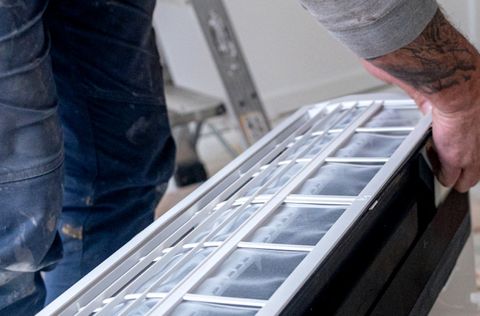
Filters out and cleaned, and the coil and fan behind them checked for dust and mould.
Outdoor coil and casing
Checked for corrosion on the fins, screws and pipe fittings, cleared of leaves, and washed down if you're near the water.
Drain and connections
The condensate drain flushed and the electrical connections tightened, both on Daikin's tune-up list.
Refrigerant check
Done by a technician with a full RAC01 licence. If it's low, there's a leak to find first: the ARC says topping up before leaks are found and fixed is illegal.
Both modes tested
Run in cooling and in heating, so you know it's ready for February and for July.
What makes a service bigger or smaller here
The count of indoor units sets most of it. After that comes access: MHIAA's warranty terms expect a unit to be safely reachable with a 1.7 metre ladder, so a head high on a two-storey wall takes longer. A unit that hasn't been touched in years may need a deeper clean of the coil and fan, and a coastal unit with corrosion may need parts.
Between services
You can
- Clean the filters as your manual says. Daikin, Mitsubishi Electric and Samsung all suggest about every two weeks.
- Switch the unit off at the power first, and dry the filters in the shade.
- Keep the outdoor unit clear of leaves, bins and plants.
- Ask your technician whether you should rinse the outdoor unit between visits, and how, before you do it.
Leave to a licensed installer
- Cleaning the coil, fan and drain tray inside the indoor unit.
- Anything involving the refrigerant.
- Electrical checks and repairs.
- Treating or replacing corroded parts.
What we'd do
If it were our system in Geelong
We'd book the service every year: in autumn if the unit does most of its work heating, in late spring if it's mainly cooling. Close to the bay, we'd want the outdoor coil washed down and checked for corrosion at each visit, and we'd keep every invoice for the warranty. A technician who services reverse cycle systems near the water week in, week out is more likely to spot early corrosion than a generalist.