Why does mould grow inside an air conditioner?
Cooling takes moisture out of the air, so the coil inside the indoor unit is wet whenever the system is cooling. Mitsubishi Electric's operating instructions link dirty filters to condensation inside the unit, which it says contributes to the growth of fungi such as mould.
Dust that slips past the filters makes it worse. Mitsubishi Electric says dirt inside the unit can cause an unpleasant smell, help mould grow or clog the drain, and that's the point where it says to get a professional in for inspection and maintenance.
How a technician deep cleans a split system
Power off and protect the room
The unit is isolated, and the wall and floor below are covered so the dirty rinse water is caught rather than running down the plaster.
Covers off
The front panel, filters and vanes come off so the coil and the fan (the long, barrel-shaped part that pushes air out) can be reached.
Coil, fan and drain tray cleaned
Each one is cleaned and rinsed, and the drain tray is scraped clear of the slime that tends to build up in it.
Drain flushed and the unit tested
The drain line is flushed so condensation runs away freely, then the unit goes back together and is run to make sure it's dry, quiet and draining.
What makes a clean bigger or smaller?
Every indoor unit is a separate job, so a home with a split in three bedrooms and the living room has four to do. A unit that's gone years without its filters being washed, or one near a kitchen where cooking grease drifts in, takes longer. Units mounted high above a stairwell need extra access gear.
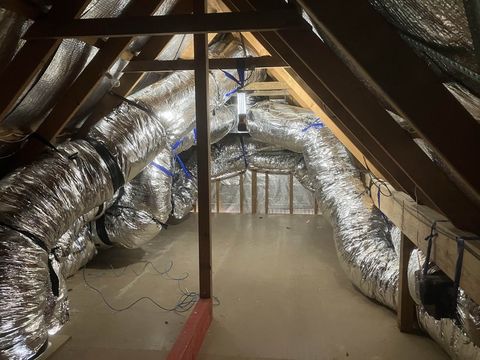
Ducted systems are a different job. The indoor unit lives in the roof and most of the dust sits in the ducts and the return air filter, which is what duct cleaning covers. Evaporative coolers have pads and a water tray instead of a coil, and an evaporative cooler service looks after those.
What you can clean, and what you can't
You can
- Wash the filters on your manual's schedule. Daikin, Mitsubishi Electric and Samsung all say about every two weeks. Solar Victoria's 2021 buyers guide said about twice a year, so where the advice differs, follow the manual for your model.
- Turn the power off at the isolator or breaker first. Mitsubishi Electric says to keep the water below 50 degrees and to dry filters in the shade.
- Run Fan mode for a while after cooling. Mitsubishi Electric recommends it to dry out the inside of the indoor unit.
- Wipe the outer casing with a soft cloth, without taking anything apart.
Leave to a licensed installer
- Taking off the covers and cleaning the coil, fan and drain tray.
- Flushing the drain line and checking it runs away from the unit.
- Checking the wiring connections while the unit is open.
- Cleaning units that sit above a comfortable ladder height.
Signs the filters aren't the whole story
- The musty smell is back within a few days of washing the filters.
- Dark spots on the vanes, or on the fan you can see through the outlet.
- Weak airflow even with freshly cleaned filters.
- Water dripping from the indoor unit, which can mean the drain is clogged.
What we'd do
If it were our home
We'd wash the filters on the manual's schedule and run the fan after cooling, because that does most of the work. If a musty smell survives a filter clean, we'd book a split specialist to strip and clean the indoor unit and flush the drain in the same visit. If the yearly service is due anyway, we'd ask for both at once.