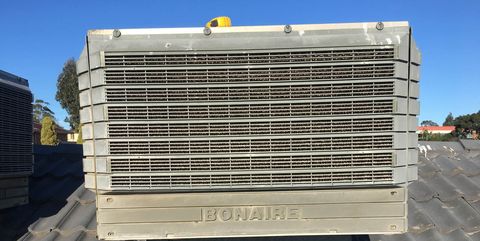
How often does an evaporative cooler need servicing?
Seeley's schedule is after the first year, then every two years, by your installer or an authorised Seeley service company, with more frequent visits in harsh environments. Other brands set their own intervals, so check your manual.
The water system matters too. Seeley says coolers with a bleed system need seasonal maintenance before and after summer, while its drain-valve units need no seasonal maintenance but still need regular checks. If you don't know which you have, the technician will.
Your warranty may decide who does it. Seeley describes Breezair Supercool's 7 year warranty as having a compulsory chargeable service in the fourth year. Bonaire says servicing by technicians it hasn't employed or authorised isn't accepted for its two-year warranty extension.
Checks to make before you book
The wall control
Seeley's first check when the vents blow hot air: make sure the control is set to cool.
The water supply
Next, check the water to the unit is turned on. It's easy to forget after winter.
The windows
Open windows or doors furthest from the vents. Seeley's tests: a tissue shouldn't stick to the fly screen while the cooler runs, and at high fan a slightly open door shouldn't slam. If either fails, open more.
The weather
On a humid day, Seeley suggests switching to ventilation mode with the fan on high, or running the cooler early morning or late evening, and using kitchen and bathroom exhaust fans to clear moisture.
Then call
If it's still blowing warm air, Seeley says the unit may need servicing.
What a good evaporative service covers
- Draining and cleaning the water tank. Seeley says to keep the reservoir, pads and other components clean.
- Checking every pad soaks evenly, and replacing pads that are due. Our pads and parts page covers how long they last.
- Testing the pump, the water distribution and the float valve that tops up the tank.
- Checking the bleed or drain valve works, and that the bleed rate is still right.
- Checking the fan and motor, and testing the wall control and outlets.
- A written note of anything that needs a part, before the work is done.
Signs it needs a technician sooner
- Warm or clammy air from the vents, even with the water on and the windows open.
- A stale or musty smell that doesn't clear. Seeley says new pads smell a little at first, but that fades quickly.
- Water dripping from a ceiling outlet, or stains around one.
- Pads crusted white, or a pump that's grinding or noisy.
Who should service it
Someone who works on evaporative coolers every week, not a general aircon technician who sees a handful a season. They'll know your brand's pads, pumps and quirks, and have the gear to work on a roof safely.
Roof and ceiling work is the real hazard here. WorkSafe Victoria reports workers falling through plaster ceilings while working in roof spaces, which is one more reason this isn't a homeowner job. If the cooler is under warranty, ask whether the brand requires its own service company.
What makes a service quicker or longer
A single-storey home with easy roof access and a cooler that's been serviced on schedule is a short visit. A second storey, a steep or tiled roof, a cooler that's sat unserviced for years, heavy scale on the pads or a failed pump all add time and parts.
Booking before the first hot spell also means any parts can be sorted before you need the cooler.
From the ground, and on the roof
You can
- The wall control, water and window checks above, all from inside the house.
- Booking the service before summer.
- Checking with a garden centre before using drained water on plants. Seeley says it's high in mineral salts.
- Leaving the bleed setting alone: Seeley says the installer sets the bleed rate.
Leave to a licensed installer
- Going onto the roof, for any reason.
- Cleaning the tank, replacing pads and adjusting the bleed.
- Pump, motor and electrical repairs.
- Shutting the cooler down for winter and starting it up in spring, if your model needs it.
What we'd do
Where we'd start
Run through the wall control, water and window checks first. They're quick and they rule out the simple causes. If it's still blowing warm, or it's been two years, we'd book an evaporative specialist before the first hot week and ask them to look at the pads while they're up there. If the cooler is under a brand warranty, we'd book whoever the brand requires.