What Canberra does to an evaporative cooler
A long off-season
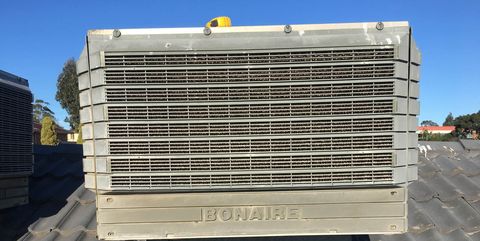
Canberra had 117 frosts in 2006, and 54 of them fell outside winter, between 12 April and 17 November. For much of the year the cooler on your roof just sits there.
Dry summer air
January afternoon humidity at Canberra Airport averages 37%. Seeley says evaporative cooling generally performs best in hot, dry climates, so a well-kept cooler here does real work on summer afternoons.
Short, sharp heat
Long-term averages give Canberra about 30 days a year at 30 degrees or more, and 4 at 35 or more. When they arrive, you want the cooler ready rather than waiting on a technician.
Older roof spaces
If ceiling outlets or ducts need work in a home from the Mr Fluffy years (1968 to 1978-79), the technician must know before going into the roof space. Look for the safety tag at the meter box.
Spring checks you can do from inside
Control on cool
Seeley's first check when the vents blow warm air is the wall control: make sure it's set to cool.
Water back on
Check the water supply to the unit has been turned back on after winter.
Windows open on the far side
Open windows furthest from the vents. If a tissue clings to the fly screen while the cooler runs, Seeley says the exhaust area is too small.
A sniff test
New pads smell for a short while, Seeley says, and the smell fades quickly. A musty smell that hangs around is a reason to book.
What a spring service should cover
- Draining and cleaning the tank and reservoir.
- Checking each pad soaks evenly and isn't crusted, sagging or past its life.
- Testing the pump, the water distribution and the float valve.
- Checking the bleed or drain valve, and the bleed rate the installer set.
- The fan, motor, wall control and outlets.
- A note of any parts needed, before they're fitted.
Bleed system or drain valve?
The type of water system changes how often someone needs to come. Seeley says bleed-system coolers need seasonal maintenance before and after summer, while its drain-valve units need no seasonal maintenance but still need maintenance checks. For a bleed-system model in Canberra, that means a visit in spring and another once the hot weather's over.
Seeley also says the drained water carries high levels of mineral salts, so ask a garden centre before you put it on plants.
Who should service it
Someone who works on evaporative coolers every week. They'll have safe roof access gear and know your brand's pads and pumps. If the cooler's under warranty, check who's allowed to do the work: Seeley names your installer or an authorised Seeley service company.
Licence-checked local technicians who specialise in evaporative coolers see your job, if we have them near you. Should none of them take it within 48 hours, technicians elsewhere in the ACT may see it as well. Only the one who takes it gets your details, so that's the only technician who'll contact you.
From the ground, and on the roof
You can
- The control, water and window checks above.
- Booking the service in spring, ahead of the first hot spell.
- Switching to ventilation mode with the fan on high on a muggy day, as Seeley suggests.
- Keeping drained water off the garden until you've checked.
Leave to a licensed installer
- Anything on the roof.
- Cleaning the tank, replacing pads and adjusting the bleed.
- Pump, motor and electrical work.
- Any outlet or duct work in the roof space.
What we'd do
What we'd book
We'd book an evaporative specialist in spring, once the frosts have eased and before the first 30 degree day, and for a bleed-system cooler we'd add an end-of-summer visit as well. We'd run the inside checks first, so the technician's time goes on the pads and the pump rather than a closed water tap.