What a Canberra ducted job has to cope with
Mostly detached homes
At the 2021 Census, 63.2% of ACT homes were separate houses. The ACT Government's buyers guide points houses above 180 sqm towards ducted or multi-head systems.
Both extremes
Canberra has hit 44.0 degrees (4 January 2020) and minus 10.0 degrees (11 July 1971). The ACT guide says good reverse cycle systems still work at minus 10, but a ducted system has to be sized for the heat load on the coldest nights you actually live through.
Gas ducts don't carry over
According to the ACT guide, gas ducts are too narrow for reverse cycle and may have age-related problems. Going from gas ducted to ducted reverse cycle means new ducting throughout.
Asbestos in some ducts
Mr Fluffy loose-fill asbestos, blown into more than 1000 Canberra homes from 1968 to 1978-79, has been found in some heating and cooling ducts and vents. Affected homes carry a safety tag at the meter box and switchboard.
Before anyone pulls out old ducts
If your home has a Mr Fluffy tag, or it dates from those years and you're unsure, don't go into the roof or take out ducts or vents yourself. Tell the installer before the quote visit. Old ductwork in an affected home can't be treated as a routine strip-out, and the quote should say how it will be handled.
Getting the ducts right for a cold climate
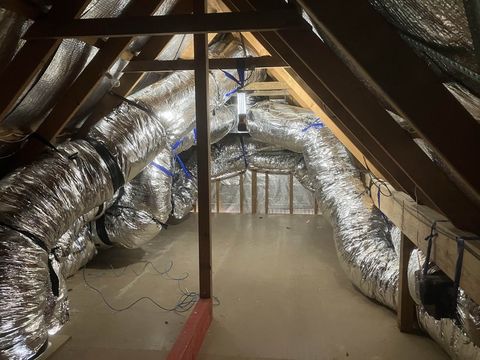
Duct heat loss is the weak point of any ducted system. The ACT guide says ducted can be slightly less efficient than splits because of losses through the ducting, and recommends at least R1.5 insulation on it, adding that suppliers may not include that by default. Ask for the rating in writing.
Ducts through the ceiling also reduce your ceiling insulation, the ACT Government says, and the outlets can lower the ceiling's thermal performance. A good installer will explain how they'll make the insulation good afterwards.
Power can be a surprise. The ACT guide says a large house may need a 3-phase upgrade for ducted, and your installer can confirm whether yours does before you commit.
Zoning for how Canberra homes are used
The ACT guide rates ducted zoning as limited to good, depending on the system, and notes that ducted often keeps servicing the living areas the whole time it runs. Zone dampers in the ducts are what let you shut off rooms you're not using.
Daikin's own example puts the bedrooms in one zone and the living areas in another, which fits a Canberra winter evening: heat the lounge after dinner, the bedrooms just before bed. ActronAir warns that zoning without proper temperature sensors can be less efficient, so ask where each sensor will go.
What a Canberra ducted quote should show
- A room-by-room heat load, worked out for winter.
- The rated heating capacity and input power, as well as cooling.
- Duct insulation of R1.5 or better.
- Removal of the old gas heater and ducts, and who disconnects the gas.
- How the roof space will be handled if it's a Mr Fluffy home.
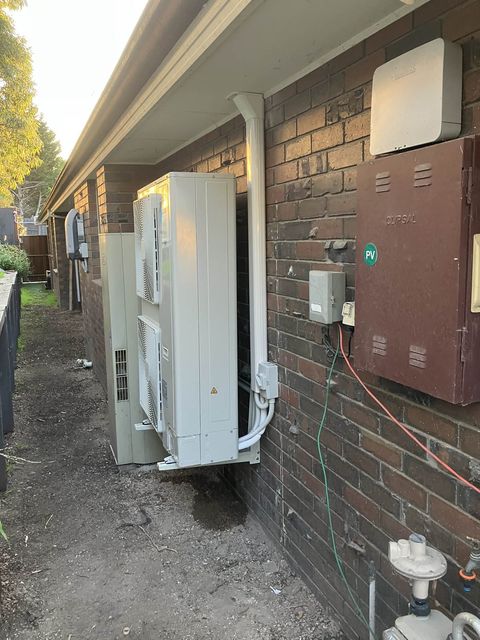
- Any switchboard or 3-phase work, and the lockable isolator beside the outdoor unit.
- The installer's RTA number, which the ARC requires on quotes.
What we'd do
If it were our home
We'd only compare ducted quotes that start from a room-by-room heat load for a frosty night, specify R1.5 or better on the ducts and give the bedrooms their own zone. Coming off gas, we'd expect new ducts throughout. In an older Canberra house we'd check the meter box for a Mr Fluffy tag before letting anyone into the roof. A ducted specialist who works in Canberra roof spaces every week will raise all of this without being asked.