How do ducted zones work?
ActronAir describes zoning as dividing the home into areas that can be cooled or heated separately, using zone dampers fitted inside the ductwork. Each damper opens or closes to control the airflow to its zone.
Daikin says that once a zone is selected, heating and cooling won't be sent to rooms outside it, and that its zoning needs a Daikin Zone Controller with zone control dampers. In other words, the controller and the dampers are part of the design, not an accessory you add at the end.
Gas ducted heating can be zoned as well. Seeley says zoning lets you heat only selected rooms or zones, with the options depending on the design of the house.
What zoning can't do
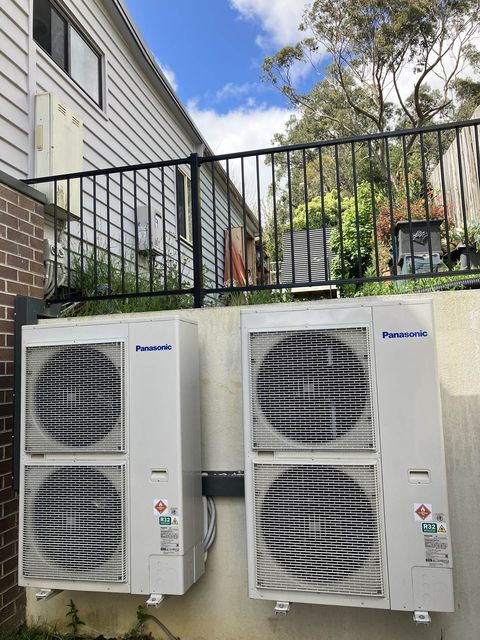
A ducted system has one outdoor unit, so every zone runs in the same mode. ActronAir says its systems can only be heating or cooling at any one time, with no more than a 4-degree difference between zones. You can't warm the bedrooms while cooling a sunny lounge.
The ACT Government's buyer's guide rates ducted room zoning as anywhere from limited to good, depending on the system, and notes that a ducted system often keeps supplying the living areas whenever it runs. If you want true room-by-room control, it rates multi-head systems very good at turning off unused areas.
Plan the zones around how your house is used
Daikin's example is the simplest one: bedrooms in Zone One, living areas in Zone Two. From there, think about the hours each room is used. A home office that's busy during the day, a teenager's room that's busy at midnight, or a west-facing room that bakes after lunch may each earn a zone of its own.
Running fewer rooms pays off. The ACT Government says heating only the parts of the home in use can be better for energy efficiency, and Solar Victoria says the same for heating and cooling alike: zone the ducted system or close doors.
Sensors and the wall controller
ActronAir warns that zoning without the correct use of temperature sensors can be less efficient. A system that only reads the temperature in the hallway has no idea the main bedroom is still cold. Ask whether each zone gets its own sensor, and where the controller will be mounted, away from direct sun, doors and the return air grille.
Shutting outlets by hand is not the same as zoning. Seeley's technician guide for gas ducted heaters lists too few outlets open among the common causes of over-temperature faults, so let the dampers do the job.
What's yours to do, and what's the installer's
You can
- List each room, who uses it and at what time of day.
- Label which outlet belongs to which room once the system is in.
- Use the controller's schedule rather than turning outlets off.
Leave to a licensed installer
- Choosing, fitting and wiring the dampers and the controller.
- Placing and setting up the zone sensors.
- Checking the unit still gets enough airflow with only one zone running.
- Adding zones to an older system, if its ducts and unit allow it.
What we'd do
If it were our home
We'd keep bedrooms and living areas on separate zones at the very least, ask for a temperature sensor in every zone, and want to hear how the system copes when only the smallest zone is on. We'd also have a ducted specialist design the zones alongside the duct layout, because adding them later depends on ducts that weren't planned for it.