Is hydronic right for your home?
It suits homes with long, cold winters, where the heating runs for months. The national energy label map groups Canberra, Hobart and Melbourne as cold climates, and that's the kind of heating season where hydronic earns its place.
It's gentle, too: Solar Victoria says a hydronic system can also suit sufferers of asthma or breathing problems. You can also heat only the rooms in use: the ACT Government says hydronic lets you zone your heating down to one room.
Think about summer early. Hydronic is mainly a heating system, so most homes pair it with split systems or another way to cool.
Panels or underfloor?
| Wall panels | Underfloor | |
|---|---|---|
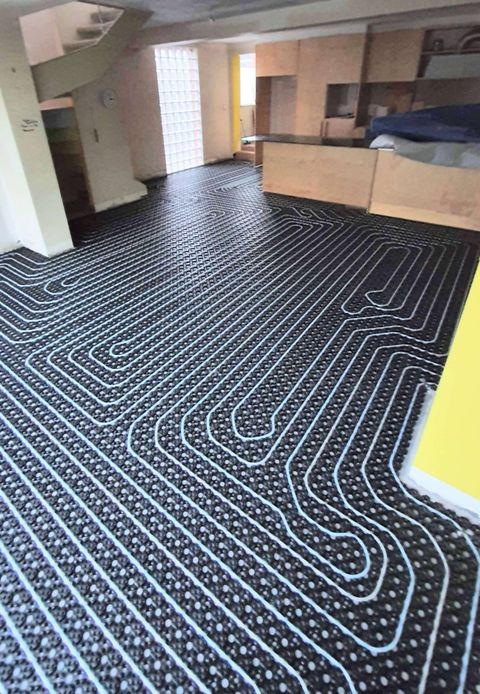
| What you see | A slim panel on a wall in each room | Nothing, the pipes sit in or under the floor |
| Easiest time to install | Any time, including in a home you live in | During a build, an extension or a new floor |
| How it feels | Warmth from each panel spreading through the room | A warm floor and even heat |
| Warm-up | Fairly quick, room by room | Slow in a slab, so it suits scheduled heating |
| More detail | Panels, boilers and heat pumps | Underfloor heating |
Gas boiler or heat pump?
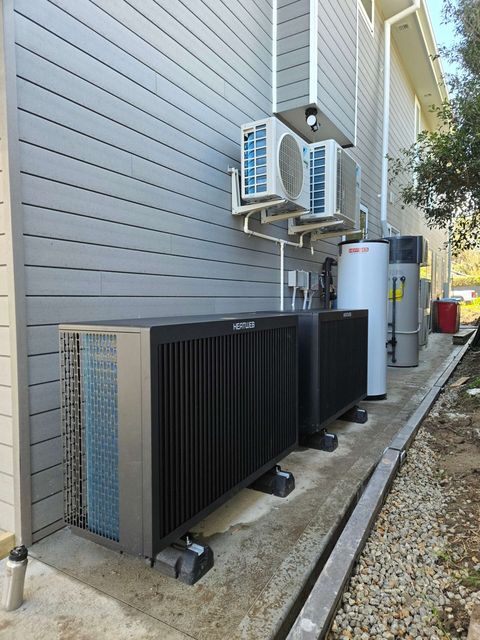
The heat source is the biggest decision. A gas boiler burns gas to heat the water. Solar Victoria describes a heat pump hydronic system as one that takes heat from the outside air and turns it into hot water for the home, running on electricity instead.
In Victoria, check the gas position before anything is designed. From 1 January 2027, connecting mains gas to a building under construction, or to an existing building that doesn't have it, is prohibited. If your home already has gas, DEECA says you don't have to switch existing gas space heating to electric.
NSW readers should know the Energy Savings Scheme offers no incentive for a gas hot water boiler or gas space heater installed from 1 July 2026.
What a hydronic install involves
A heat loss design
The installer works out how much heat each room loses through its walls, windows, ceiling and floor, then sizes each panel or floor loop to suit.
The heat source goes in
A boiler or a heat pump unit, often outside or in a laundry, with gas, power, water and a flue as each needs.
Pipes are run
Under the floor, through walls or across the ceiling to each panel, or in loops for underfloor. Solar Victoria says the pipes need proper insulation for the system to stay efficient.
Panels and controls are fitted
Panels go on the walls, with a thermostat or timer for the system and a valve or zone control for each room.
It's filled, bled and tested
Air is let out, the pressure is set, and each room is run to check it actually reaches temperature.
What makes the job bigger or smaller
The number of rooms is the main driver. A single-storey house on stumps, with space underneath for pipes, is simpler than a double-storey on a slab where every pipe has to go through walls and ceilings.
Underfloor in a finished home usually means lifting or building up floors, so it's a much bigger job than panels. A heat pump instead of a boiler adds an outdoor unit and electrical work. And a renovation with walls already open is easier than working around finished rooms.
Hydronic quotes are hard to compare at a glance, so ask each installer for their room-by-room heat loss figures. That's the fair way to line them up.
Questions to ask before you say yes
- How did you size each panel or floor loop?
- Which heat source would you put in this house, and why?
- Who does the gasfitting, plumbing and electrical work, and what licences do they hold?
- Where will the pipes run, how will they be insulated, and what will I see?
- How are the rooms or zones controlled?
- What warranty covers the boiler or heat pump, the panels and your workmanship?
- What servicing will it need, and how often?
Your side of it, and the installer's
You can
- Decide which rooms need heating, and at what times of day.
- Find out whether you have mains gas, and in Victoria whether a new connection is still possible.
- Keep couches and long curtains off the panels so the heat reaches the room.
- If the boiler has a pressure gauge, notice the usual reading and mention any change to your installer.
Leave to a licensed installer
- Designing and sizing the system.
- Gasfitting for a gas boiler and its flue.
- All plumbing and pipework.
- Electrical work for the heat pump, circulating pump and controls.
- Refrigerant pipework on a two-part heat pump, which needs an ARC licence.
Rentals in Victoria
Until 28 February 2027, a hydronic system with an outlet in the main living area counts as an energy efficient fixed heater for a rental. One that was in place before 1 March 2027 and still works in good order means a new heater isn't required. Our rental heating guide explains the rest.
What we'd do
Where we'd start
We'd settle the heat source first. In Victoria that means confirming the gas position, and on a new build we'd look hard at a heat pump. Then we'd ask for a room-by-room heat loss design before anyone mentions panel brands. That's work for a hydronic specialist who designs these systems every week, not a general plumber doing their first one.