
Townsville, Queensland
Heating and cooling in TownsvilleCooling all year, and an outdoor unit that can ride out the wet.
Townsville is a year-round cooling city: the Queensland Government's aim for climate zone 1 homes is to cool the interior all year, and even July nights at Townsville Airport average a minimum of 14.0 degrees. The November to April wet season brings the humidity, the cyclones and the floods, so where the outdoor unit sits and how well it's looked after matter as much as the model.
What's different about Townsville
The dry tropics
Townsville gets most of its rain in a six-month wet season from November to April. Its winters are dominated by south-east trade winds and mostly fine weather.
Hot, and humid in the wet
At the Bureau of Meteorology's Townsville Airport station, December and January share a mean daily maximum of 31.9 degrees. February afternoons average 68% humidity with a dew point of 23.1, and the record high is 44.3 degrees, set in January.
Climate zone 1
The ABCB map places Townsville in zone 1, which the Queensland Government describes as tropical, hot and humid. It says air-conditioned rooms there should be well insulated and sealed.
Cyclones and outages
Cyclone Kirrily left nearly 34,000 homes and buildings without power, mainly in Townsville, on 25 January 2024. The QRA's table lists a risk of power failure from Category 2 winds, and Townsville is in Wind Region C.
The 2019 flood
The monsoon flood of early 2019 damaged about 3,300 homes and left around 1,500 uninhabitable. Rosslea, Hermit Park and Idalia were among the suburbs with major inundation.
Houses on stumps, by the bay
Historian Henry Reynolds wrote in 1965 that most Townsville houses stood up on stumps, and 81.1% of occupied dwellings were separate houses at the 2021 Census. The city sits on Cleveland Bay, with Magnetic Island 8 km offshore.
Electric
Townsville isn't on the Queensland Government's natural gas distribution list, and it's on Ergon Energy's regional network.
Where the work goes in Townsville
Because a Townsville system works most of the year, the decisions at install time carry further than in a cooler city: the size, the efficiency and where the outdoor unit sits. Our page on installation in Townsville goes through them.
The dry season is when we'd book a service in Townsville, while winter's fine weather lasts. The wet is when faults tend to show, often after a storm or an outage, and repairs in Townsville starts with the checks that are safe to do yourself.
Whichever it is, licence-checked local installers who specialise in that work see the job, where we have them, and your contact details go to whichever one takes it. If nobody in Townsville takes it within 48 hours, it may be seen by installers elsewhere in Queensland.
Keeping power use down when cooling barely stops
Running cost is input power in kW, times the hours it runs, times your electricity rate, and in Townsville the hours are what add up. The Energy Rating calculator suggests 25 to 27 degrees for summer cooling and says each degree colder could add 10% to your electricity bill.
Mitsubishi Electric's i-save example sets a room 2 to 3 degrees warmer in cooling while you sleep or the room's empty. Small habits like that matter more in a city that cools all year. Our running cost tool does the maths with your own rate.
What's safe to do yourself
You can
- Clean the filters often through the wet season.
- Know where the isolator is before cyclone season starts.
- Rinse salt off the outdoor unit from the ground, power off, if you're near the bay and the manual allows.
- Keep the outdoor unit clear of storm debris and garden growth.
Leave to a licensed installer
- Raising an outdoor unit and its electrics above flood level.
- Cleaning inside the indoor unit.
- Refrigerant and electrical work.
- Checking a unit after a flood or cyclone.
What we'd do
If it were our Townsville home
We'd pick an efficient reverse cycle system sized from a heat load, put the effort into insulating and sealing the rooms it cools, and set it at 25 degrees or a little above. In a suburb that flooded in 2019, the outdoor unit and its isolator would go above the flood level. And we'd book the service every winter, before the wet.
What this work looks like
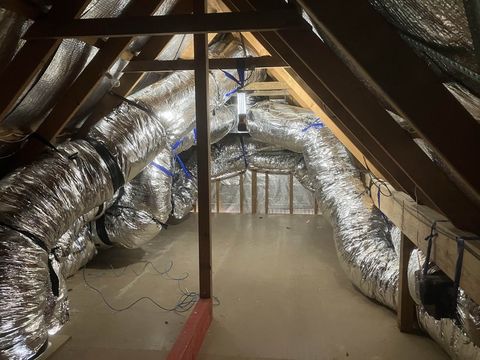
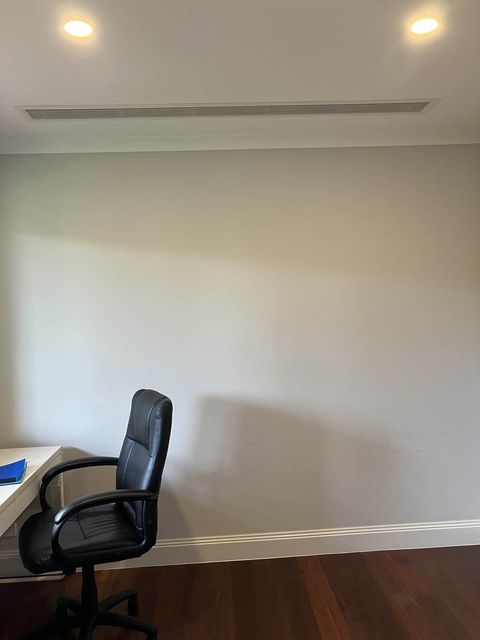
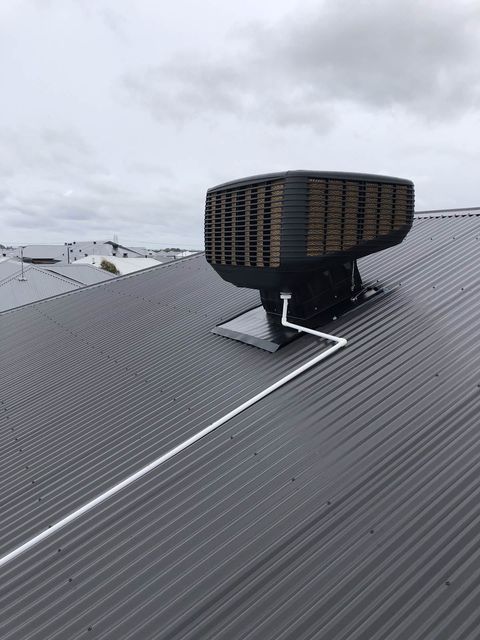
Photos from real jobs in Melbourne, to show what the work looks like. They aren't from an installer near you.
Heating and cooling jobs in Townsville
- Air conditioning installation in TownsvilleSizing, efficiency and placement for a new air conditioner in Townsville.
- Air conditioning service in TownsvilleWhen to service an aircon in Townsville, and what a technician should check.
- Air conditioning repairs in TownsvilleWhat to check when your aircon fails in Townsville, and who's licensed to fix it.
Questions people ask
Do I need heating in Townsville?
Should my outdoor unit be raised in Townsville?
Does evaporative cooling work in Townsville?
How do I check a Townsville installer's licence?
Can I get a concession if I need cooling for medical reasons?
Ready for the right installer to take a look in Townsville?
Your postcode and three quick questions. Licence-checked local installers who specialise in your kind of job see it, and the one who takes it gets in touch to quote.
Read next
- 01Reverse cycle air conditioningHow reverse cycle heats and cools, which type suits your home, and what to check for winter.
- 02What it costs to run an air conditionerThe method: input power times hours times your rate, and what pushes the number up or down.
- 03Running cost toolHow much power your unit uses, worked out with your hours and your own rate.
- 04Air conditioning near the coastSalt, coil coatings, warranty fine print and where the outdoor unit should go near the sea.
- 05Evaporative or refrigerated cooling?How each kind of cooling works, why humidity matters, and what each one needs from your home.
- 06Heating and cooling in QueenslandQueensland's QBCC licence at any value, who does the wiring and gas, and how to read an installer's ad.
Where this information comes from
- Wikipedia (Bureau of Meteorology data) Townsville, 28 October 2026
- Australian Building Codes Board Queensland Climate zone map (National Construction Code, release date Nov 2019, version VC00031.3), 28 October 2026
- Business Queensland (Queensland Government) Building in Queensland's climate zones, 24 July 2025
- Wikipedia Cyclone Kirrily, 28 October 2026
- Queensland Reconstruction Authority Cyclone Resilient Building Guidance for Queensland Homes (December 2019), 28 October 2026
- Wikipedia 2019 Townsville flood, 28 October 2026
- Get Ready Queensland (Queensland Government) Strengthen your home for flood, 28 October 2026
- Australian Bureau of Statistics 2021 Census QuickStats: Townsville (LGA37010), 28 October 2026
- Business Queensland (Queensland Government) Your gas supply, 3 June 2025
- ESD News Ergon recruiting next gen of apprentices, 23 July 2019
- Queensland Government Evaporative air coolers, 23 January 2026
- Queensland Government Medical Cooling and Heating Electricity Concession Scheme, 24 June 2025
- RAA (Royal Automobile Association of South Australia), SA Move What's your air-con costing you?, 19 February 2026
- Australian Government, Energy Rating Energy Rating Calculator: air conditioner information, 28 October 2026
- Mitsubishi Electric Australia Split-type air conditioners, indoor unit MSZ-AS90VGD, operating instructions (PDF), 26 October 2020
- Queensland Building and Construction Commission Find a licensed contractor, 12 December 2025
- Queensland Building and Construction Commission Advertising, 30 June 2025
- Blufire Pty Ltd Blufire's lead engine rules (supplied 29 October 2026) and Privacy Policy, 29 October 2026
We don't publish prices. Every home is different, so an installer's written quote is the only real number. How we write and check these pages.