
Licences and rules
Heating and cooling in the ACTCheck the electrical licence, then the rebate rules.
In the ACT, the licence that decides who can install your heating and cooling is the electrical one. Wiring on low voltage systems needs an unrestricted electrical licence, and the restricted refrigeration and air-conditioning licence only covers disconnecting and reconnecting. Access Canberra's public registers show whether a licence is current, and any disciplinary action against the holder.
How to check a Canberra installer
Get the licence numbers
In the ACT, builders, electricians, plumbers, drainers, gasfitters and gas appliance workers all need a licence. Ask for the electrician's number, and the gasfitter's if gas is involved.
Search the public registers
Access Canberra lists licensed electricians, plumbers and gasfitters, including licences that are expired, suspended, surrendered or cancelled.
Open the Details tab
Any disciplinary action against the holder shows there, so it's worth the extra click.
Match the licence to the job
A restricted holder may disconnect and reconnect low voltage only, and can't install low voltage wiring. A new unit on a new circuit needs the unrestricted licence.
The isolator beside your outdoor unit
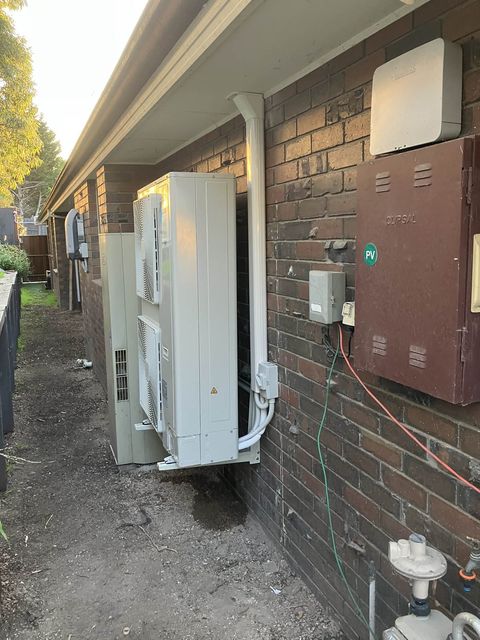
Access Canberra quotes the Wiring Rules clause (AS/NZS 3000:2018 clause 4.19) that requires air conditioning and heat pump systems with a compressor to have a lockable isolating switch adjacent to the unit, but not on it. If yours is missing, or fixed to the unit itself, raise it with the installer.
Older Canberra homes: Mr Fluffy and the ducts
Between 1968 and 1978-79, Mr Fluffy loose-fill asbestos was put into more than 1000 Canberra homes, and fibres have turned up in some heating and cooling ducts and vents. An affected house has to carry a safety tag on its meter box and switchboard. If you see one, or aren't sure, stay out of the roof space, leave old ducting alone, and tell any installer before they come to quote.
Rebates and loans: pre-approval comes first
The Sustainable Household Scheme lends money at low interest, through Brighte, for electric heating and cooling and other upgrades. Home Energy Support adds a rebate for eligible owner-occupiers holding a Pensioner Concession Card, DVA Gold Card or Health Care Card.
For the rebate, quotes must come from accredited suppliers on the Brighte list, and you shouldn't accept one until the ACT Government has pre-approved your application. The amounts and tests are in our ACT scheme guide.
Gas, and why heating comes first here
Since 8 December 2023, new gas network connections have been blocked in all of the ACT's residential, commercial and community facility zones. The ACT aims to phase out fossil fuel gas by 2045, and the government says parts of the network will likely close from the mid-2030s. It also says any unflued gas heater should be replaced immediately, because of the carbon monoxide it produces.
The ACT Government puts heating at about 60% of the average Canberra household's energy use. That's why the installer to look for is a heating specialist who sizes reverse cycle for Canberra winters. Our gas to electric page covers the switch.
What we'd do
If it were our Canberra home
We'd check the electrician on Access Canberra's register, Details tab included, before booking a quote. In an older house we'd look for a Mr Fluffy tag at the meter box first. And if we were applying for the rebate, we'd wait for pre-approval before signing anything.
What this work looks like
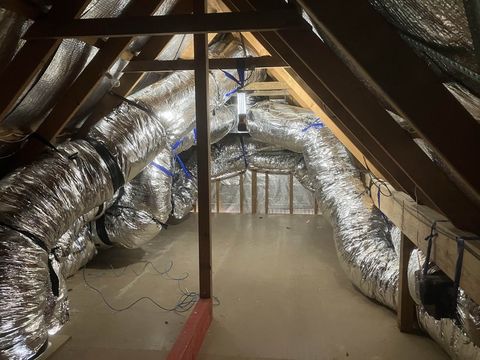
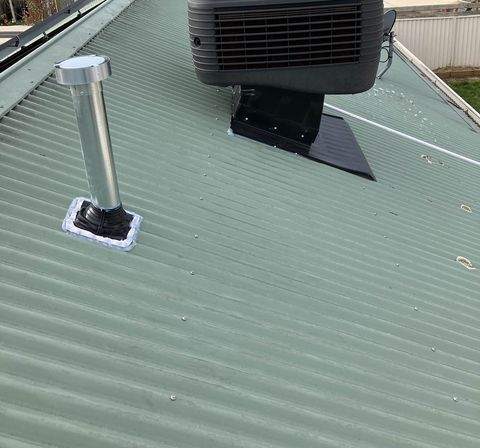
Photos from real jobs in Melbourne, to show what the work looks like. They aren't from an installer near you.
Cities in Australian Capital Territory
Questions people ask
Can an air conditioning tech wire up a new split in the ACT?
Can I accept a quote before my rebate is approved?
What are the ACT's noise limits for air conditioners?
Ready for the right installer to take a look?
Your postcode and three quick questions. Licence-checked local installers who specialise in your kind of job see it, and the one who takes it gets in touch to quote.
Read next
- 01ACT Sustainable Household SchemeHow the ACT loan works for electric heating and cooling, and the rebate some homeowners can add.
- 02How to check an installer's licenceRun the ARCtick check, read RAC01 and RSS03, and check the state licence too.
- 03Switching from gas heating to electricYour options for leaving gas heating, what the rules actually require, and what to ask before you sign.
- 04Duct cleaningWhen duct cleaning is worth it, what to check first, and what a proper clean involves.
- 05The electrical side of an installCircuits, isolators, switchboard upgrades and three phase, and who's licensed to do them.
- 06Aircon noise rules and neighboursQuiet hours, decibel limits by state, and how to place an outdoor unit so the neighbours don't notice.
Where this information comes from
- ACT Government (City and Environment Directorate, ACT Planning) Construction licences, 28 October 2026
- Access Canberra (ACT Government) Electrical Fact Sheet: Split Air-Conditioning Units (update September 2019), 1 September 2019
- Access Canberra (ACT Government) Choosing a tradesperson, 28 October 2026
- Access Canberra (ACT Government) Noise standards, 28 October 2026
- ACT Government (Everyday Climate Choices) Home Energy Support: Rebates for Homeowners, 28 October 2026
- ACT Government (Everyday Climate Choices) Sustainable Household Scheme, 28 October 2026
- WorkSafe ACT Mr Fluffy (Loose Fill Asbestos Insulation), 28 October 2026
- ACT Government (Climate Choices) Preventing new gas network connections, 28 October 2026
- ACT Government (Climate Choices) Canberra's Electrification Pathway, 28 October 2026
- ACT Government (Climate Choices) Heating for your home, 28 October 2026
- ACT Government (Climate Choices, Sustainable Household Scheme) Heating and cooling your home: a guide to reverse cycle systems (buyers guide), 28 October 2026
We don't publish prices. Every home is different, so an installer's written quote is the only real number. How we write and check these pages.