Victoria: it's about being heard, not being switched off
Victoria's rule isn't a curfew on your aircon. It's about whether the noise can be heard inside a habitable room of a neighbouring home, such as a bedroom or living room. If it can't be heard in there, the hours don't stop you running it.
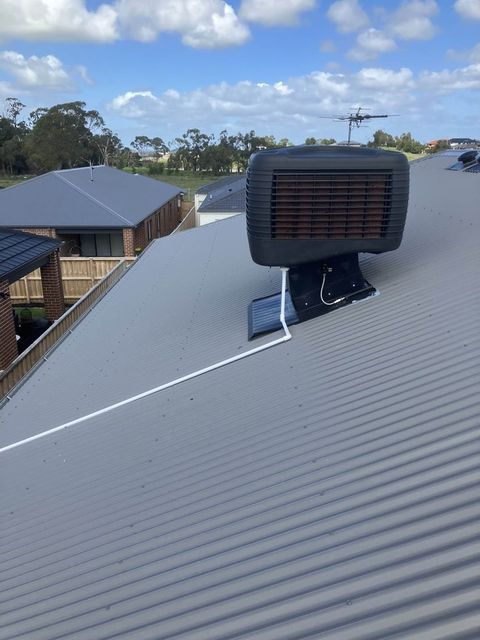
For cooling, which includes evaporative coolers and splits on cool, the quiet hours are before 7am and after 11pm on weekdays, and before 9am and after 11pm on weekends and public holidays.
For heating, which includes heat pumps and air conditioners on heat, the night limit comes an hour earlier, at 10pm, with the same morning start times. In a Melbourne winter that's the rule more likely to bite.
There's one exception for the worst summer nights. During a Department of Health heat health warning, you can use your air conditioner at any time. The rules are in regulation 114 of the Environment Protection Regulations 2021.
Victoria's hours at a glance
| Weekdays | Weekends and public holidays | |
|---|---|---|
| Cooling | Not audible next door before 7am or after 11pm | Not audible next door before 9am or after 11pm |
| Heating | Not audible next door before 7am or after 10pm | Not audible next door before 9am or after 10pm |
New South Wales: new rules in 2026
NSW's Protection of the Environment Operations (Noise Control) Regulation 2026 sets restricted hours for using air conditioners on residential property, when the noise can be heard in a residential room of another home.
On 31 August 2026 the NSW EPA said the strengthened rules extend the permitted hours of use for residential pumps and air conditioners, and exempt air conditioners from restricted hours during severe or extreme heatwaves.
We couldn't read the new hours at the source, so we won't quote them. Check the NSW EPA's page on the regulation before you rely on a particular time.
Queensland, the ACT and Tasmania: decibel limits
Queensland's default standard measures against the background noise at the affected property. An air conditioner mustn't be more than 5 decibels (A) above background from 7am to 10pm, or more than 3 decibels (A) above it from 10pm to 7am. Local councils can set their own standards instead.
The ACT sets fixed limits for residential areas: 45 dB(A) from 7am to 10pm and 35 dB(A) from 10pm to 7am, Monday to Saturday. On Sundays and public holidays, the 45 dB(A) limit runs from 8am to 10pm, with 35 dB(A) at all other hours. In a multi-unit development, noise from your home must be 5 dB(A) quieter than the limit for your zone.
EPA Tasmania's guidelines say heat pumps and air conditioners shouldn't be louder than 45dB(A) from 7am to 10pm, or 40dB(A) from 10pm to 7am, measured one metre from the outside wall of the neighbouring home closest to the unit. It also warns that noise at any time of day or night can be found unreasonable and may lead to a penalty.
South Australia, WA and the NT
In South Australia, noise from fixed machinery at a home, such as an air conditioner, is a local nuisance if it travels to a habitable room, or to an outdoor courtyard or entertainment area, on the neighbouring property. Most domestic noise there comes under the Local Nuisance and Litter Control Act 2016.
We haven't confirmed the rules for Western Australia or the Northern Territory. Your local council can tell you what applies where you live.
Placement: where most noise problems start
The easiest noise fix happens before install day. Ask the installer where the outdoor unit will sit and how close that is to the boundary. The ACT Government's reverse cycle guide lists noise affecting neighbours as one of the things to weigh, alongside access for maintenance and fresh air, and warns against enclosed courtyards and slat fencing around the unit.
Think about the other side of the fence, not just yours. The tidy spot beside your side path might sit right under a neighbour's bedroom window.
Energy rating labels carry noise figures too. Mitsubishi Electric says those are the indoor and outdoor units' sound power levels, and lower numbers mean quieter running, so compare them when you're choosing between models.
Ask for an installer who fits splits on tight suburban blocks all the time. They'll have a view on brackets, side passages and which wall gives the neighbours the least to hear.
Looking at a noisy outdoor unit safely
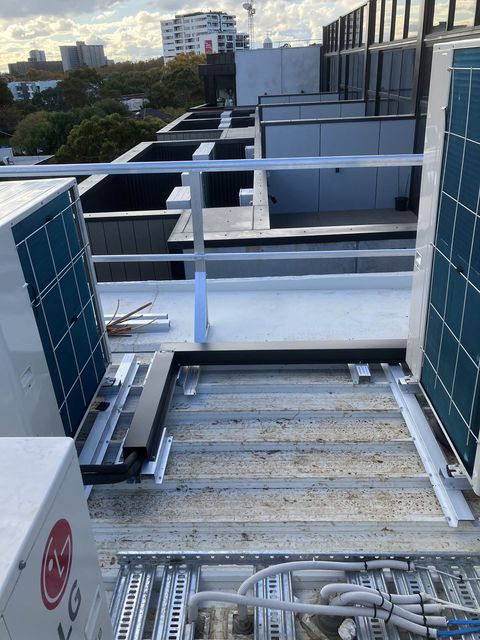
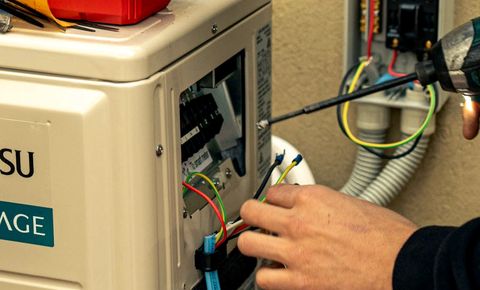
Look from the ground, and don't climb. If the outdoor unit is on the roof or a high bracket, checking it is a job for the installer. Mitsubishi Electric says not to step on the outdoor unit or put anything on it, and not to stand on an unstable bench to reach the unit. Switch the system off at the isolator or the switchboard before you look closely, and leave the covers on.
If a neighbour's aircon is keeping you up
Talk to them first
Plenty of people have no idea how their unit sounds from your side. A friendly word, with the times it bothers you, is the place to start.
Keep a note
Write down the dates and times, and whether you could hear it inside a bedroom or living room. Hearing it inside a room of your home is the test in Victoria and NSW.
Check the rule where you live
Hours in Victoria, decibel limits in Queensland, the ACT and Tasmania, and the nuisance test in South Australia. Victoria and NSW both make allowances in heatwaves.
Ask the council
If talking doesn't work, your local council can tell you how noise complaints are handled where you live.
Signs the noise is a fault, not just placement
- Rattling, which Samsung says often means loose panels.
- Whistling, which Samsung links to dust on the fan.
- A new or abnormal sound from a unit that used to be quiet. Mitsubishi Electric says to stop using it and get it looked at.
- Noise that gets steadily worse over a season.
If the noisy one is yours
Some sounds are normal. Samsung says some airflow and fan noise is expected, especially at startup, and our guide to what aircon noises mean goes through the rest.
If the unit itself is fine and it's simply in the wrong spot, moving it is a real option. Our page on removing and relocating units explains what that involves, and an apartment or strata building may have its own rules, covered in apartments and strata.
What you can do, and what needs an installer
You can
- Setting a timer so the unit winds down before your state's quiet hours, if it can be heard next door.
- Keeping leaves and clutter clear of the outdoor unit.
- Comparing the sound power figures on the label before you buy.
- Talking to your neighbour before anyone makes a complaint.
Leave to a licensed installer
- Choosing an outdoor spot that works for both properties.
- Moving an outdoor unit to a better wall, which means handling the refrigerant under an ARC licence.
- Tightening loose panels and cleaning or checking the fan.
- Finding the cause of a new or abnormal sound.
What we'd do
What we'd do
We'd sort noise at the quote, not after the first complaint. Ask the installer to show you exactly where the outdoor unit will go, stand there yourself, and look at what's on the other side of the fence. If the only spot is near a neighbour's bedroom, we'd ask about another wall or a quieter model before signing, and give the neighbour a heads-up early. It's a lot easier than moving a unit later.