Is ducted right for your home?
The ACT Government's buyer's guide draws the line at house size. It points large houses (above 180sqm) towards ducted or multi-head systems, and smaller homes, or homes that only need a few rooms done, towards split systems. Solar Victoria agrees that ducted suits larger homes, with vents in several rooms linked to one central unit.
There are trade-offs, and the ACT guide is honest about them. Ducted can be slightly less efficient than splits because some heat is lost through the ducting, though one installation looks after the whole house and holds an even temperature more easily. Good zoning is how you win most of that back.
What the install involves
A heat load for every room
Mitsubishi Electric calls a professional heat load calculation essential, covering climate, orientation, insulation, windows and ceiling height. On a ducted job it should be done room by room, because each outlet needs its own share of the air.
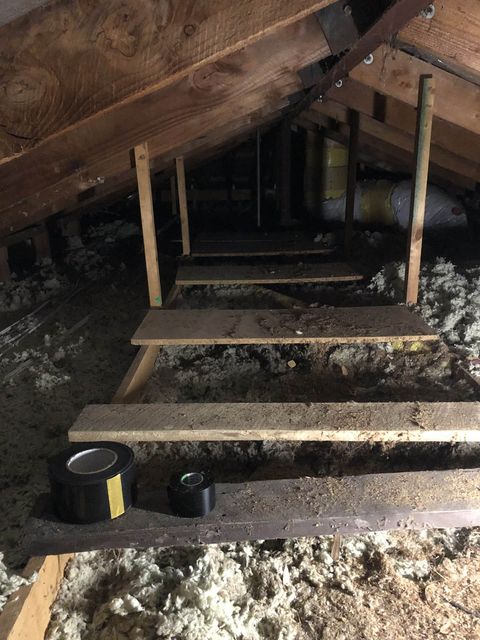
The indoor unit goes into the roof or under the floor
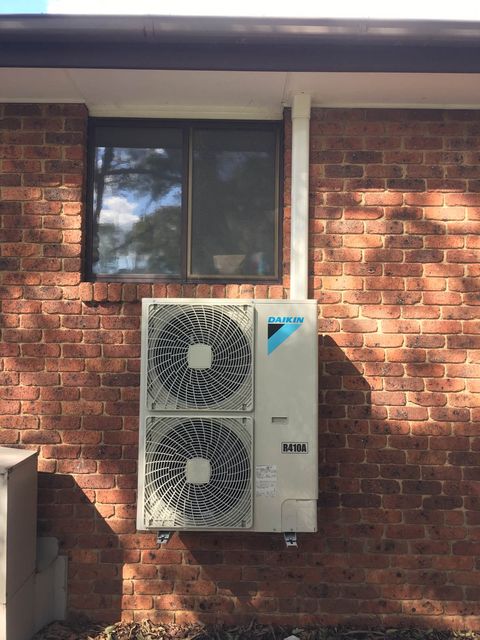
It needs a solid platform and room around it for servicing. From there, the ACT Government says, it splits into many insulated ducts.
Ducts, outlets and a return air grille
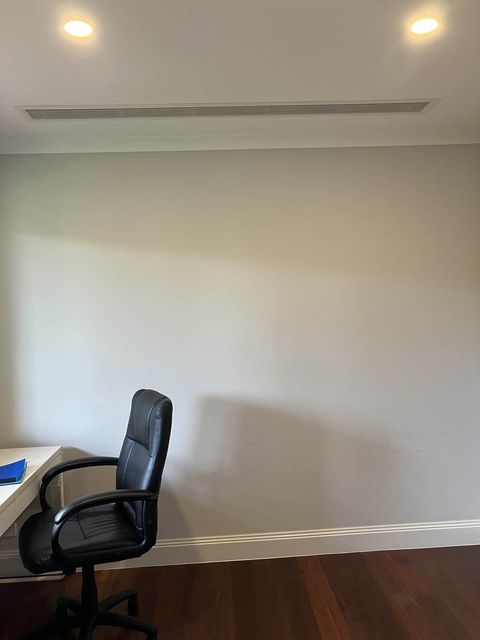
A duct runs to an outlet in each room, and a return air grille (the large vent that draws air back to the unit, usually with a filter behind it) completes the loop. The ACT guide recommends at least R1.5 insulation on the ducting and says to ask for it, because suppliers may not provide it by default.
Zones and a controller
ActronAir explains that zone dampers inside the ductwork open and close to send air only to the zones you've switched on.
Refrigerant, power and commissioning
The units are piped, wired, charged and tested. The ACT guide says a large house may need a 3-phase power upgrade for ducted, and your installer can confirm it. In Victoria you should finish with a Certificate of Electrical Safety and a plumbing compliance certificate.
What makes a ducted job bigger or smaller
A single-storey house with a roomy roof space is the easy case. Two storeys, a low-pitched roof or no room under the floor all make the duct runs harder, and sometimes mean two separate systems.
Replacing gas ducted heating is usually a bigger job than people expect. The ACT guide says the old gas ducts can't be re-used for ducted reverse cycle, because they're too narrow and may have age-related problems, so plan on new ducting throughout. Keeping the gas heater and fitting add-on cooling is a different system, and that one does use the existing ducts.
The number of zones, the switchboard, removing an old system and the ceiling insulation all change the job too. The ACT Government notes that ducting through the ceiling reduces your ceiling insulation, so ask how the installer will make it good.
Who can legally install ducted air conditioning?
Anyone handling the refrigerant needs an Australian Refrigeration Council licence. The restricted RSS03 licence covers single-head split systems under 18kW, and the ARC says that includes ducted indoor units. A bigger system needs a full RAC01 holder, and so does any later repair that touches the refrigerant.
In Victoria, installing reverse cycle is also plumbing work needing Building and Plumbing Commission registration, and the wiring needs a Registered Electrical Contractor. Our licence guide covers the other states.
A Victorian ducted job may qualify for a Victorian Energy Upgrades discount through an accredited provider. The program is voluntary, and from 30 September 2026 the minimum co-payment on a ducted VEU job is $3,000 including GST.
Your part, and the installer's
You can
- Work out which rooms you use, and when. It decides the zones.
- Note ceiling heights, west-facing glass and any room that's always cold.
- Once it's running, clean the return air filter the way your manual says.
Leave to a licensed installer
- The heat load and the duct layout.
- Everything in the roof space. WorkSafe Victoria reports workers falling through plaster ceilings, so it's no place to go exploring.
- Refrigerant pipework, charging, new circuits and any 3-phase work.
What a ducted quote should spell out
- Brand, model and capacity in kW for heating and cooling.
- Where the indoor unit, the outdoor unit and the return air grille will go.
- How many outlets, which rooms they're in, and the duct insulation rating.
- The zones, the controller model, and whether each zone gets its own temperature sensor.
- Electrical work included, and whether a 3-phase upgrade is needed.
- The installer's Refrigerant Trading Authorisation number, which starts with AU. The ARC requires it on quotes.
- Warranty conditions, including any maintenance the brand requires. ActronAir's terms, for example, set residential maintenance at once every 12 months.
What we'd do
Our take
We'd only compare ducted quotes that show a room-by-room heat load, R1.5 or better duct insulation and a zone plan that keeps the bedrooms separate from the living areas. If you're coming off gas ducted heating, expect new ducts throughout. Then we'd give the job to a ducted specialist, someone who designs duct runs every week, because a great unit on poor ducting still pushes lukewarm air into the wrong rooms.