Why the detail is worth asking for
The written quote is the job description: it's what you compare, and what you point to if the finished job isn't what you agreed.
The Australian Consumer Law backs that up. Installation work has to be done with due care and skill, and if you tell the installer the result you want, the work has to be reasonably fit for that purpose. So put your goal in writing and get it onto the quote: keep the open living area warm through winter, say, or the main bedroom cool on hot nights.
What a complete quote names
- The brand and full model number of every indoor and outdoor unit, not just a size.
- Each unit's heating and cooling capacity in kW. Mitsubishi Electric points out that capacity is what a unit delivers, and its input power is a separate figure.
- For splits, the star ratings on the energy label, so you can compare like with like.
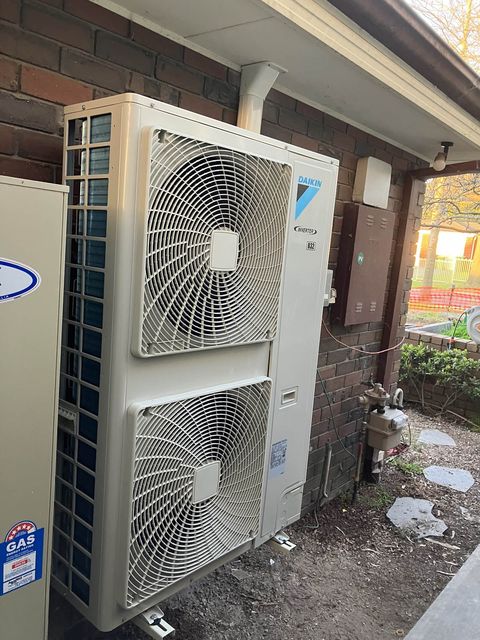
- Where each indoor unit and the outdoor unit will sit, and how the outdoor unit is mounted.
- The pipe run, the drain, and how the hole through the wall gets sealed.
- The electrical side, and who does it: a dedicated circuit, the isolating switch beside the outdoor unit, and any switchboard work.
- Removing and decommissioning the old unit, if there is one. Recovering its refrigerant is licensed work too.
- The RTA number, which starts with AU. A technician who isn't employed by an RTA holder has to show their own licence number.
- The certificates you'll get. A Victorian air conditioner install should finish with a Certificate of Electrical Safety and a plumbing compliance certificate.
- The manufacturer's warranty, the installer's workmanship warranty, and who registers the product.
- The start date, how long the work takes, and when payments are due.
What does "standard installation" actually cover?
Many quotes, especially from retailers, start from a standard back-to-back install: the outdoor unit straight behind the indoor unit, on the other side of the same wall. The definition is narrower than most people expect.
Appliances Online, for example, defines it as a single-storey brick veneer home with a tile roof, the outdoor unit on a concreted path, 3 m of refrigerant pipe, up to 15 m of electrical cabling and a switchboard with a spare space for a new breaker. It lists wall brackets, concrete pads and switchboard upgrades as to be quoted.
The Good Guys' standard split install has similar limits on pipe and cable, and says materials beyond what's listed mean extra charges on site. It excludes non-standard positions, multi-storey buildings, custom brackets and removing the old unit.
So if your quote says standard install, ask what that means at your place. An upstairs bedroom or a long pipe run can become an extra on the day unless it's written in now.
Extra lines a ducted quote needs
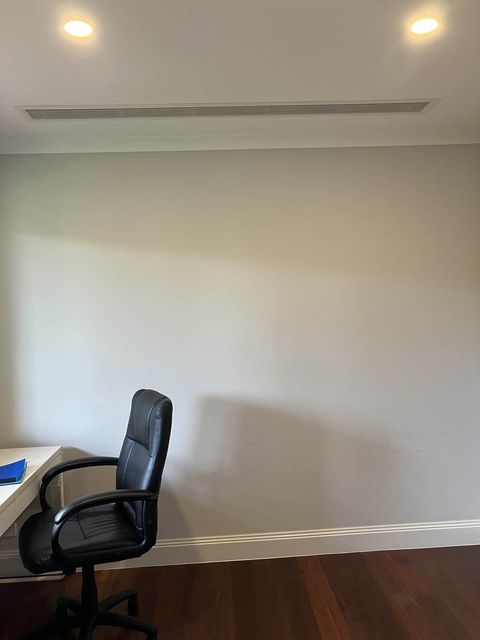
Ducted jobs have more parts, so the quote should too. Look for the number of outlets and where they go, the zones and the controller, and the duct insulation. The ACT Government recommends at least R1.5 insulation on ducting, and suggests raising it with your supplier because they may not provide it by default.
Replacing ducted gas heating with ducted reverse cycle? The ACT guide says the old gas ducts can't be reused, because they're too narrow and may have age-related problems. Expect new ductwork on the quote.
A large ducted or multi-head system can also need 3-phase power. The ACT guide says your installer can confirm it, so make sure it's on the quote.
Adding cooling to an existing gas ducted heater depends on the heater and the ducts. Rinnai says not every ducted heater can support it and the ductwork may need changes. Rinnai's booklet also gives a retrofit component a shorter warranty than a new system, so a ducted specialist should check compatibility before quoting and spell out which warranty applies.
Discounts on the quote: VEU and NSW ESS
If a Victorian Energy Upgrades (VEU) discount is on the quote, you should be told the name of the accredited person who'll create the certificates. That's a VEU rule. VEU air conditioner discounts only apply to systems that both heat and cool.
From 30 September 2026, ducted air conditioners carry a minimum VEU co-payment of $3,000 including GST. A ducted VEU quote showing nothing for you to pay isn't right, and no part of the co-payment can be paid back to you in money, goods or services.
In NSW, the Energy Savings Scheme discount appears upfront in the installer's quote, and you sign a nomination form before installation begins. Our guides to VEU and the NSW scheme go further.
A thin quote next to a complete one
| Thin quote | Complete quote | |
|---|---|---|
| Equipment | A brand and a size | Model numbers for each indoor and outdoor unit, with heating and cooling capacity |
| Sizing | Picked over the phone | Worked out from the rooms, windows, insulation and which way they face |
| Positions | Not mentioned | Where each unit goes, and how the outdoor unit is mounted |
| Electrical | Electrical included | Dedicated circuit, isolator, switchboard work, and who does it |
| Licences | None shown | RTA number, plus the state licence numbers for each trade |
| Paperwork | Not mentioned | The certificates you'll get and the warranties that apply |
How to compare two quotes fairly
Line up the equipment
Check both quotes are for the same type of system and a similar size. The ACT Government's guide says efficiency comparisons mean most between systems of similar capacity, rated for where you'll install them.
Ask why the sizes differ
If one installer suggests a noticeably bigger unit for the same room, ask each how they got there. Rinnai says an undersized unit often can't keep up, while an oversized one can short cycle and dehumidify poorly.
Match the inclusions
Run the checklist above over each quote. A shorter quote is often just one with more left out.
Put the gaps in writing
Email each installer the questions their quote doesn't answer and ask for a revised version. Their written answers become part of what you agreed.
Decide in your own time
If a deal is negotiated at a home visit you only asked them to quote on, it can carry a cooling-off period to the end of the 10th business day. Our cooling-off guide explains.
Gaps to query before you sign
- A total with no breakdown and no model numbers.
- Words like "or equivalent" next to the brand name.
- No RTA number anywhere on the quote.
- A deposit asked for on the spot at the first visit. During a cooling-off period, the supplier can't accept any payment.
- A clause saying there are no refunds, or no warranty beyond the manufacturer's. That kind of term can't remove your consumer guarantees.
- Electrical or gas work listed with no one named to do it.
Your part, and the installer's
You can
- Measure the rooms and note which way they face, so you can sense-check the size.
- Tell every installer the same thing about what you want, in writing.
- Check the RTA and licence numbers on the quote.
- Run it through our quote checker to spot gaps.
Leave to a licensed installer
- A heat load calculation for the rooms, not a guess.
- Checking the switchboard and power supply before quoting.
- Specifying ducts, zones and insulation on a ducted job.
- Listing every licensed trade on the job and the certificates each will issue.
What we'd do
If it were our home
We'd get written quotes from installers who do this kind of job every week, then lay them side by side, line by line. Anything one covers and another doesn't, we'd ask about by email. And we wouldn't sign on the first visit. A good quote is still a good quote next week.