What matters for ducted on the Gold Coast
Mostly a house job
Of the City of Gold Coast's occupied homes in 2021, 56.8% were separate houses. That's where ducted belongs. In an apartment, a split system is usually the practical choice.
Cooling does the heavy lifting
The Gold Coast Seaway averages a January top of 28.9 degrees with 70% afternoon humidity, and a July low of 12.0. ActronAir says tropical and subtropical areas have much greater demands than cooler regions, so the cooling capacity is the figure to get right.
Insulation and shade count
ActronAir also says a well insulated home likely won't need as much capacity as a poorly insulated one. The Queensland Government's advice for climate zone 2 homes is wide eaves and awnings shading the east and west sides, and both belong in the heat load.
Ducts and the ceiling
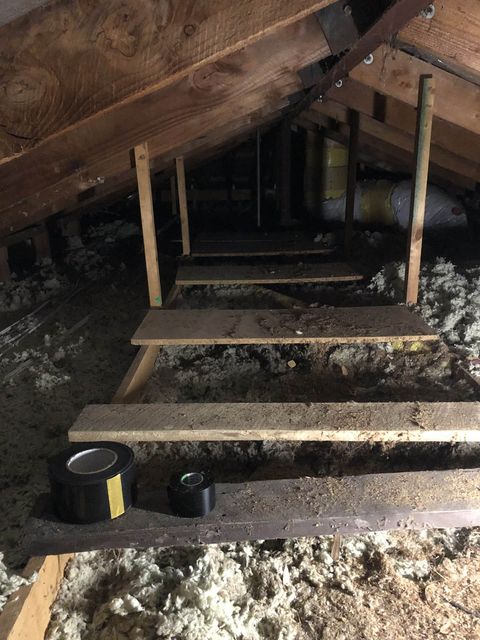
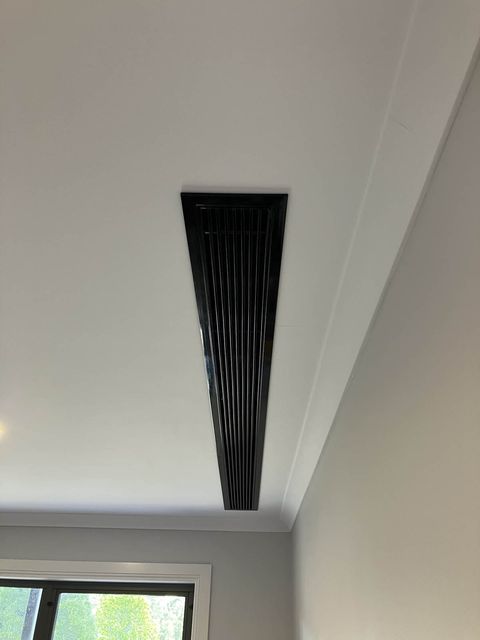
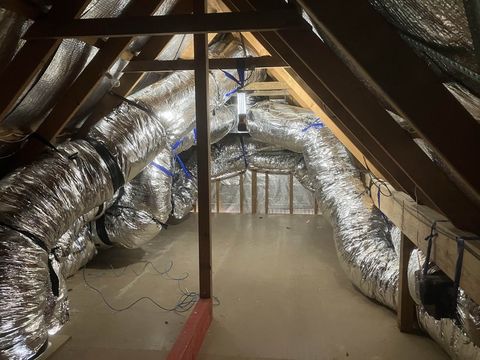
The ACT Government says ducting through the ceiling reduces your ceiling insulation and outlets can lower its thermal performance. Its guide recommends at least R1.5 insulation on the ducts, and says to ask for it.
One big outdoor unit near the sea
Mitsubishi Electric's instructions name the seaside among places to avoid installing. A ducted outdoor unit is large, so agree on a sheltered spot with open air and room to service it before the quote is final.
Zoning a Gold Coast house
Zoning lets you cool part of the house instead of all of it. Daikin's example assigns bedrooms to one zone and living areas to another, so on a humid night only the bedrooms get the air.
ActronAir adds two limits: the whole system runs in either cooling or heating at any one time, and zoning without the right temperature sensors can be less efficient. Ask for a sensor in each zone you'll use often. Our page on zoning and controllers goes into it.
What a Gold Coast ducted quote should show
- Cooling capacity in kW, worked out room by room, including shade and insulation.
- The zones, which rooms are in each, and where the sensors go.
- The duct insulation rating, and how the ceiling insulation will be put back.
- Where the outdoor unit goes, and what the warranty says about salt for that model.
- Any servicing the warranty asks for, such as the yearly residential maintenance in ActronAir's terms.
- Which ARC licence the technician holds. A system of 18kW or more needs an RAC01 holder.
- The QBCC licence number and the RTA number.
Your part, and the installer's
You can
- List the rooms you use at night and the ones you use by day.
- Note which rooms get afternoon sun and which are shaded by eaves.
- Find out if your home's ceiling insulation has ever been checked or topped up.
- Keep the return air filter clean once the system is in.
Leave to a licensed installer
- The heat load and duct layout.
- All work in the roof space.
- Refrigerant pipework, charging and commissioning.
- Electrical work, including any 3-phase connection a large system needs.
What we'd do
Our take
We'd ask for a room-by-room heat load that counts the shade and insulation, rather than a size picked from the floor area. We'd zone the bedrooms on their own, insist on R1.5 or better on the ducts, and fix the outdoor unit's spot before choosing the model. Then we'd give it to a ducted specialist who designs systems for coastal houses every week.