Which system fits a Gold Coast home?
At the 2021 Census, 56.8% of occupied homes in the City of Gold Coast were separate houses. Those usually suit ducted or a few splits in the rooms you use.
Another 21.7% were flats or apartments and 20.6% townhouses, terraces or semi-detached homes. There, a split system or a multi-split is the usual fit, as long as the building agrees to where the outdoor unit goes.
What the Gold Coast changes
Salt decides the position
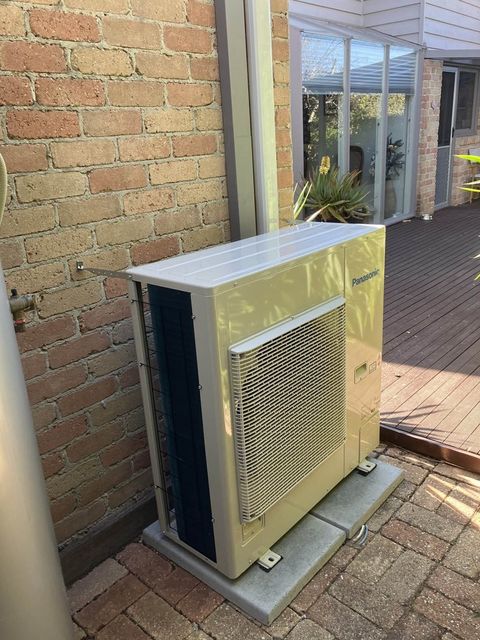
Mitsubishi Electric's operating instructions list salty places such as the seaside among places to avoid installing. Near the surf, ask for the most sheltered wall that still has open air around it, rather than the side that takes the sea breeze.
Coatings help, the clause decides
Daikin treats every outdoor coil with Blue Fin, Carrier says its outdoor units have an anti-corrosive coating, and TECO calls its version Gold Fin Protection. None of that changes what each warranty says about salt, so read the clause first.
Storm season
Ex-Tropical Cyclone Alfred brought gusts of over 100 km/h to the Gold Coast on 7 March 2025 and detached the roof of an apartment building. Ask how a wall bracket or rooftop frame will be fixed, and what the fixings are made of.
Shade cuts the load
For climate zone 2 homes like these, the Queensland Government recommends wide eaves and awnings to shade the eastern and western sides in summer. A well-shaded room needs less cooling, so point out your eaves and blinds at the site visit.
Neighbours close by
Queensland's default noise standard limits air conditioners to 5 dB(A) above background from 7am to 10pm and 3 dB(A) above background overnight, at the neighbour's place, unless the council sets its own standard. In attached housing, that rules out some spots.
The licences behind a Gold Coast install
Queensland needs a QBCC licence for mechanical services work at any value, which covers every air conditioning install. QBCC also says a licensee's ads, online directories included, must show the licensed name, a statement that they're licensed under the QBCC Act and the licence number. If an ad doesn't, ask why.
The refrigerant side needs an ARC licence. RSS03 stops at single-head splits under 18kW, so a multi-split or a ducted system above that needs an RAC01 holder. The electrical connection is a job for someone with an Electrical Safety Office licence.
Questions to ask before you say yes
- Which wall would you put the outdoor unit on, and why that one?
- What does this model's warranty say about salt, and does the coil have a coating?
- What are the bracket and bolts made of, and how are they fixed for strong wind?
- Do I need body corporate approval, and will you write up the proposal for it?
- What's your QBCC licence number, and your RTA number?
What you can do first, and what's theirs
You can
- Get the body corporate's rules on outdoor units if you live in a unit or townhouse.
- Walk around the house and note which side takes the sea breeze.
- Read the corrosion clause on the warranty card for the model you're quoted.
- Look up the installer's licence on the QBCC register.
Leave to a licensed installer
- Sizing from a heat load, including your shade and glass.
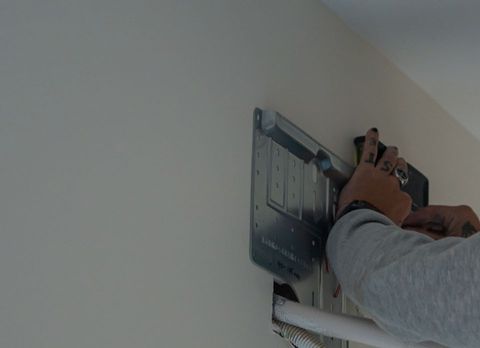
- Mounting and fixing the outdoor unit.
- Refrigerant pipework, leak testing and commissioning.
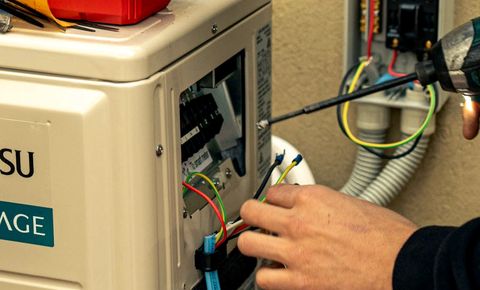
- The electrical connection, by a licensed electrician.
What we'd do
What we'd do
We'd choose the outdoor unit's spot before the model: out of the direct sea breeze, with open air around it and safe access for servicing. Then we'd pick a model whose corrosion clause we could live with, and ask for fixings that suit salt air and storm winds. In a unit, we'd have the body corporate's approval in writing before install day. And we'd want an installer who fits systems near the beach every week, because they'll already know which spots and fixings hold up.