What matters for ducted in Wollongong
Mostly houses
Separate houses were 68.4% of homes in the council area at the 2021 Census, with semis, terraces and townhouses another 12.2%. Ducted is mostly a house job; in a unit, splits are the usual answer.
Mild extremes
AdaptNSW says the Illawarra averages fewer than 10 days a year above 35 degrees, and Wollongong University station's January mean maximum is 25.8. Size for a humid summer afternoon, not an inland scorcher.
The escarpment side
Up to 50 nights a year drop below 2 degrees inland along the escarpment, while the coast sees very few. A house up the hill will lean on the heating far more than one by the beach.
Salt and wind on the outdoor unit
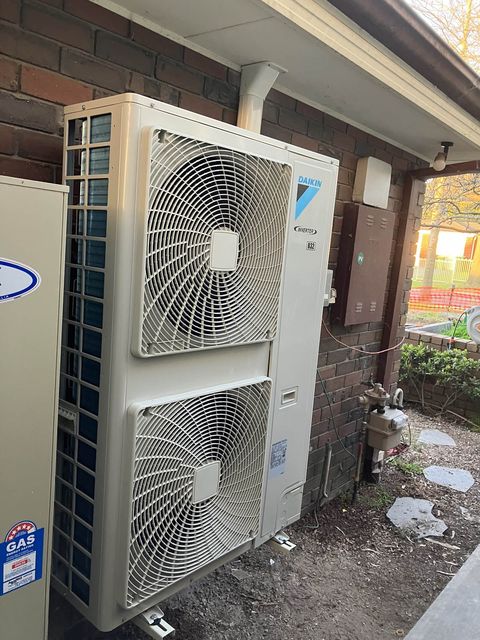
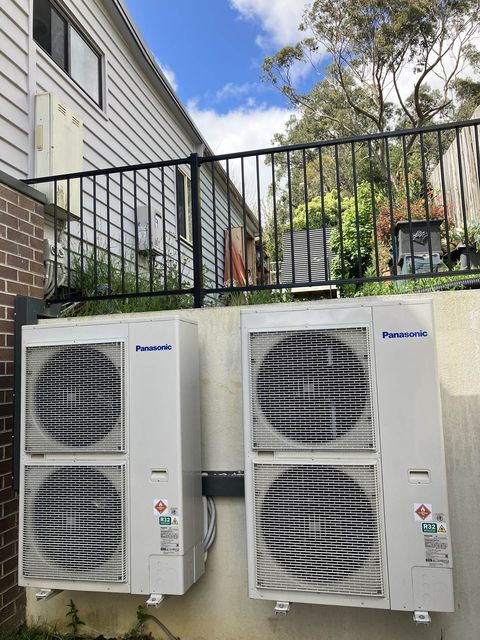
With the Tasman Sea on one side and westerlies gusting past 100 km/h in July and August, the outdoor unit's position and fixings deserve as much thought as the ducts.
Ducted or splits in Wollongong?
The ACT Government's buyer's guide points houses above 180 square metres towards ducted or multi-head systems, and smaller homes, or those that only need a few rooms done, towards splits. On a mild coast, where many summer days only call for the living area to be cooled, splits are often enough.
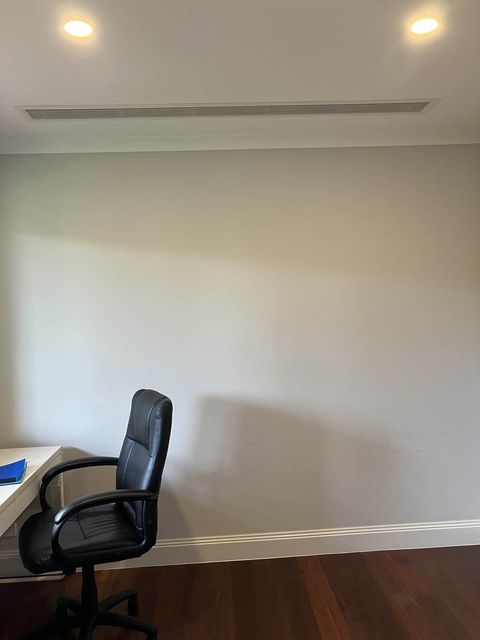
Ducted makes more sense in a bigger house, a two-storey home where the bedrooms get stuffy, or anywhere you'd rather not see wall units. Our split or ducted tool helps you weigh it up.
Zoning and insulation do the heavy lifting
Daikin gives the example of putting bedrooms in one zone and living areas in another, so only the selected zone gets air. ActronAir warns that zoning without the right temperature sensors can be less efficient, so ask where each sensor goes.
The ACT guide recommends at least R1.5 insulation on the ducts and notes that suppliers may not provide it unless asked. It also says ducting through the ceiling reduces your ceiling insulation, so ask how the installer will make that good.
What makes a Wollongong ducted job bigger
Old gas ducted heating. The ACT guide says those ducts are too narrow to reuse for reverse cycle, so plan on new ducting. Keeping the gas heater and adding add-on cooling is a different system that can use existing ducts where they're suitable.
The roof and floor. A tight or low roof space, or a house with no room underneath, makes the duct runs harder.
Coastal hardware for the outdoor unit, and a sheltered spot that still gets air.
Power. A bigger system may need 3-phase, which your installer can confirm.
The national ducted air conditioning page walks through the install itself.
Your part, and the installer's
You can
- List the rooms you actually use in summer and in winter.
- Note any room that's always stuffy or always cold.
- Once it's in, clean the return air filter on the schedule in your manual.
Leave to a licensed installer
- The heat load and the duct design.
- All work in the roof space.
- Refrigerant, electrical and any 3-phase work.
Ask a Wollongong ducted installer
- Would splits do the job in this house, and why ducted instead?
- How many zones, which rooms are in each, and where do the sensors go?
- What insulation rating do the ducts have?
- Where will the outdoor unit sit, out of the salt and the westerlies?
- What heating output will it give on a cold night near the escarpment?
What we'd do
Where we'd land
For a smaller Wollongong home, we'd look hard at splits first. For a bigger house, ducted with at least two zones, R1.5 ducting and a sensor in each zone is what we'd want quoted, with the outdoor unit tucked out of the salt and wind. We'd hand it to a ducted specialist who works on this coast, if we have one near you.