Why Wollongong systems need the attention
The Tasman along the whole eastern edge
The city occupies a narrow coastal strip with the Tasman Sea to the east. MHIAA's warranty terms, for one, make additional corrosion protection in coastal sea air the owner's job, and exclude damage from corrosive coastal environments.
Damp summer afternoons
Wollongong University station's January and February afternoons average 68% and 69% humidity. Samsung says to clean filters about every 2 weeks, or more often if you have pets, and a clogged filter is where condensation and mould problems tend to start.
Winter westerlies
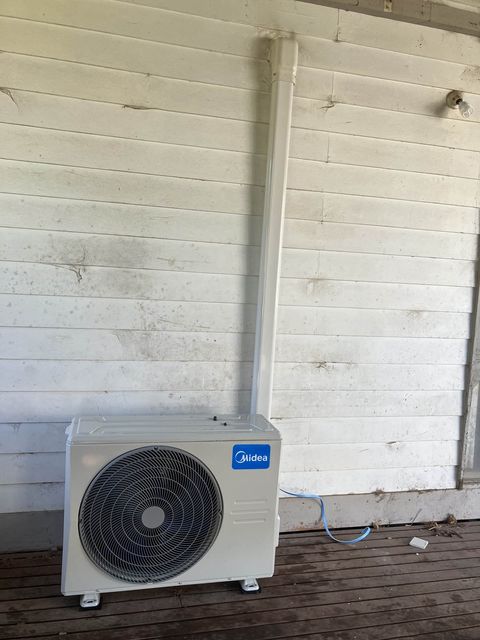
July and August bring westerly gales that can gust past 100 km/h. Afterwards, check from the ground for leaves packed against the outdoor unit and any movement in its bracket.
When to book in Wollongong
Yearly is the rule of thumb. The ACT Government puts it as every year or as the manufacturer recommends, and Gree's warranty card goes further, voiding cover if maintenance isn't carried out at intervals of no more than 12 months.
Late spring suits most Wollongong homes, ahead of the humid months. If your reverse cycle is your main heater up near the escarpment, where AdaptNSW counts up to 50 nights a year below 2 degrees, add an autumn visit.
Close to the surf, ask whether the outdoor unit needs washing between services too, because the brand's manual sets that schedule. For the standard list of what a service includes, see air conditioning service.
Coatings help, but they don't replace the service
Some brands treat their outdoor coils against corrosion. Daikin calls its treatment Blue Fin and says it's on all its outdoor coils, yet it still says maintenance and positioning matter. TECO calls its version Gold Fin Protection, and Carrier says its outdoor units have an anti-corrosive coating.
The NT Government's coastal advice, a yearly look at brackets and bolts for rust or looseness, is worth folding into each visit. Coastal homes has the brand-by-brand warranty detail.
What a Wollongong service should include
- Filters out and washed, with the indoor coil and fan inspected for mould.
- The condensate drain cleared, so damp-season water runs away freely.
- The outdoor coil and casing rinsed the way the brand's manual describes.
- The bracket, bolts and pipe insulation inspected for rust and wind damage.
- Refrigerant pressures checked by someone holding an RAC01 licence, with any leak repaired, never just topped up.
- The system run in both modes before the technician leaves.
Your part between services
You can
- Clean the indoor filters with the power off, and dry them in the shade.
- With the system switched off, hose the parts of the outdoor unit you can reach from the ground, if your manual allows it.
- Clear leaves and debris from around the outdoor unit after a windy spell.
Leave to a licensed installer
- Cleaning inside the indoor unit.
- Refrigerant and electrical work.
- Units above ladder height or on a roof.
Questions for a Wollongong technician
- How will you wash down the outdoor unit, and should I rinse it between visits?
- Will you check the bracket and bolts for rust while you're here?
- Do you hold the full RAC01 licence?
What we'd do
Our Wollongong routine
We'd book a yearly service with a wash-down built in, and keep every invoice with the warranty card in case a salt claim ever comes up. We'd look after the filters ourselves through summer, and want a service technician who works on coastal units every week and holds the full RAC01 licence. That's the kind of specialist we pass Wollongong service jobs to, where we have one.