Wollongong facts that shape the install
Humid, not scorching
At Wollongong University station, January averages a 25.8 degree maximum and 68% afternoon humidity. Rinnai warns that an oversized system short cycles and dehumidifies less effectively, so on this coast, bigger isn't safer.
Salt in the air
A corrosion guide based on AS 4312 rates land within 200 m of surf beaches as C5, 200 m to 1 km inland as C4, and 1 km to 10 km inland along ocean fronts with breaking surf and significant salt spray as C3. Mitsubishi Electric's instructions list salty places such as the seaside among places to avoid installing.
Gales in late winter
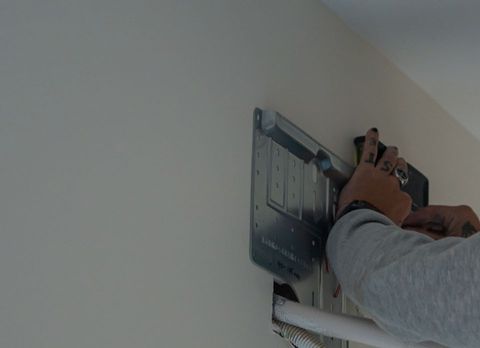
July and August bring westerly gusts that can top 100 km/h. An outdoor unit on a bracket on an exposed wall needs its mount and fixings chosen with that, and the salt, in mind.
Escarpment nights
AdaptNSW counts up to 50 nights a year below 2 degrees inland along the escarpment, against very few on the coast. The energy label gives heating capacity at 7 degrees and at 2 degrees, and up the hill it's the 2 degree figure that counts.
Houses and units
Separate houses make up 68.4% of homes in the council area, and flats or apartments 18.5%. In a strata scheme, the air conditioner needs a vote before it goes in.
Which system suits which Wollongong home?
A unit or townhouse: a split system or a small multi-split, once strata has agreed.
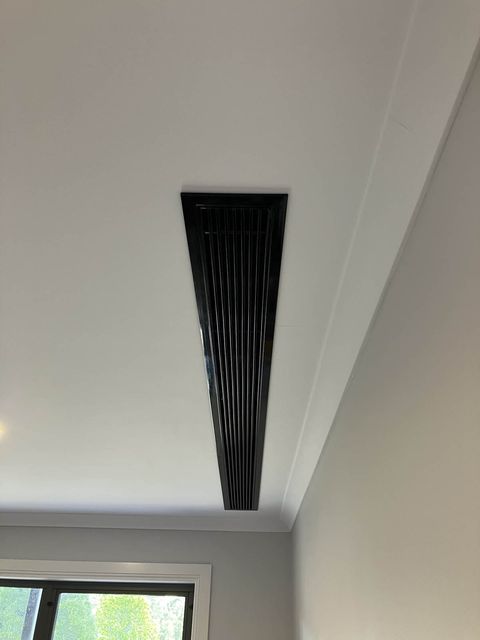
A house with roof space: ducted reverse cycle in Wollongong or a multi-split, if you want every room done.
A beachside house: whichever system suits, with the outdoor unit on the most sheltered side that still breathes. The ACT Government's guide warns against enclosing an outdoor unit in a courtyard or slat fencing, so shelter shouldn't mean boxed in.
Our national installation page covers how an install runs from quote to handover.
What makes a Wollongong install bigger or smaller
Coastal hardware. A coated coil, a sheltered mount and fixings that suit salt all add to the job near the water. The NT Government's advice for coastal homes, a yearly look at brackets and bolts for rust or looseness, makes sense here too.
The strata vote. A reverse cycle install is a minor renovation needing more than 50% of the votes cast at a strata meeting; work on the building's outside or structure needs a special resolution.
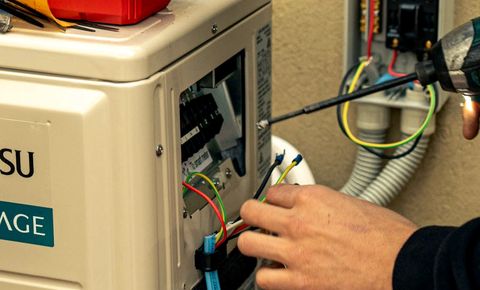
The switchboard. Mitsubishi Electric says each air conditioner needs a dedicated power supply, so an older board may need work first.
An old unit to remove, which means recovering its refrigerant before it comes off the wall.
NSW paperwork and the ESS
The installer needs a NSW licence or certificate for air conditioning work and an ARC refrigerant licence. Their ads should show the NSW licence number, and the RTA number (starting AU) belongs on the quote and invoice.
Energy NSW says Wollongong homes may be eligible for an ESS discount on an energy efficient air conditioner, and that a more efficient model generally gets a larger one. The installer partners with an Accredited Certificate Provider, which isn't part of the NSW Government, and the forms are done before installation.
Your part, and the installer's
You can
- Walk round the house on a windy day and note the sheltered walls.
- If you're in a unit, ask strata for the by-laws.
- Check the installer's licence on Service NSW before you sign.
Leave to a licensed installer
- Sizing from a heat load.
- Refrigerant pipework, leak testing and commissioning.
- The dedicated circuit and any switchboard work.
- Choosing a mount and fixings for the exposure.
Questions for a Wollongong installer
- What does this model's warranty say about salt, and does the coil have a coating?
- Which is the most sheltered spot for the outdoor unit that still gets fresh air?
- How will the outdoor unit be fixed against the winter westerlies?
- Have you sized it for humidity, rather than just going a size up?
- If I'm up near the escarpment, what's the heating capacity at 2 degrees?
- Will the ESS discount show on the written quote, and who's your Accredited Certificate Provider?
What we'd do
Our take
In Wollongong we'd put more thought into the outdoor unit than the indoor one: a sheltered spot that still breathes, fixings that suit salt and wind, and a warranty whose salt clause we've actually read. We'd size for damp summers, check the heating output if we lived up the hill, and give the job to an installer who fits units on this coast every week.