When to switch it off
A burning smell, a breaker that trips again and again, or water running from the indoor unit all mean stop. Mitsubishi Electric's instructions say to stop using the unit in those cases and, for a burning smell, to turn the breaker off. Leave the covers and the wiring alone.
How the coast shows up in Wollongong repairs
Salt on coils and fixings
Plenty of warranties exclude salt damage. Samsung's card excludes salt spray, Rinnai's booklet excludes salt and other corrosive substances, and Toshiba's certificate excludes damage from salt. A corroded coil on a beachside house may not be a warranty job.
Damp air and drips
Summer afternoons average 68% to 69% humidity at Wollongong University station. Long runs in very humid air, or with windows open, are a known cause of condensation dripping from indoor units.
Rare heat, sudden demand
AdaptNSW says the Illawarra averages fewer than 10 days a year above 35 degrees, but the record is 44.1. A system that's rarely pushed may only show a weak point on the first really hot day.
Winter westerlies
July and August gusts can top 100 km/h. After a big blow, look at the outdoor unit from the ground for debris, a shifted bracket or torn pipe insulation before you run it.
Before you call a repairer
Power and settings
Check the breaker is on, the remote has batteries and the mode is right. Timers and Sleep settings catch people out too.
Filters
Clean them if they're dusty. Mitsubishi Electric says dirty filters cause condensation inside the unit.
Drain hose
Samsung says the hose outside should point down, run straight and not end in water. If the drip only shows after rain, the hole in the wall may need sealing.
Outdoor unit
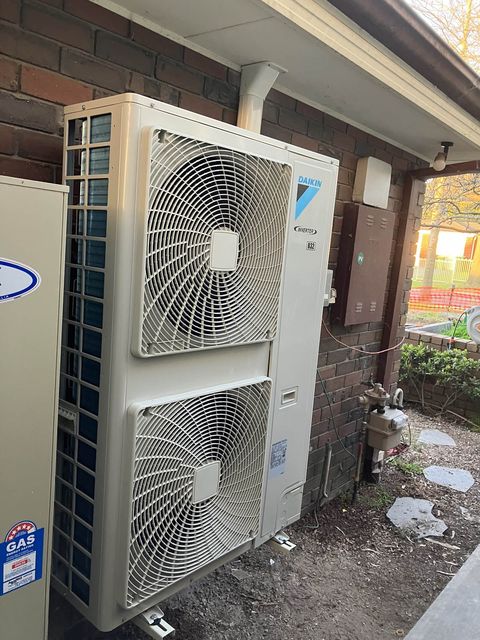
From the ground, clear leaves and look for rust or loose fixings. Never stand on it.
What makes a Wollongong repair bigger or smaller
Corrosion is the big one. A coil or casing eaten by salt may mean a major part. On an older system, that's the time to compare repairing with replacing: Solar Victoria says a system over 15 years old typically uses more than three times the energy of a modern reverse cycle one.
Refrigerant leaks. A unit that won't cool or heat may be losing refrigerant, and the leak has to be found and fixed. The ARC says topping up before that is illegal.
Access. A unit on a second-storey bracket or a roof takes longer to reach.
The warranty. Some brands insist on their own repairer while the system is covered. The national air conditioning repairs page explains what the main brands ask.
Your part, and the repairer's
You can
- Switching the unit off and catching any drips.
- Cleaning the filters and checking the drain hose.
- Noting when the fault happens and any error code.
Leave to a licensed installer
- Opening the unit, clearing drains and replacing parts.
- Any refrigerant or electrical work.
- Repairing corroded coils, brackets or fixings.
Questions to ask the repairer
- Is this corrosion, and does my warranty cover it?
- If the refrigerant's low, where is it leaking from?
- Do you hold an RAC01 licence and a NSW air conditioning licence?
- Is the part available locally, and how long will it take?
- At this unit's age, is it worth repairing, or should I get a replacement quote as well?
What we'd do
What we'd do
We'd start with the checks and the warranty card, then ring the brand if the system's still covered. Out of warranty, we'd want a repair specialist who sees coastal units all the time to tell us in writing whether it's salt, a drain or a genuine failure, and whether it's worth fixing at that age.