Switch it off and leave it off if
If you smell burning, see smoke or sparks, or the breaker keeps tripping, Mitsubishi Electric says to stop the unit and turn the breaker off. Don't keep resetting it, and don't take covers off or touch wiring. While you wait for the repair, don't fall back on an old unflued gas heater: the ACT Government says to replace those immediately because they give off dangerous carbon monoxide fumes. And never bring an outdoor gas heater inside.
Canberra conditions that look like faults
Frost and fog
Canberra averages 41 foggy days a year, and the ABS counted 117 frosts in 2006. Cold, damp mornings are exactly when Mitsubishi Electric says frost builds up on the outdoor unit and the system stops to defrost. White vapour from the outdoor unit during that pause is normal.
Months on heat
Frosts in 2006 ran from 12 April to 17 November. That's a lot of hours on heating, so book a repair as soon as something changes, before a cold snap makes the wait harder.
A few sharp hot days
Canberra's long-term average is just 4 days a year at 35 degrees or more, yet the record is 44.0. ActronAir says air conditioners lose cooling capacity above 35 degrees, so a unit that struggles on the hottest afternoon isn't always broken.
Checks before you book
Wait out the defrost
On a frosty morning, give it 10 minutes before deciding it's failed. Mitsubishi Electric also says air doesn't blow straight away when heating starts, while the unit warms up.
Check the breaker and the isolator
Make sure the breaker at the switchboard is on, and that the isolating switch beside the outdoor unit hasn't been turned off.
Check the remote and mode
Fresh batteries, the right mode, and no Timed Off or Sleep setting switched on, as Samsung suggests.
Clean the filters
Mitsubishi Electric lists dirty filters among the reasons a room won't heat or cool enough. Power off first.
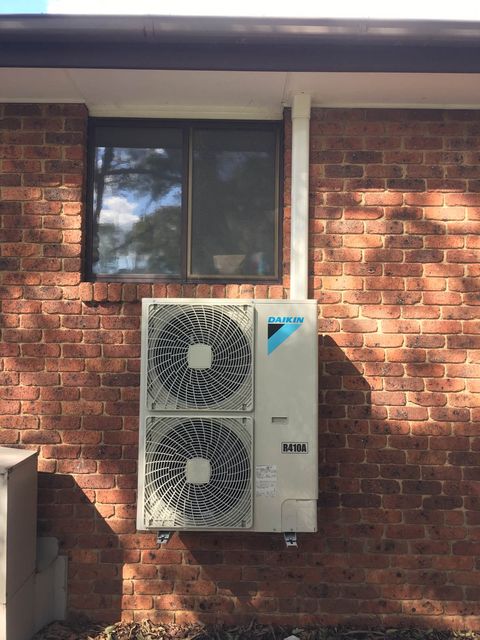
Look at the outdoor unit from the ground
Clear leaves from around it if they're easy to reach, but don't open it or stand on it.
Who can repair it in the ACT
A repair that touches the refrigerant needs a technician with a full RAC01 licence. The restricted RSS03 licence doesn't cover refrigerant repairs, and the ARC says topping up a system before its leaks are found and fixed is illegal.
The electrical side has its own limits here. A restricted refrigeration and air conditioning electrical licence covers disconnecting and reconnecting. Any new wiring needs an unrestricted electrical licence, which Access Canberra's public registers will confirm.
Licence-checked technicians near you who specialise in your type of system see each repair, where we have them, and your contact details go only to the one who takes it. If no Canberra technician takes it within 48 hours, technicians elsewhere in the ACT may see it too.
Repair or replace?
The system's age and the failed part decide most of it. Solar Victoria says a system more than 15 years old typically uses more than three times the energy of a modern reverse cycle one, so for a major fault on an old unit, get a replacement quote alongside the repair. Our repair or replace quiz helps weigh it up.
If the thing that's failed is an old gas heater rather than an aircon, the ACT Government recommends moving to the most efficient electric system when the time is right. See reverse cycle in Canberra.
Questions to ask the repairer
- What's the fault, and how did you find it?
- Is it under the brand's warranty, and can you do warranty work for this brand?
- Does the fix involve refrigerant, and do you hold an RAC01 licence?
- Is the part in stock, or does it have to be ordered in?
- Who'll do any electrical work, and what licence do they hold?
What we'd do
What we'd do
On a frosty morning we'd give the system ten minutes before calling it broken, then run the basic checks. If it still won't heat, or it trips the breaker, we'd switch it off and find the warranty card, and call the brand or the original installer first if it's still covered. Out of warranty, we'd want a repair specialist who knows the brand, with the fault and the fix written down before work starts. And we'd leave any old unflued gas heater out of it.