Why servicing matters more on the Coast
Wet air means a wet coil
Afternoon humidity at Sunshine Coast Airport averages 70% in January and 71% in February. Pulling that moisture out keeps the indoor coil and drain tray damp for months, and Mitsubishi Electric says dirt inside the unit can feed mould and clog the drain.
Sea air on the outdoor unit
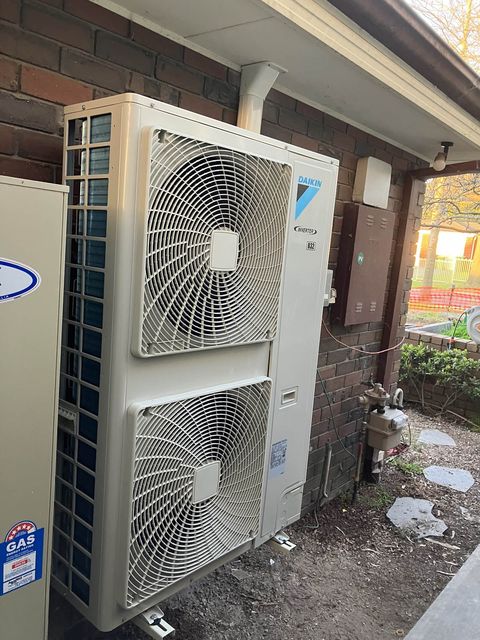
The beaches the council has prioritised for coastal hazard work, including Mooloolaba, Maroochydore, Bulcock Beach and Golden Beach, are about as close to the water as homes get. Daikin coats all its outdoor coils with Blue Fin, but still calls proper maintenance and positioning essential.
Storm season
Sunshine Coast Council says storms usually run from November to March. A visit before then is the time to check the drain, the electrical connections and the seal where the pipes go through the wall.
What a Sunshine Coast service should cover
Filters, coil and fan
The filters come out and get washed, then the coil and fan behind them are checked for dust and the first signs of mould.
The drain
The drain tray and line (the pipe carrying condensed water outside) are cleared and tested, so water pulled from humid air leaves the house instead of dripping inside.
A wash-down for the outdoor unit
ActronAir's warranty terms describe extra corrosion protection in sea air as regularly washing down the outdoor unit, panels and coils with a mild detergent. Near the beach, ask for it as part of the visit.
Fixings and the wall seal
Brackets and bolts checked for rust, and the wall penetration checked, because Samsung lists rain getting in through the wall hole as one cause of indoor leaks.
Refrigerant check and a test run
Done by an RAC01 licence holder, in both cooling and heating, with anything that needs fixing written down for you to decide on later.
What makes a service bigger or smaller here?
Salt build-up is the big one. A beachside unit that's gone a few years without a wash-down may need more than a routine clean, and corrosion is often outside the warranty: Mitsubishi Electric's card, for one, doesn't cover salt damage to paintwork, metalwork or trims.
Mould is the other. If the system smells musty when it starts, the coil and fan may need a full mould clean rather than a filter wash. Then come the number of indoor units and how hard they are to reach.
In Queensland, the QBCC counts maintenance and testing of air conditioning as mechanical services work, licensed at any value, and checking the refrigerant needs a full RAC01 licence. Our national service page has the warranty side.
Between services: your part and the technician's
You can
- Wash the filters on your manual's schedule. Most manufacturers say about every two weeks, so check yours.
- After a humid day on COOL or DRY, run FAN mode for a while. Mitsubishi Electric recommends it to dry the inside of the indoor unit.
- If your manual allows it, rinse salt off the outdoor unit from the ground, with the power off at the isolator first.
- Keep plants, pool gear and stored things clear of the outdoor unit.
Leave to a licensed installer
- Cleaning inside the indoor unit, which Mitsubishi Electric says owners should never try to wash.
- Anything to do with the refrigerant.
- Electrical connections and the outdoor unit's fixings.
- Any unit you can't reach from the ground or a short ladder.
Questions to ask before you book
- Will you wash down the outdoor unit and check its brackets for rust?
- Do you clean the coil and drain tray, or just the filters?
- Does the technician hold an RAC01 licence, and what's your QBCC licence number?
- Will you test it in heating as well as cooling?
- If you find a fault, will you write it up separately rather than fix it on the spot?
What we'd do
What we'd do
Book a yearly service in late spring, ask for the outdoor unit to be washed down and its fixings checked as part of it, and keep every invoice together for the warranty. Choose someone who services systems near the beach all the time, because they'll know what salt does to a coil and won't skip the drain. Licence-checked local service specialists see your job where we have them, and the one who takes it gets your contact details. If we don't have anyone, we'll tell you plainly.