What a Perth service has to allow for
A long, hot season
Perth gets 26 days above 35 degrees and five above 40 in an average year. Daikin suggests a licensed technician looks the system over at the start of every summer, which in Perth means late spring.
Afternoons without the sea breeze
Most summer afternoons, the Fremantle Doctor blows in from the south-west and takes the edge off. On the days it doesn't, your system carries the whole load, and that's when you find out whether the coil and filters were clean.
Salt near the surf
The Galvanizers Association of Australia's guide rates the first 200 m back from surf beaches as C5 for corrosion, 200 m to 1 km as C4, and 1 to 10 km along ocean fronts with breaking surf and salt spray as C3. It adds that the bands can reach further inland with the prevailing wind.
Heating in winter
In 2006, 21% of WA households with heating used reverse cycle as their main heater. If yours is one, have the heating mode run at the same service, before July nights settle around their 8.1 degree average.
What a Perth service should cover
A proper service goes well past the filters. Daikin's idea of a pre-summer tune-up takes in the coils, the refrigerant charge, the electrical connections, the drains and any ductwork, all done by a licensed technician.
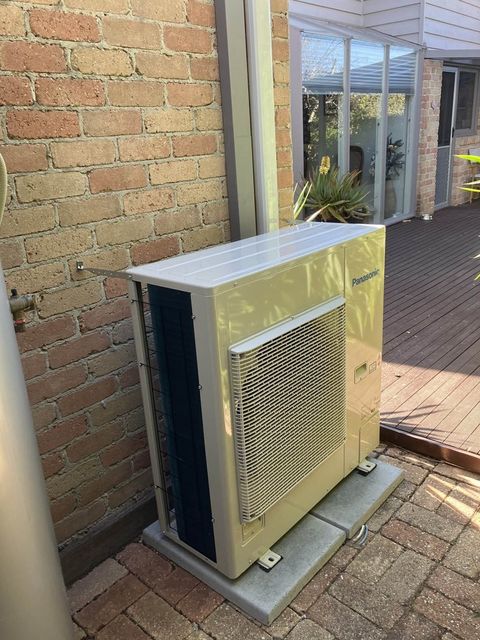
For a coastal home, add the outdoor unit's coil and casing. Daikin says all its outdoor coils carry an anti-corrosion treatment called Blue Fin, yet still calls maintenance and positioning essential, and its warranty card leaves extra corrosion protection in sea air to the owner.
Anything the technician finds should come back to you as a written item you can think about, not a repair done on the spot. The general checklist is on our air conditioning service page, and Perth's heating and cooling page covers the bigger local picture.
What makes a Perth service bigger or smaller?
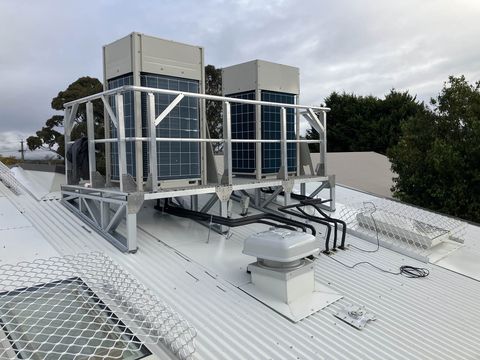
Each indoor unit is its own job, so three splits take longer than one, and a ducted system adds the return air filter and the zones. Access counts too: a head above a stairwell or an outdoor unit on the roof needs more time and gear.
Salt and neglect add the most. A coastal unit that hasn't been touched in years may need a deeper coil clean, and corrosion found on the day is a repair to quote separately. A low refrigerant reading means a leak to track down, never a quick top-up: the ARC says topping up before leaks are found and fixed is illegal.
Questions to ask before the technician comes
- Do you hold a full RAC01 refrigerant licence, so you can check the charge?
- Will you run the heating as well as the cooling?
- We're close to the beach. Will you check the outdoor coil and casing for corrosion?
- If you find a fault, will you write it up and quote it separately?
- What's your RTA number? It starts with AU and belongs on the invoice.
- If electrical work turns up, will a licensed electrical contractor do it?
Your part, and the technician's
You can
- Clean the filters to your manual's schedule. Daikin suggests at least monthly through summer.
- Switch off at the isolator or breaker first, and dry the filters in the shade before they go back.
- Keep sand, leaves and garden clutter clear of the outdoor unit.
- Write down any smell, drip, noise or room that never cools, and tell the technician.
Leave to a licensed installer
- Cleaning the coil, fan and drain inside the indoor unit.
- Checking the refrigerant charge and looking for leaks.
- Electrical repairs beyond the limited work a technician's restricted electrical licence allows in WA.
- Any unit on a roof or out of comfortable ladder reach. Evaporative coolers are a separate trade: see evaporative cooler servicing in Perth.
What we'd do
Our take
We'd book in late spring, ask for heating and cooling both to be run, and within a kilometre of the surf we'd have the outdoor coil and casing checked every time. We'd want an RAC01 technician who services our kind of system every week, a split specialist for wall units or a ducted specialist for a roof system, and any repair in writing before it's done.