After a cyclone or a big storm
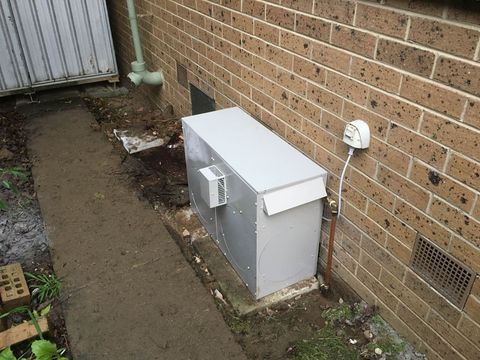
Don't switch the system back on if the outdoor unit has been hit by debris, pulled off its bracket or sat in floodwater. Stay away from fallen power lines and wet electrical equipment, and have a licensed technician or electrician check it before it runs again.
Why units fail in Darwin
The build-up
October and November are Darwin's hottest months, with mean maximums of 33.8 and 33.7 degrees at the airport and an average November minimum of 25.4. A unit that never gets a break is the one most likely to fail in that stretch.
Storms and power cuts
When Cyclone Marcus crossed the coast on 17 March 2018, approximately 26,000 homes lost electricity. After any outage, Mitsubishi Electric says a unit won't run for about 3 minutes when it restarts, so give it a moment before assuming the worst.
Water
In the wet, afternoon humidity averages over 70%, so a unit pulls a lot of water from the air. Samsung lists a clogged drain, a bent or upward-facing drain hose and a unit that isn't level among the causes of indoor leaks.
Salt and old fixings
The NT Government says corrosion is particularly relevant close to the coast, and that older structures are more likely to have corroded, rotted or termite-damaged parts. A loose outdoor unit is both a repair and a cyclone risk.
Check these first
If the room won't cool, check the mode, the set temperature and the fan speed, clean the filters, and make sure nothing blocks the indoor or outdoor unit. Mitsubishi Electric also lists an open window or door, so close the house up.
If water is dripping from the indoor unit, switch it off, as Mitsubishi Electric advises. From the ground, look at the drain hose outside: Samsung suggests checking it points down, isn't bent and isn't sitting in water. Leave anything more to a technician. Water dripping from the outdoor unit is often normal, and our leaking water guide explains the difference.
What makes a repair bigger or smaller
A blocked drain or a failed fan is usually a short visit. A corroded coil, a refrigerant leak or an outdoor unit damaged in a storm is bigger. Leaks must be found and repaired before any regas, and that work needs a full RAC01 licence.
If the coil is corroded through and the unit is out of warranty, a repair may not be worth it. Our repair or replace tool helps you weigh it up. Storm damage may be an insurance matter, so photograph the unit before anything is moved and check your policy.
Questions to ask the technician
- What caused the fault, and is it likely to come back in the wet?
- Is it a refrigerant leak, and where is it?
- Do you hold a full RAC01 licence?
- Is the outdoor unit's bracket sound, or does it need replacing too?
- With this much corrosion, would you repair the unit or replace it?
What we'd do
What we'd do
If a unit under five years old were leaking water or had a failed fan, we'd have it repaired. If it's older, the coil is corroded through and it needs refrigerant work, we'd get a replacement quote at the same visit, before the next build-up finds the next weak spot. After any cyclone we'd have the fixings checked, even if the unit still runs.
Tell us what's wrong and your postcode, and licence-checked technicians near you who repair your type of system will see the job, where we have them. The one who takes it gets your contact details, and no other technician does. The national repairs page covers warranty first steps, and our Darwin page has the local picture.