Why sizing is different here
ActronAir says tropical and subtropical parts of Australia put much greater demands on air conditioning than cooler regions, and that capacity falls once it's above 35 degrees outside. So a rule-of-thumb chart written for the south can undersize a Darwin room.
Bigger isn't automatically better either. Rinnai warns that an oversized system short cycles, switching on and off, and dehumidifies less effectively. With an average January dew point of 24.2 degrees at Darwin Airport, that's the difference between cold and comfortable.
Darwin conditions that change the install
Wind region C
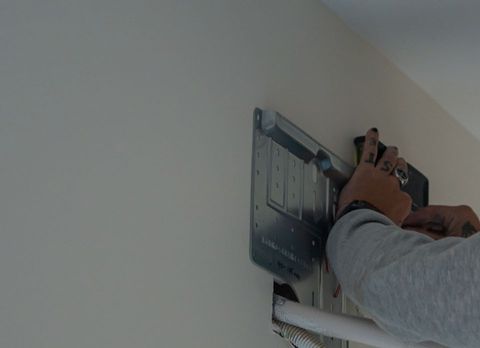
Lysaght's wind guide classes Darwin's suburbs as cyclonic, with the site classification depending on distance from the coastline. Ask how the outdoor unit will be fixed for that, and what the bracket and bolts are made of.
Salt and corrosion
Mitsubishi Electric's manual lists salty places such as the seaside among places to avoid, and Daikin's warranty card puts additional corrosion protection in sea air on the owner. Near the harbour or the beaches, ask what coastal protection the quoted model has.
Units and rentals
A quarter of Greater Darwin's homes (25.0%) were flats or apartments in 2021, and 43.8% were rented. A body corporate may control where outdoor units go, and renters need the owner's agreement first. See apartments and strata.
Raised and louvred homes
Raised tropical houses with louvres and screened walls were designed to let air move through. To air condition one of those rooms, it has to be closed in well enough to hold the cool.
Older houses
The NT Government notes that older structures are more likely to have corroded, rotted or termite-damaged components. Ask the installer to check the wall or frame the outdoor unit will hang from.
Who can install it in the NT?
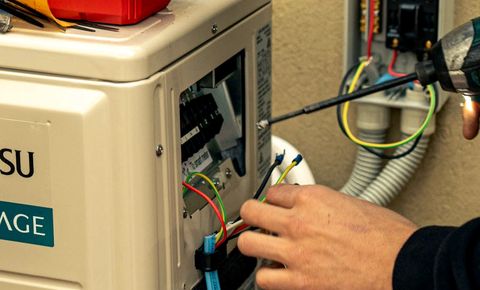
The ARC refrigerant licence is national, so the same rules apply in the Territory as anywhere: a full RAC01 licence, or the restricted RSS03 for single-head splits under 18kW. The ARC also tells licence holders to check local rules for electrical and contractor work.
We couldn't confirm the NT's electrical licence details at the source, so ask for every licence number the installer and their electrician hold, plus their RTA number, which the ARC requires on quotes and invoices.
The Australian Consumer Law applies in the Territory as well. A deal you sign at the kitchen table can be an unsolicited consumer agreement with a 10 business day cooling-off, even though you asked for the quote. Our cooling-off guide explains it.
Questions to ask a Darwin installer
- What size do you recommend, and how will it cope with humidity as well as heat?
- How will the outdoor unit be fixed for cyclonic winds?
- What corrosion protection does this unit have, and what does the warranty say about salt air?
- Where will the condensate drain empty?
- Which licences do you and your electrician hold, and can I have the numbers?
What we'd do
What we'd do
We'd have each room sized from a heat load done for Darwin, not a southern chart, and we wouldn't let anyone talk us into the biggest unit just to be safe, because an oversized one leaves the room clammy. We'd want the fixing method and the coastal protection written on the quote, from an installer who fits systems in the Top End every week.
Tell us the rooms and your postcode. Where we have licence-checked installers near you who specialise in that install, they see the job, and whoever takes it is the only one who gets your details. The national installation page and our Darwin page have more.