Why Brisbane units fail when they do
Storms and power cuts
On 27 November 2014 a storm with gusts of up to 144 km/h and hail the size of tennis balls damaged at least 22,000 Brisbane homes, and cut power to 108,000 homes and businesses at one stage. Storm season is when outdoor units take knocks and breakers trip.
Muggy days and drips
Mitsubishi Electric says not to run its units for more than 4 hours in high humidity (80% or more) or with a window or outside door open, because condensation may drip. On a sticky day, shut the verandah door before blaming the unit.
Floodwater
The February 2022 flood affected 23,400 Brisbane properties. An outdoor unit or switchboard that's been under water needs a licensed technician, and an electrician for the switchboard, before anyone turns it on.
The hottest afternoons
Temperatures above 38 degrees are uncommon in Brisbane. When it does get that hot, ActronAir says air conditioners lose cooling capacity above 35 degrees, so a unit struggling on the worst day isn't always faulty.
Big wind events
Ex-Tropical Cyclone Alfred in March 2025 brought Brisbane's first tropical cyclone warning since Cyclone Nancy in 1990. After strong winds, look over the outdoor unit from the ground before switching it back on.
Leave it off if you see any of these
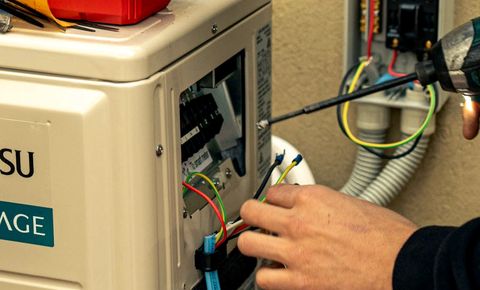
A burning smell, smoke or sparking, water streaming from the indoor unit, or an outdoor unit that has sat in floodwater. For a burning smell, Mitsubishi Electric says to stop the unit and turn the breaker off. Don't open any covers or touch the wiring, and don't climb up to a unit on a roof.
Safe checks before you book
Power
See whether the breaker at the switchboard has tripped. If it trips again, or trips often, Mitsubishi Electric says to stop using the unit and get it checked, so don't keep resetting it.
Remote, mode and timers
Fresh batteries, the right mode, and Samsung's tip: make sure Timed Off or Sleep isn't switched on.
Give it a few minutes
After a power cut, Mitsubishi Electric units won't run for about 3 minutes after restarting, to protect themselves.
Filters and airflow
Clean the filters as your manual says and clear anything crowding the outdoor unit.
Look, don't touch
From the ground, check the outdoor unit for bent fins, dents or storm debris, and write down any error code on the display before you call.
Hail, insurance and the warranty
Read the warranty card before booking, because weather damage is often excluded. Mitsubishi Electric's card doesn't cover damage to paintwork, metalwork or trims caused by hail, and Haier's booklet excludes hail damage too.
For storm or hail damage, talk to your home insurer as well, and photograph the unit before anything is moved or repaired. For a fault on a younger system, the brand may decide who does the repair. Our warranties guide explains how that works.
Who can repair it in Queensland
QBCC counts repairing an air conditioner as mechanical services work, which needs a QBCC licence at any job value. Anything that touches the refrigerant needs a technician with a full RAC01 licence.
A restricted electrical licence for air conditioning lets a technician test and repair the unit itself. New wiring or a new circuit is a job for a licensed electrician.
Ask before you agree to the repair
- What's the fault, and how did you confirm it?
- Is this storm or hail damage I should take to my insurer, or wear and tear?
- Does the repair involve the refrigerant, and if so, where's the leak?
- Is the part on hand, or does it need ordering?
- What's your QBCC licence number?
What we'd do
What we'd do
After a storm, we'd check the breaker, give the unit a few minutes, and look at the outdoor unit from the ground. Anything hail-damaged or flooded stays off. If it drips on a muggy day, we'd close the doors and clean the filters before ringing anyone. If it still misbehaves, we'd want a repair technician who knows the brand to find the fault, and we'd take photos first if insurance might come into it.