
Armidale, New South Wales
Heating and cooling in ArmidaleA heating town first. Choose the system for July.
In Armidale, heating is the main job and cooling is the extra. July nights at the airport average 1.4 degrees, frost and valley fog are common, and the town rarely goes past 35. If you're installing air conditioning here, choose it on how well it heats on a frosty morning, then check it can cool the few hot afternoons.
What's different about Armidale
Long, cold winters
At Armidale Airport AWS (1994 to 2023, 1,079 m above sea level), July's mean daily minimum is 1.4 degrees. The Tree Group Nursery station (987 m) averages minus 0.3 degrees in July. Overnight temperatures drop below minus 5, and minus 11.2 degrees was recorded on 30 June 2010.
Frost and fog
Winters are long and cool with many frosty nights, and residents often wake to thick fog in the Armidale valley. AdaptNSW says the higher parts of the New England Tablelands average 90 to 110 cold nights below 2 degrees a year.
Warm, rarely hot
January's mean daily maximum at the airport is 26.2 degrees. Armidale passes 30 degrees on an average of 13 afternoons a year but rarely goes higher than 35, and the airport's highest is 37.1 degrees, in February 2017.
Cool temperate
The building code lists Armidale as climate zone 7, cool temperate, the same zone it gives Orange and Bathurst.
Wood smoke
Winter air quality in Armidale is reduced by solid fuel domestic wood heaters.
Will reverse cycle heat an Armidale house?
Yes, if it's chosen for heating. The ACT Government's guide says good reverse cycle systems keep working at minus 10 degrees, and that air at 0 degrees still holds over 90% of the heat energy of air at 40.
The headline kW figure won't tell you how a unit copes in July. Look at the red heating stars for the cold zone on the energy label, and the heating capacity at 2 degrees outside. The ACT Government also suggests asking whether a split has an 'H2' rating, which it says means it'll work efficiently through a Canberra winter, and that's a fair question in any tableland town.
Size it for the coldest room you use, not the summer. Mitsubishi Electric says a proper heat load calculation is essential, covering climate, orientation, insulation, windows and ceiling height.
Why foggy mornings make it pause
Mitsubishi Electric says frost forms on the outdoor unit in heating when the outside temperature is low and the humidity high, and the unit then stops for up to 10 minutes to defrost. A foggy minus-five morning is exactly those conditions, so expect a few pauses and some white vapour outside. It isn't a fault.
Where that melted ice goes matters more than people think. Mitsubishi Electric says water drips from the outdoor unit in heating and during defrost. On an Armidale night it can refreeze, so ask the installer to place the unit and its drainage away from paths, steps and driveways.
Moving away from a wood heater
Reverse cycle is the main electric alternative, delivering 3 to 6 units of heat for every unit of electricity by the ACT Government's figures. Armidale households may be eligible for the NSW Energy Savings Scheme discount on a new energy efficient air conditioner, which is based on its potential energy savings. It's arranged through the installer and an Accredited Certificate Provider, independent of the NSW Government, and the nomination form must be signed before installation.
A large or draughty house may need more than one unit, or a ducted or multi-split system. Our reverse cycle page compares them.
Questions to ask an Armidale installer
- What's this unit's heating capacity at 2 degrees outside, and how many red stars does it get in the cold zone?
- Did you size it from a heat load for winter, or from the room's floor area?
- Where will defrost water drain, and will it freeze across a path?
- Who's doing the electrical work, and does your NSW licence include it?
Do you need cooling at all?
Not much. With an average of 13 afternoons a year over 30 degrees, cooling is a bonus that comes with a reverse cycle system rather than the reason to buy one. That's why we'd never size an Armidale system for summer: get the heating right and the cooling looks after itself.
What we'd do
What we'd do in Armidale
We'd choose a reverse cycle system on its heating figures at 2 degrees, sized from a winter heat load for the rooms you live in, and we'd think about defrost drainage before the outdoor unit goes on the wall. Ask a reverse cycle heating specialist who installs in tableland frost. Send us the job and your postcode. Licence-checked Armidale installers who specialise in that work can see it, and the first to take it is the only installer who gets your contact details. If no Armidale installer takes it within 48 hours, installers elsewhere in New South Wales may see it too.
What this work looks like
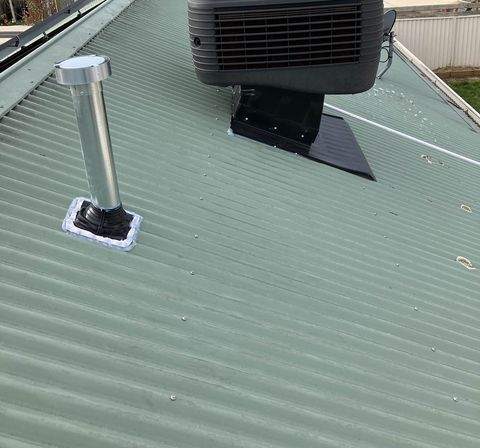
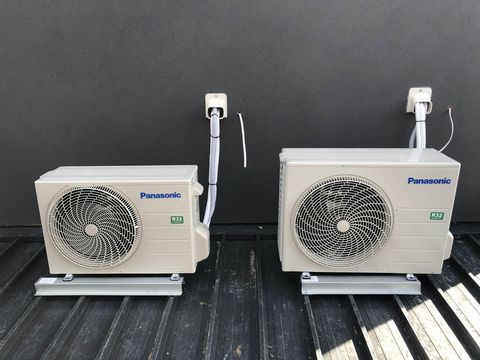
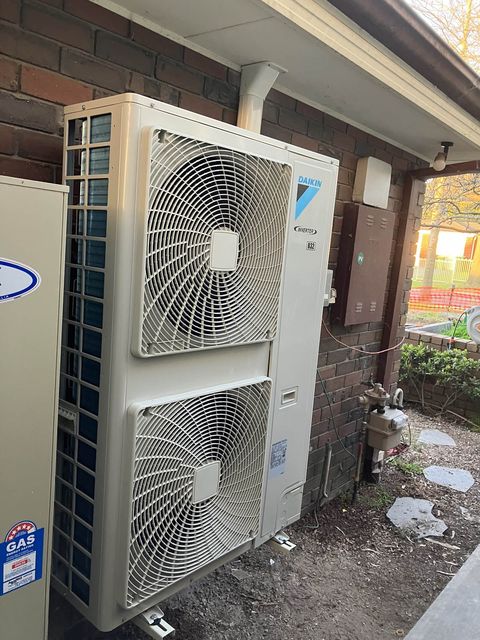
Photos from real jobs in Melbourne, to show what the work looks like. They aren't from an installer near you.
Questions people ask
Does reverse cycle work in an Armidale winter?
Why does my heat pump stop blowing warm air on foggy mornings?
Can I get the ESS discount to replace my wood heater?
What size air conditioner do I need for an Armidale living room?
Ready for the right installer to take a look in Armidale?
Your postcode and three quick questions. Licence-checked local installers who specialise in your kind of job see it, and the one who takes it gets in touch to quote.
Read next
- 01Reverse cycle air conditioningHow reverse cycle heats and cools, which type suits your home, and what to check for winter.
- 02Heat pumps for heatingHow reverse cycle heats from outside air, and how it copes on frosty mornings.
- 03Energy ratings and efficient air conditionersHow to read the zoned label and find an efficient air conditioner for your climate.
- 04Air conditioner size calculatorA rough kW size from your room's measurements, and what that number leaves out.
- 05Reverse cycle or gas heating?Efficiency, cold mornings, carbon monoxide and the Victorian gas rules, in plain terms.
- 06NSW Energy Savings SchemeHow the ESS discount works on a new or replacement air conditioner, and what's left out.
Where this information comes from
- Wikipedia Armidale, 28 October 2026
- NSW Office of Environment and Heritage (AdaptNSW) New England North West climate change snapshot (NARCliM 1.0 edition; Climate of the region section), 28 October 2026
- Australian Building Codes Board NCC 2016 Volume One, Part A1 Interpretation, Table A1.1 Climate zones for thermal design: various locations, 28 October 2026
- NSW Government (NSW Climate and Energy Action) Air conditioner upgrade incentive (Energy Savings Scheme), 28 October 2026
- ACT Government, Sustainable Household Scheme Heating and cooling your home: a guide to reverse cycle systems (PDF), 27 March 2023
- ACT Government, Everyday Climate Choices Heating for your home, 28 October 2026
- Mitsubishi Electric Australia Split-type air conditioners, indoor unit MSZ-AS90VGD, operating instructions (PDF), 26 October 2020
- Mitsubishi Electric Australia Air Conditioner Buying Guide, 28 October 2026
- NSW Government (Energy NSW) Air conditioner upgrade incentive, 6 February 2026
- NSW Government Air conditioning and refrigeration work, 23 October 2026
- Blufire Pty Ltd Blufire's lead engine rules (supplied 29 October 2026) and Privacy Policy, 29 October 2026
We don't publish prices. Every home is different, so an installer's written quote is the only real number. How we write and check these pages.