
Orange, New South Wales
Heating and cooling in OrangeA heating town. Summer cooling is the easy part.
Orange is a heating town first. July nights at the airport average 0.5 degrees, winters are cold and wet with frequent morning frosts, and fewer than 10 days a year go above 35. So most heating and cooling decisions here start with keeping the house warm, and often with whether to stay on gas.
What's different about Orange
Cold, wet winters
At Orange Airport AWS (1996 to 2024, 945 m above sea level), July's mean daily minimum is 0.5 degrees. Orange has cold, wet winters with frequent morning frosts, and colder winter daytime maximums than most inland centres.
Up to 130 cold nights
AdaptNSW says up to 130 nights below 2 degrees a year are recorded in the Tablelands. The Orange Agricultural Institute station (922 m) averages a 1.5 degree July minimum.
Mild summers
January's mean daily maximum is 27.4 degrees at the airport and 26.6 at the Agricultural Institute, with fewer than 10 days a year above 35. The airport's records run from 40.1 degrees (February) down to minus 8.3 (June).
Climate zone 7
The building code lists Orange as cool temperate. Afternoon humidity at the airport averages 41% in January and 54% across the year.
Gas, and a lot of renters
Jemena names the Central West and Central Tablelands among the regions its gas network serves. At the 2021 Census, 86.3% of occupied dwellings in the Orange council area were separate houses, and 32.6% were rented.
Gas or reverse cycle for an Orange winter?
Both can keep a house warm. The ACT Government says gas heats a home quickly, but reverse cycle has much lower running costs, because it turns each unit of electricity into 3 to 6 units of heat. For your own home, put the unit's input power in kW, your hours and your rate into the running cost tool.
NSW incentives point one way. The Energy Savings Scheme gives no incentive for gas space heaters installed from 1 July 2026. Orange households may be eligible for its discount on an energy efficient air conditioner, though not every model of the same size gets the same discount. It's arranged through an Accredited Certificate Provider before installation begins.
If you're replacing gas ducted heating with ducted reverse cycle, the ACT Government's guide says the old gas ducts are too narrow for a reverse cycle system and can't be reused. If your gas ducted heater is working well, keeping it is a reasonable choice. Our guide to reverse cycle or gas heating goes through the trade-offs.
Choosing a heat pump for frost
On a frosty Orange morning, the figure that matters is heating capacity at 2 degrees outside, which the energy label shows beside the 7 degree figure. The red stars for the cold zone tell you how efficiently it heats.
Expect pauses on wet, frosty mornings. Mitsubishi Electric says heating can stop for about 10 minutes while the outdoor unit defrosts when it's cold and humid outside, and that warm air doesn't blow straight away when heating starts. Neither is a fault. Good systems keep working at minus 10 degrees, by the ACT Government's account.
Gas heaters and carbon monoxide
Energy Safe Victoria says any gas heater can spill carbon monoxide, old or new, and it has no smell. Have gas heaters serviced at least every two years by a licensed gasfitter, as Better Health advises. If people or pets feel dizzy, sick or headachy only when they're at home, leave the house for fresh air and call 000 in an emergency. Don't use the heater again until a gasfitter has checked it.
The jobs that come up most in Orange
A new install in Orange is really a heating decision: a reverse cycle split or ducted system, perhaps replacing an older gas or electric heater. Gas heater servicing matters too, and that's a gasfitter's work, because NSW counts gas fitting as specialist work. Our Orange service page covers getting a reverse cycle system ready for winter.
With about a third of homes rented, a tenant who wants better heating will need the owner's agreement before anything fixed goes in.
What we'd do
If it were our Orange home
We'd choose heating first: a reverse cycle system judged on its heating at 2 degrees, sized for the coldest room you use, with cooling as the bonus. If the gas heater still works well, we wouldn't rush to rip it out, but we'd keep it serviced. Tell us what you need. Licence-checked installers around Orange who specialise in that job can see it where we have them, and only the one who takes it gets your contact details. If nobody around Orange takes it within 48 hours, installers elsewhere in NSW may see it too.
What this work looks like
Photos from real jobs in Melbourne, to show what the work looks like. They aren't from an installer near you.
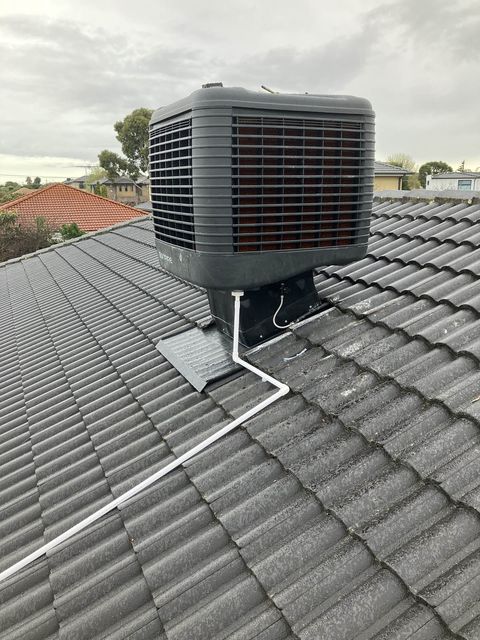
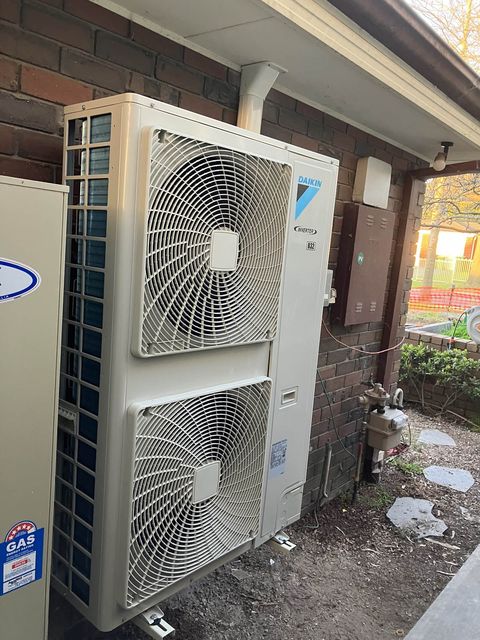
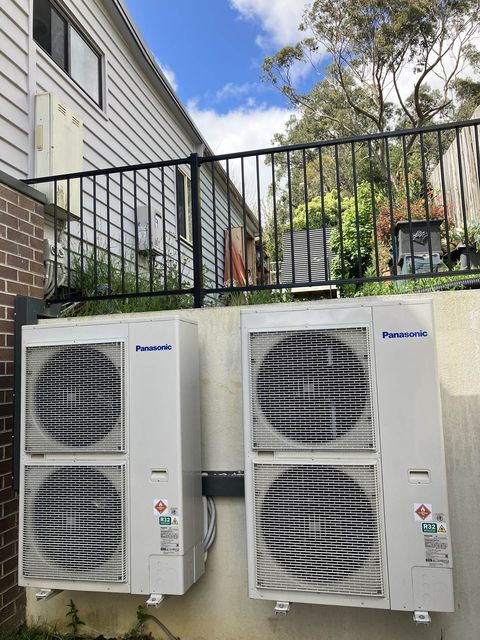
Heating and cooling jobs in Orange
Questions people ask
Should I replace my gas heater with reverse cycle in Orange?
Will a heat pump work through an Orange frost?
How often should a gas heater be serviced?
Do I need air conditioning for summer in Orange?
Ready for the right installer to take a look in Orange?
Your postcode and three quick questions. Licence-checked local installers who specialise in your kind of job see it, and the one who takes it gets in touch to quote.
Read next
- 01Air conditioning service in OrangeServicing a reverse cycle system for an Orange winter: timing, heating tests and frost.
- 02Reverse cycle or gas heating?Efficiency, cold mornings, carbon monoxide and the Victorian gas rules, in plain terms.
- 03Switching from gas heating to electricYour options for leaving gas heating, what the rules actually require, and what to ask before you sign.
- 04Gas heater serviceHow often to service a gas heater, the warning signs, and who's licensed to do it.
- 05Running cost toolHow much power your unit uses, worked out with your hours and your own rate.
- 06NSW Energy Savings SchemeHow the ESS discount works on a new or replacement air conditioner, and what's left out.
Where this information comes from
- Wikipedia Orange, New South Wales, 28 October 2026
- NSW Office of Environment and Heritage (AdaptNSW) Central West and Orana climate change snapshot (NARCliM 1.0 edition; Climate of the region section), 28 October 2026
- Australian Building Codes Board NCC 2016 Volume One, Part A1 Interpretation, Table A1.1 Climate zones for thermal design: various locations, 28 October 2026
- Jemena Jemena Gas Network, 28 October 2026
- Australian Bureau of Statistics 2021 Census QuickStats: Orange (LGA16150), 28 October 2026
- NSW Government (NSW Climate and Energy Action) Air conditioner upgrade incentive (Energy Savings Scheme), 28 October 2026
- ACT Government, Everyday Climate Choices Heating for your home, 28 October 2026
- ACT Government, Sustainable Household Scheme Heating and cooling your home: a guide to reverse cycle systems (PDF), 27 March 2023
- Mitsubishi Electric Australia Split-type air conditioners, indoor unit MSZ-AS90VGD, operating instructions (PDF), 26 October 2020
- Energy Safe Victoria Heating your home with gas, 10 July 2026
- Energy Safe Victoria Is your gas heater safe? Be Sure., 28 October 2026
- Better Health Channel (Victorian Department of Health) Gas heating: health and safety issues, 4 May 2023
- NSW Government (Minister for Energy) Energy Savings Scheme (Amendment No. 1) Rule 2025, with notice of approval, 12 September 2025
- NSW Government (Energy NSW) Air conditioner upgrade incentive, 6 February 2026
- NSW Government Building trade advertisements, 28 October 2026
- Blufire Pty Ltd Blufire's lead engine rules (supplied 29 October 2026) and Privacy Policy, 29 October 2026
We don't publish prices. Every home is different, so an installer's written quote is the only real number. How we write and check these pages.