
Warragul, Victoria
Heating and cooling in WarragulBuilt around cold, wet winters.
Warragul is a heating town first. The Bureau of Meteorology table for Warragul gives a July average low of 3.8 degrees, and the town averages 1,020.2 mm of rain a year. Summers are warm, with February averaging 26.2, so a reverse cycle system that heats well and cools when needed covers both seasons.
Warragul at a glance
Temperatures
The Bureau-sourced Warragul table gives a mean high of 25.9 degrees in January and 26.2 in February, and a July low of 3.8. It's built on records from 1962 to 1979, so treat it as a guide rather than a recent average.
Rain and cloud
1,020.2 mm of rain over 153.9 rainy days a year, with 171.4 cloudy days and only 52.6 clear ones.
Extremes
From -3.7 degrees on 4 July 1963 to 42.3 degrees on 25 February 1968.
Homes
At the 2021 Census, 91.5% of Baw Baw Shire's occupied homes were separate houses, 4.2% semis, terraces or townhouses and 2.8% flats or apartments. Only 18.7% were rented.
People
Warragul had 19,856 people at the 2021 census, and Warragul and Drouin together an estimated 42,827.
What's different about heating and cooling in Warragul
The July nights in that table average lower than Geelong's or Warrnambool's, so heating sets the size of most systems. With nine in ten homes being separate houses, whole-home heating is usually on the table: ducted reverse cycle, a multi-split, or ducted gas heating where it's already in.
The wet matters too. Samsung lists rainwater getting in through the wall hole among the reasons an indoor unit leaks, so in a town this rainy, ask how the pipe penetration will be sealed. Cold, damp mornings also bring frost on the outdoor unit, and Mitsubishi Electric says it pauses for up to 10 minutes to defrost. That's normal.
Building new around Warragul and Drouin
From 1 January 2027, Victoria prohibits connecting mains gas to buildings under construction, so new homes around Warragul and Drouin will heat with electricity. That makes heating and cooling a design decision: tell your builder early if you want ducted reverse cycle, so the ducts, zoning and outdoor unit position are planned in.
Ask for duct insulation of at least R1.5, which the ACT Government's guide recommends, and a heat load done for the house as designed. Mitsubishi Electric lists orientation, insulation, windows and ceiling height among the things that change the size.
Cloud, solar and running a heat pump
If you're counting on rooftop solar to run the heating, remember Warragul's sky has far more cloudy days than clear ones. Winter, when you heat most, is also when panels produce least, so treat solar as a help rather than a way to run the heater for nothing. Our solar and air conditioning guide explains how to think about it.
Rules that apply
In Victoria, installing a split is plumbing work, so the installer needs Building and Plumbing Commission registration as well as an ARC refrigerant licence, and new wiring is a licensed electrician's job. Systems that both heat and cool may get a VEU discount through an accredited provider, and the installer can tell you whether your job qualifies.
If we have a licence-checked installer near Warragul who specialises in your job, we'll pass it to them. If we don't, we'll tell you so.
What we'd do
Where we'd start in Warragul
We'd size for July first, make sure the wall penetrations are sealed properly in this rain, and on a new build we'd lock in the heating design with the builder before the frame goes up. In an existing house with working gas ducted heating, we'd keep it serviced and add reverse cycle where it's needed, rather than replacing everything at once.
What this work looks like
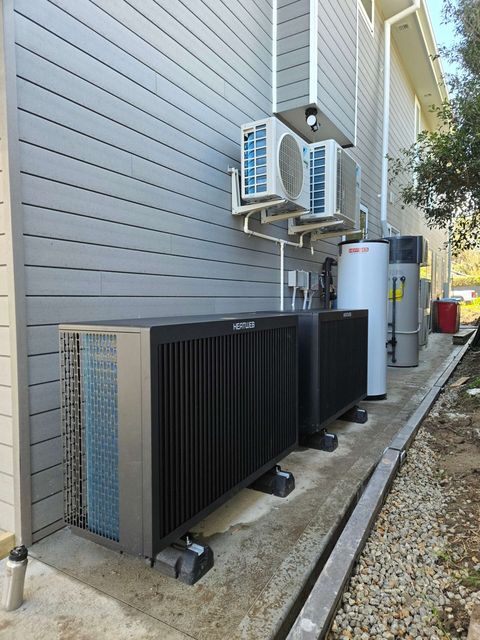
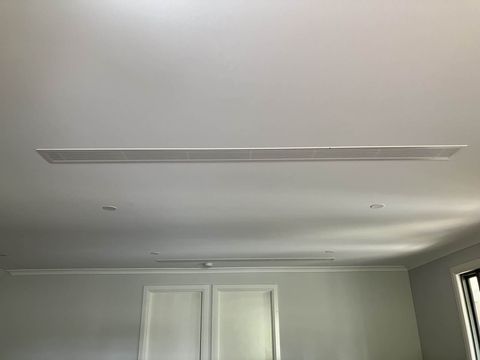
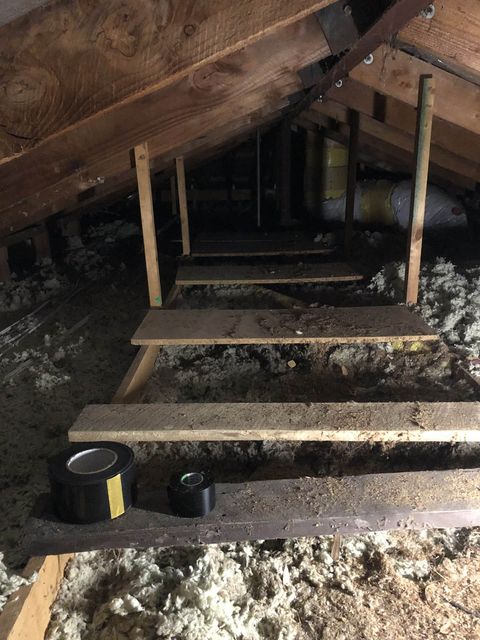
Photos from real jobs in Melbourne, to show what the work looks like. They aren't from an installer near you.
Questions people ask
Is Warragul a heating or cooling climate?
Why is my split leaking water after heavy rain?
Will a new home in Warragul have gas?
Do I have to replace my gas heater?
Ready for the right installer to take a look in Warragul?
Your postcode and three quick questions. Licence-checked local installers who specialise in your kind of job see it, and the one who takes it gets in touch to quote.
Read next
- 01Reverse cycle air conditioningHow reverse cycle heats and cools, which type suits your home, and what to check for winter.
- 02Ducted air conditioningWhen ducted reverse cycle suits your home, what the install involves and what to check on the quote.
- 03Ducted heatingGas ducted or ducted reverse cycle: how they compare, the gas rules, and what a good install covers.
- 04Running air conditioning on solarHow solar powers your aircon, how to check your panels can carry it, and summer versus winter.
- 05Air conditioner leaking waterWhat's normal outside, what isn't inside, and the checks you can do yourself.
- 06Heating and cooling in VictoriaVictoria's BPC and electrical rules, the two install certificates, and what 2027 changes for gas and rentals.
Where this information comes from
- Wikipedia (climate table cites Bureau of Meteorology) Warragul, 28 October 2026
- Australian Bureau of Statistics 2021 Census All persons QuickStats: Baw Baw (LGA20830), 28 October 2026
- Wikipedia (climate tables cite Bureau of Meteorology) Geelong, 28 October 2026
- Wikipedia (climate tables cite Bureau of Meteorology) Warrnambool, 28 October 2026
- Samsung Australia What should I do when water drops fall from my air conditioner?, 28 August 2026
- Mitsubishi Electric Australia Split-type air conditioners, indoor unit MSZ-AS90VGD, operating instructions (PDF), 26 October 2020
- ACT Government, Sustainable Household Scheme Heating and cooling your home: a guide to reverse cycle systems (PDF), 27 March 2023
- Mitsubishi Electric Australia Air Conditioner Buying Guide, 28 October 2026
- Victorian Legislation (Chief Parliamentary Counsel) Building and Plumbing Amendment Regulations 2025 (S.R. No. 140/2025), 28 October 2026
- Department of Energy, Environment and Climate Action (Victoria) Electric and efficiency standards for buildings, 5 August 2026
- Consumer Affairs Victoria Minimum energy efficiency standards: Heating standard, 5 June 2026
- Energy Safe Victoria and Victorian Building Authority Air-conditioning systems: Installation and replacements (fact sheet), 28 October 2026
- Building and Plumbing Commission (Victoria) Plumber classes and categories, 23 September 2026
- Victorian Legislation (Chief Parliamentary Counsel) Victorian Energy Efficiency Target Regulations 2018, Authorised Version No. 020 (incorporating amendments as at 30 June 2026), 30 June 2026
We don't publish prices. Every home is different, so an installer's written quote is the only real number. How we write and check these pages.