
Dubbo, New South Wales
Heating and cooling in DubboHot and dry in summer, frosty in winter.
Dubbo's summers are hot and dry: January averages 33.6 degrees at the airport, summer days often top 40, and January afternoon humidity is just 32%. That dry heat is where evaporative cooling does well, but winter brings frosty mornings, so the real decision is how you'll cover both seasons.
What's different about Dubbo
Dry heat
At Dubbo Regional Airport AWS (1993 to 2026, 284 m above sea level), January's mean daily maximum is 33.6 degrees. Average afternoon relative humidity there is just 32% in January and 41% across the year.
Plenty of very hot days
AdaptNSW says areas around Forbes, Parkes and Dubbo average 20 to 30 days a year above 35 degrees. Summer temperatures often peak above 40, and the airport's record is 46.1 degrees.
Sun and evaporation
Evaporation in the Dubbo area averages around 1,880 mm a year, and Dubbo gets 148.6 clear days a year, compared with Sydney's 104.
Frosty winter mornings
July's mean daily minimum at the airport is 3.1 degrees, winters bring some early morning frost, and the record low is minus 6.0. The building code lists Dubbo as climate zone 4: hot dry summer, cool winter.
Brick bungalows near the centre
Dubbo's older residential areas near the city centre include numerous red brick California Bungalows from the early 20th century. Across the council area, 85.3% of occupied dwellings were separate houses at the 2021 Census.
Evaporative or reverse cycle in Dubbo?
| Evaporative cooler | Reverse cycle (split or ducted) | |
|---|---|---|
| How it cools | Outside air pulled through water-soaked pads, then pushed through the house (Seeley) | Refrigerated air, recirculated with the house closed up |
| Windows | Some must stay open for the air to escape | Kept shut while it runs (Seeley) |
| In Dubbo's dry heat | Where Seeley says evaporative performs best | Works in any humidity |
| Winter | Doesn't heat | Heats as well as cools |
| Other needs | A water supply connection | A dedicated power circuit (Mitsubishi Electric) |
Why the dry air matters
Evaporative cooling works by evaporating water into the air, and that only happens well when the air is dry. Seeley says it performs best in hot, dry climates, and Dubbo's January afternoons average 32% humidity. On the occasional humid day it loses ground: the ACT Government says evaporative systems are less effective then.
To work properly, it needs somewhere for the air to go. Seeley says the open window or door area should be at least twice the size of the vent, opening the ones furthest from the vents. An evaporative cooling specialist will check that your layout allows it before quoting.
Covering the winter too
An evaporative cooler only cools, so a Dubbo home that uses one still needs heating for frosty mornings. That usually means pairing it with a gas or electric heater. The alternative is one reverse cycle system for both seasons, which the ACT Government says turns each unit of electricity into 3 to 6 units of heat.
There's no ESS help for gas space heaters installed from 1 July 2026. Dubbo households may be eligible for the NSW Energy Savings Scheme discount on an energy efficient air conditioner, subject to installers in the area offering it. It's arranged through an Accredited Certificate Provider, and the nomination form is signed before installation. Don't count on it for an evaporative cooler: the scheme's activity is for high efficiency air conditioners.
Older brick homes
The red brick bungalows near the centre date from the early 20th century, so expect the installer to look closely at the switchboard. Mitsubishi Electric says an air conditioner needs a dedicated power supply, and on older wiring a new circuit may be part of the job. See electrical work for air conditioning.
If you're going ducted, ask how the ducts will run and how they'll be insulated. The ACT Government's guide recommends at least R1.5 insulation on ducting, and says suppliers may not provide it by default.
What we'd do
Where we'd start in Dubbo
If you already heat with something you like, an evaporative cooler is a sensible match for Dubbo's dry summers, provided the house can be opened up for airflow. If you're starting from scratch, we'd look hard at one reverse cycle system for both seasons, sized for a 40 degree afternoon and a frosty morning. Send us the job and licence-checked local installers who specialise in that kind of system will see it, where we have them. Should nobody around Dubbo take it in 48 hours, installers elsewhere in New South Wales may see it as well. Your contact details go only to the installer who takes it.
What this work looks like
Photos from real jobs in Melbourne, to show what the work looks like. They aren't from an installer near you.
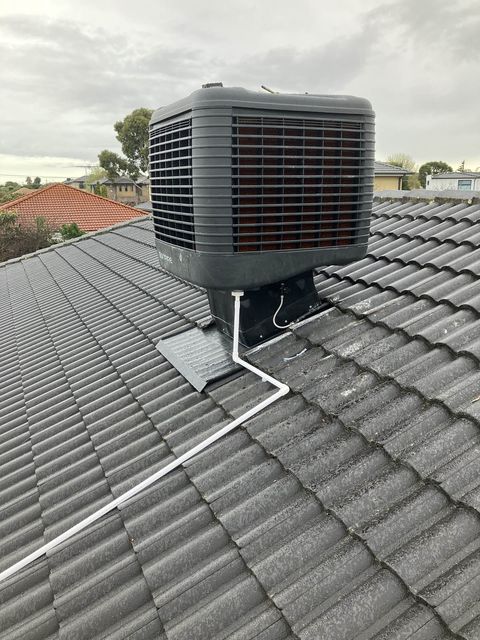
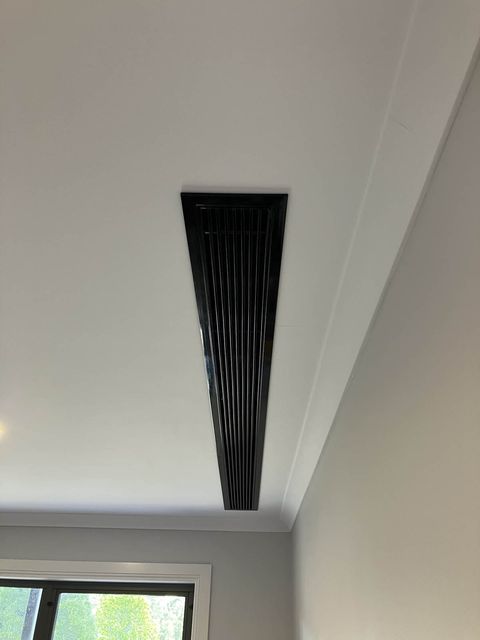
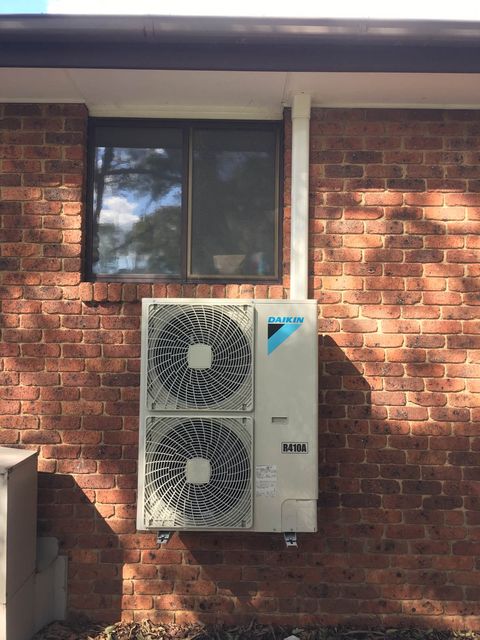
Heating and cooling jobs in Dubbo
Questions people ask
Is evaporative cooling worth it in Dubbo?
Can an evaporative cooler heat my house in winter?
Will a split keep up on a 40 degree day in Dubbo?
Can I get an ESS discount on an evaporative cooler?
When should I service my aircon in Dubbo?
Ready for the right installer to take a look in Dubbo?
Your postcode and three quick questions. Licence-checked local installers who specialise in your kind of job see it, and the one who takes it gets in touch to quote.
Read next
- 01Air conditioning service in DubboWhat a pre-summer aircon service in Dubbo should cover, plus evaporative cooler servicing.
- 02Evaporative coolingHow evaporative cooling works, where it suits, and what a good install involves.
- 03Evaporative or refrigerated cooling?How each kind of cooling works, why humidity matters, and what each one needs from your home.
- 04Reverse cycle air conditioningHow reverse cycle heats and cools, which type suits your home, and what to check for winter.
- 05The electrical side of an installCircuits, isolators, switchboard upgrades and three phase, and who's licensed to do them.
- 06NSW Energy Savings SchemeHow the ESS discount works on a new or replacement air conditioner, and what's left out.
Where this information comes from
- Wikipedia Dubbo, 28 October 2026
- NSW Office of Environment and Heritage (AdaptNSW) Central West and Orana climate change snapshot (NARCliM 1.0 edition; Climate of the region section), 28 October 2026
- Australian Building Codes Board NCC 2016 Volume One, Part A1 Interpretation, Table A1.1 Climate zones for thermal design: various locations, 28 October 2026
- Australian Bureau of Statistics 2021 Census QuickStats: Dubbo Regional (LGA12390), 28 October 2026
- NSW Government (NSW Climate and Energy Action) Air conditioner upgrade incentive (Energy Savings Scheme), 28 October 2026
- Seeley International How does evaporative cooling work?, 28 October 2026
- Seeley International Reverse cycle vs evaporative cooling: what works best in Australian homes?, 28 October 2026
- Seeley International (help centre) Optimising evaporative cooling in humid conditions, 28 October 2026
- ACT Government, Everyday Climate Choices Cooling for your home, 28 October 2026
- ACT Government, Everyday Climate Choices Heating for your home, 28 October 2026
- ACT Government, Sustainable Household Scheme Heating and cooling your home: a guide to reverse cycle systems (PDF), 27 March 2023
- Mitsubishi Electric Australia Split-type air conditioners, indoor unit MSZ-AS90VGD, operating instructions (PDF), 26 October 2020
- ActronAir What size air conditioner do I need?, 28 October 2026
- NSW Government (Minister for Energy) Energy Savings Scheme (Amendment No. 1) Rule 2025, with notice of approval, 12 September 2025
- NSW Government (Energy NSW) Air conditioner upgrade incentive, 6 February 2026
- Blufire Pty Ltd Blufire's lead engine rules (supplied 29 October 2026) and Privacy Policy, 29 October 2026
We don't publish prices. Every home is different, so an installer's written quote is the only real number. How we write and check these pages.