Before you install on the Central Coast
Winter decides it inland
AdaptNSW puts winter minimums at 4 to 6 degrees inland, away from the coast. That's where a unit can be undersized for heating even when it's fine for cooling.
Gentler summers
Along the coast, summer maximums sit at 24 to 26 degrees, and the region sees fewer than 10 days a year above 35. The cooling side has to cope with humid air more than extreme heat.
Room for outdoor units
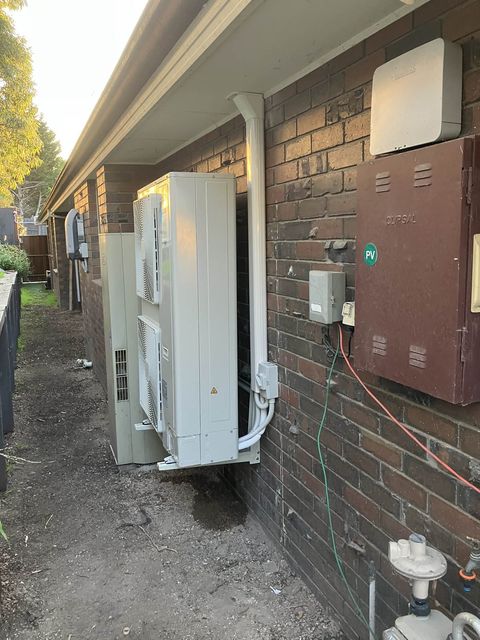
With 78.4% of homes separate houses, there's usually a side wall or path for an outdoor unit. Pick a spot with airflow and service access, away from a neighbour's bedroom window.
Gas homes
Jemena's network supplies natural gas on the Coast. If you're swapping a gas heater for reverse cycle, the ESS discount may apply to the air conditioner, but never to a gas space heater installed from 1 July 2026.
Reading the label for a Central Coast winter
The zoned energy label rates heating and cooling separately: blue stars for cooling and red for heating, as Mitsubishi Electric explains. The ACT Government's example label shows heating capacity at two outdoor temperatures, 7 and 2 degrees.
For an inland home where winter mornings sit at 4 to 6 degrees, the 2-degree heating figure is the one to compare. Ask the installer to show it for every model they quote.
Don't let the unit be oversized to make up for it, either. Rinnai says oversizing causes short cycling and less effective dehumidification, and you'd feel that on humid summer days by the lakes.
Split, multi-split or ducted?
A split for the main living area is the usual starting point. If you want bedrooms warm on winter nights too, a multi-split runs several indoor units from one outdoor unit. Mitsubishi Electric notes that they all share one mode, heating or cooling, which rarely matters on a winter night when every room wants heat.
For whole-house comfort in a larger home, read our Central Coast ducted page.
Licences and the ESS discount
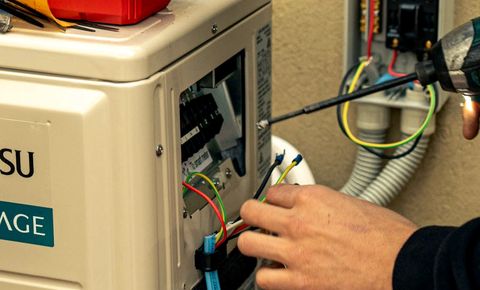
In NSW, installing air conditioning needs a licence or certificate, and that covers connecting the wiring, though some licences carry a condition that excludes the electrical side. NSW also bars anyone from advertising air conditioning work without a current contractor licence, and the ad must show the licence number.
For the ESS, the installer must partner with an Accredited Certificate Provider, and IPART accredits them. You sign a nomination form before the work starts. Energy NSW says a home that already has an efficient air conditioner may not be eligible.
What to ask a Central Coast installer
- What's this model's heating capacity at 2 degrees outdoors?
- Did your heat load allow for our winter mornings?
- Where will the outdoor unit sit, and how close is it to the neighbours?
- Does your NSW licence include the electrical work?
- Is the ESS discount on this quote, and who's the certificate provider?
What we'd do
Our take
We'd have a reverse cycle specialist size the system from a heat load done in the house, and we'd compare models on their heating figure at 2 degrees, not just the cooling stars. Near the coast, we'd add a sheltered outdoor position to the list. And if an offer turned up on the doorstep uninvited, we'd send it on its way: doorknocked jobs can't get the ESS discount anyway.