
Port Macquarie, New South Wales
Heating and cooling in Port MacquarieHumidity sets the tone, and winter still turns up.
Port Macquarie needs cooling and heating, but humidity is what you'll notice most. At the airport, February's mean dew point is 18.9 degrees and July nights average 6.3. A reverse cycle system that's sized properly, so it dries the air in summer and heats in winter, suits most homes here.
Port Macquarie's climate and homes
Humid summers
At Port Macquarie Airport, afternoon humidity averages 65% in January and 66% in February, with mean dew points of 18.7 and 18.9 degrees. The former Hill Street station averaged 75% in both months, so readings vary across the area.
Warm, with spikes
January's mean daily maximum at the airport is 28.0 degrees. AdaptNSW says the North Coast averages fewer than 10 days a year above 35, yet the airport's record is 46.6, set in February.
Southerly busters
Port Macquarie is the northernmost locality on the coast to get southerly busters, and foehn winds occasionally affect the town in winter and spring.
Cool winter nights
July's mean minimum at the airport is 6.3 degrees, and the record low is minus 3.5, set in May. The building code puts Port Macquarie in climate zone 5, warm temperate, the same zone as Newcastle and Wollongong.
Mostly houses
At the 2021 Census, 75.7% of occupied homes in Port Macquarie-Hastings were separate houses, 13.3% semis, terraces or townhouses and 9.6% flats or apartments.
What Port Macquarie homes usually need
For most homes it's one or more reverse cycle splits, or ducted for a larger house. Size matters more than usual in humid air: Rinnai says an oversized system short cycles and dehumidifies less effectively, so the room ends up cool but clammy.
Servicing is the other regular job. Moist air and a dirty filter lead to condensation and mould inside the indoor unit, as Mitsubishi Electric explains, while salt air works on the outdoor unit near the coast. Our pages on servicing in Port Macquarie and installation go into both.
Evaporative coolers are a poor match for this much humidity. Seeley, which makes them, says it doesn't recommend evaporative cooling in humid climates.
NSW rules and the ESS in Port Macquarie
Air conditioning work in NSW needs a licence or certificate, and you can look any business up on Service NSW's licence check. Refrigerant work needs an ARC licence on top of that.
Port Macquarie households may be eligible for the ESS discount on an air conditioner, if local installers offer it. It's based on the potential energy savings, so a home that already has an efficient system may not qualify. Read our ESS guide before you sign anything.
What we'd do
Our take for Port Macquarie
We'd treat humidity as the main design problem: a right-sized reverse cycle system from a proper heat load, filters cleaned on the manufacturer's schedule, and a yearly service that reaches inside the indoor unit. Near the water, we'd add a sheltered spot for the outdoor unit. Then we'd want a local installer who works in this humidity every week.
What this work looks like
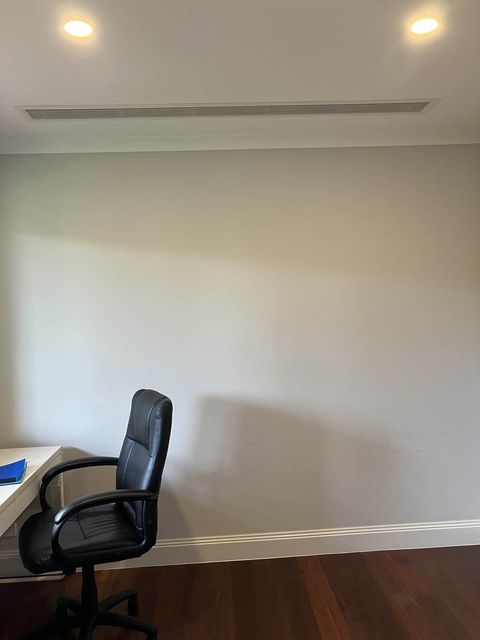
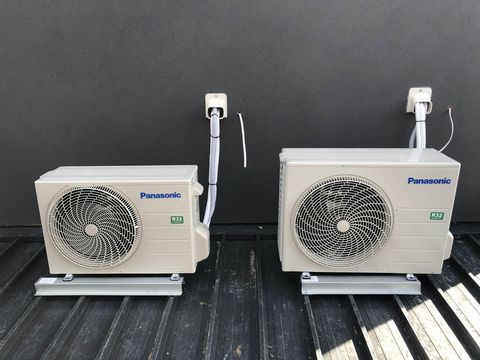
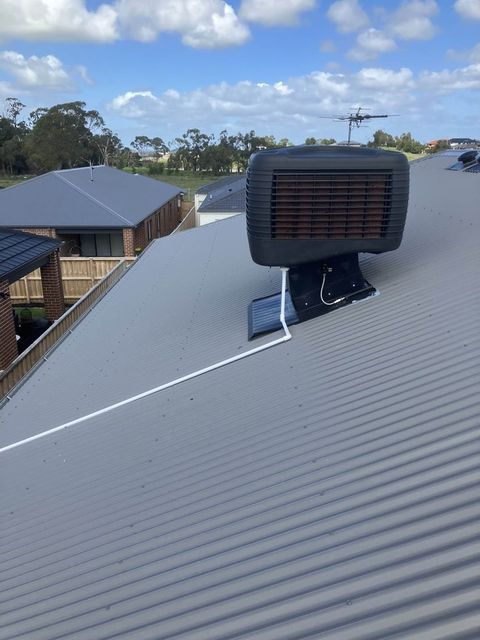
Photos from real jobs in Melbourne, to show what the work looks like. They aren't from an installer near you.
Questions people ask
Do I need heating in Port Macquarie?
Why does my aircon leave the room cold but clammy?
Can I get the ESS discount in Port Macquarie?
How do I check a Port Macquarie installer's licence?
Do you have installers in Port Macquarie?
Ready for the right installer to take a look in Port Macquarie?
Your postcode and three quick questions. Licence-checked local installers who specialise in your kind of job see it, and the one who takes it gets in touch to quote.
Read next
- 01Heating and cooling in New South WalesNSW air conditioning licences, the Service NSW check, the ESS discount and strata approval.
- 02Reverse cycle air conditioningHow reverse cycle heats and cools, which type suits your home, and what to check for winter.
- 03What size air conditioner do I need?Rough kW sizes by room, what changes them, and how an installer should check the number.
- 04Air conditioning near the coastSalt, coil coatings, warranty fine print and where the outdoor unit should go near the sea.
- 05NSW Energy Savings SchemeHow the ESS discount works on a new or replacement air conditioner, and what's left out.
- 06Evaporative or refrigerated cooling?How each kind of cooling works, why humidity matters, and what each one needs from your home.
Where this information comes from
- Wikipedia Port Macquarie, 28 October 2026
- NSW Office of Environment and Heritage (AdaptNSW) North Coast climate change snapshot (NARCliM 1.0 edition; region from Port Stephens to the Queensland border), 28 October 2026
- Australian Building Codes Board NCC 2016 Volume One, Part A1 Interpretation, Table A1.1 Climate zones for thermal design: various locations, 28 October 2026
- Australian Bureau of Statistics 2021 Census QuickStats: Port Macquarie-Hastings (LGA16380), 28 October 2026
- NSW Government (NSW Climate and Energy Action) Air conditioner upgrade incentive (Energy Savings Scheme), 28 October 2026
- Rinnai Australia Ultimate split system air conditioner size guide, 28 October 2026
- Mitsubishi Electric Australia Split-type air conditioners, indoor unit MSZ-AS90VGD, operating instructions (PDF), 26 October 2020
- Seeley International Reverse cycle vs evaporative cooling: what works best in Australian homes?, 28 October 2026
- NSW Government Air conditioning and refrigeration work, 23 October 2026
- Service NSW Check a builder or tradesperson licence, 15 August 2025
- NSW Government (Energy NSW) Air conditioner upgrade incentive, 6 February 2026
- Australian Refrigeration Council Fact Sheet 12: Refrigerant Trading Authorisation number included when advertising RAC services (ARC5919/JVD/0726), 28 October 2026
- Blufire Pty Ltd Blufire's lead engine rules (supplied 29 October 2026) and Privacy Policy, 29 October 2026
We don't publish prices. Every home is different, so an installer's written quote is the only real number. How we write and check these pages.