
Rockhampton, Queensland
Heating and cooling in RockhamptonCooling for hot Januarys, a little heat for July nights.
Rockhampton sits inland on the Fitzroy, so its summers run hotter and drier than the coast and its winter nights get properly cool. Most homes here suit reverse cycle air conditioning sized for the heat, which also covers those cool nights. The local questions that change a job are flood height, cyclone season and getting the size right.
What's different about Rockhampton
Hotter days than the coast
At the Bureau of Meteorology's Rockhampton station, December and January share a mean daily maximum of 32.6 degrees. The average of each January's hottest reading is 38.1 degrees, and the town's record is 45.3. Yeppoon, 41 km away on the coast, tops out at a mean maximum of 29.4.
Drier afternoons
Bureau of Meteorology averages put Rockhampton's 3 pm humidity at 45% across the year. It peaks at 55% in February and drops to 37% in August and September, well below the 71% Yeppoon averages on summer afternoons.
Cool winter nights
July's mean daily minimum at the Rockhampton station is 10.6 degrees, cooler than July nights in Mackay, Townsville or Cairns. The Australian Building Codes Board's map puts Rockhampton in climate zone 2, where the Queensland Government's design aim is to cool the home for summer and give it some warmth for winter.
Flood and cyclone country
The Fitzroy's highest recorded flood at Rockhampton reached 10.11 m in January 1918, and the town lies within the cyclone risk zone. For flood-prone homes, Get Ready Queensland's advice includes raising air conditioner units and switchboards above the flood level.
Mostly houses
At the 2021 Census, 88.1% of occupied private dwellings in the Rockhampton Regional council area were separate houses and 4.5% were flats or apartments.
Gas and power
The Queensland Government says Australian Gas Networks supplies natural gas to Rockhampton, and the town is on Ergon Energy's regional network. With winters this mild, we'd heat with the reverse cycle system that does the cooling rather than add a gas heater.
The jobs that come up most in Rockhampton
Cooling installs that can cope with the January peaks. ActronAir says an air conditioner loses cooling capacity above 35 degrees, and the average January's hottest day here sits above that. A unit sized on a mild-day guess falls behind on exactly the days you need it. Our page on installation in Rockhampton goes through sizing for this town.
Servicing before the heat. A system that works through December and January should be cleaned and checked before it starts. Servicing in Rockhampton covers the timing.
Repairs in heatwaves and after storms. Faults tend to show on the hottest afternoons and after the power drops out. Repairs in Rockhampton has the checks to run first.
Is evaporative cooling worth considering here?
Rockhampton's drier afternoons make it a fairer question here than on the coast. The Queensland Government says evaporative coolers are most effective in hot, dry climates, lose ground as humidity rises, and should have their water pump turned off when regional humidity is above 65% or it's raining.
Rockhampton's average 3 pm humidity stays under that mark even in February, but an average hides the stickier days. Then there's winter: Seeley, which makes evaporative coolers, presents them as cooling only, while reverse cycle systems also heat. On a 10.6 degree July night, that matters. Our evaporative or refrigerated guide lays out the trade-offs.
Who's allowed to do the work in Queensland
The Queensland Building and Construction Commission (QBCC) treats installing, repairing and maintaining air conditioning as mechanical services work, which needs a QBCC licence whatever the job's value. Electrical work needs a licence from the Electrical Safety Office, and the refrigerant side needs the right ARC licence.
When you send us a job, licence-checked local installers who specialise in that kind of work can see it, and the one who takes it is the only one who gets your contact details. Should nobody around Rockhampton take it within 48 hours, installers in other parts of Queensland may see it too.
What you can do before anyone visits
You can
- Note which rooms you actually cool, and at what time of day.
- Find out whether your block has flooded before, and how high the water came.
- Clean the filters on the schedule in your manual.
Leave to a licensed installer
- Working out the size from a heat load on the rooms, not floor area alone.
- Anything involving the refrigerant, the wiring or the switchboard.
- Checking a unit that floodwater has reached before it's switched back on.
What we'd do
If it were our place in Rockhampton
We'd put in reverse cycle, sized from a proper heat load with the January peaks in mind, and use it for the cool July nights too. On a block that's flooded before, we'd have the outdoor unit and its isolator set above the known flood level. Then we'd book a service each spring, ahead of the heat and the start of cyclone season.
What this work looks like
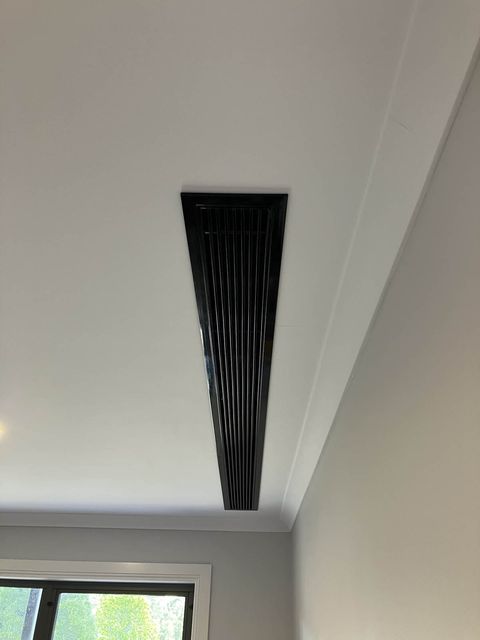
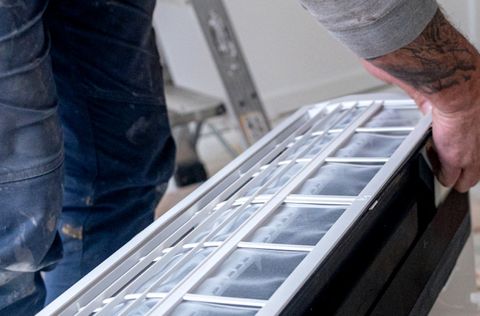
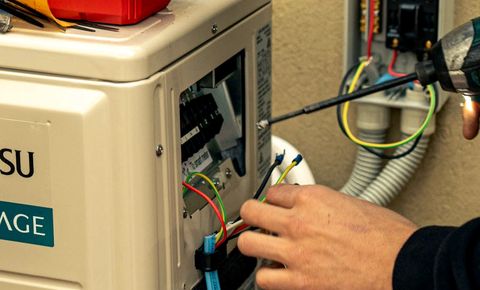
Photos from real jobs in Melbourne, to show what the work looks like. They aren't from an installer near you.
Heating and cooling jobs in Rockhampton
- Air conditioning installation in RockhamptonSizing, placing and licensing a new air conditioner for Rockhampton's inland heat.
- Air conditioning service in RockhamptonWhen to book a service in Rockhampton, and what a technician should check before summer.
- Air conditioning repairs in RockhamptonWhat to check when your aircon fails in Rockhampton's heat or after a storm, and who can fix it.
Questions people ask
Do I need heating in Rockhampton?
Should my outdoor unit be raised in Rockhampton?
Is there help with power bills if I need cooling for a medical condition?
How do I check an installer's licence in Queensland?
Ready for the right installer to take a look in Rockhampton?
Your postcode and three quick questions. Licence-checked local installers who specialise in your kind of job see it, and the one who takes it gets in touch to quote.
Read next
- 01Reverse cycle air conditioningHow reverse cycle heats and cools, which type suits your home, and what to check for winter.
- 02Evaporative or refrigerated cooling?How each kind of cooling works, why humidity matters, and what each one needs from your home.
- 03What size air conditioner do I need?Rough kW sizes by room, what changes them, and how an installer should check the number.
- 04How to check an installer's licenceRun the ARCtick check, read RAC01 and RSS03, and check the state licence too.
- 05What it costs to run an air conditionerThe method: input power times hours times your rate, and what pushes the number up or down.
- 06Heating and cooling in QueenslandQueensland's QBCC licence at any value, who does the wiring and gas, and how to read an installer's ad.
Where this information comes from
- Wikipedia (Bureau of Meteorology data) Rockhampton, 28 October 2026
- Wikipedia (Bureau of Meteorology data) Yeppoon, 28 October 2026
- Australian Building Codes Board Queensland Climate zone map (National Construction Code, release date Nov 2019, version VC00031.3), 28 October 2026
- Business Queensland (Queensland Government) Building in Queensland's climate zones, 24 July 2025
- Queensland Government Evaporative air coolers, 23 January 2026
- Get Ready Queensland (Queensland Government) Strengthen your home for flood, 28 October 2026
- Australian Bureau of Statistics 2021 Census QuickStats: Rockhampton (LGA36370), 28 October 2026
- Business Queensland (Queensland Government) Your gas supply, 3 June 2025
- ESD News Ergon recruiting next gen of apprentices, 23 July 2019
- Queensland Government Medical Cooling and Heating Electricity Concession Scheme, 24 June 2025
- ActronAir What size air conditioner do I need?, 28 October 2026
- Seeley International Reverse cycle vs evaporative cooling: what works best in Australian homes?, 28 October 2026
- Queensland Building and Construction Commission Mechanical services licences, 30 August 2021
- Queensland Building and Construction Commission Advertising, 30 June 2025
- Queensland Building and Construction Commission Find a licensed contractor, 12 December 2025
- Australian Refrigeration Council Fact Sheet 13: Who can do what, with Split System Air Conditioners (ARC5919/JVD/0726), 28 October 2026
- Blufire Pty Ltd Blufire's lead engine rules (supplied 29 October 2026) and Privacy Policy, 29 October 2026
We don't publish prices. Every home is different, so an installer's written quote is the only real number. How we write and check these pages.