What a Ballarat winter does to a heat pump
Long running hours
Ballarat is in climate zone 7, colder than Melbourne or Geelong, and below-freezing nights can arrive any time from May to September. A heat pump that runs most evenings through all of that racks up far more hours than one that cools for a few hot weeks.
Fog and defrost
Autumn and winter mornings are often foggy, and July afternoon humidity averages 75% at the aerodrome. Those cold, damp conditions are when frost builds on the outdoor coil and the unit stops to defrost, so a service should confirm the defrost works and the melt water drains away.
Wind and debris
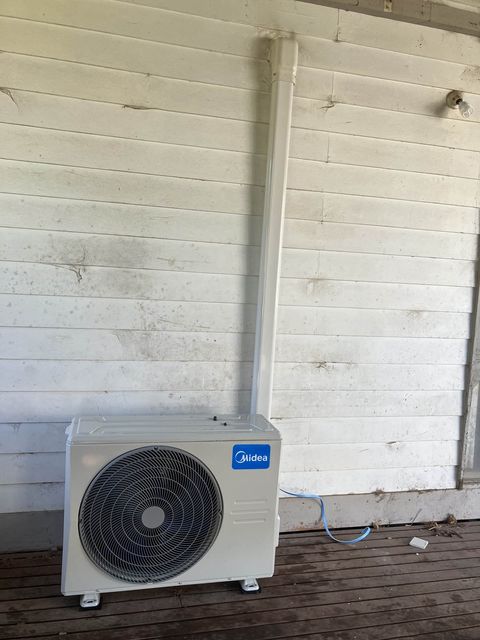
With a mean daily wind run of 470 km, wind can pile leaves against an outdoor unit. Daikin says debris around the unit makes it run less efficiently, and Samsung says rattling often means loose panels, so mention any new noise.
Summer still matters
January averages 26.2 degrees and the record is 44.1, so the technician should run a cooling test as well.
Why a heating-season service is different
Most service advice is written for summer. Daikin's tune-up is timed for the start of summer, but in Ballarat the system's big test is winter. Ask the technician to run it in heating long enough to see real output, and a defrost cycle if the weather allows, not just switch it on and off.
Filters matter in winter too. Mitsubishi Electric says dirty filters cause condensation inside the unit, which helps mould grow, and Daikin says swapping a blocked filter for a clean one can cut energy use by 5% to 15%. In a heating city, that's months of running on a clogged filter if you only clean it in summer.
What a Ballarat service visit should cover
- Filters cleaned, and the indoor coil and fan checked.
- A heating run long enough to check the output and the defrost function.
- The outdoor unit cleared of leaves, its panels checked for looseness and its drain clear.
- The refrigerant charge checked by an RAC01 licence holder, with any leak found before anything is added.
- Electrical connections tightened, and the controls and timers tested.
- A short cooling test for summer.
- Any repairs written up separately, with the problem explained.
What makes a service bigger or smaller in Ballarat
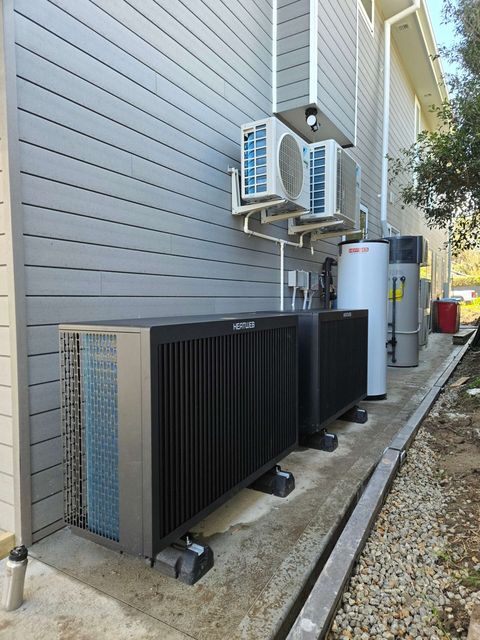
The number of indoor units sets most of the time, and a ducted system adds the return air filter and zone controls. Access comes next: in a terrace or semi (12.0% of Ballarat homes), the outdoor unit can sit in a narrow side passage or high on a bracket, and MHIAA's warranty terms expect units to be reachable with a 1.7 metre ladder.
A unit that's worked hard for several winters without attention may need a deeper coil and fan clean. And if the refrigerant is low, the job becomes finding the leak, because the ARC says topping up before leaks are fixed is illegal.
Your part, and the technician's
You can
- Clean the filters on your manual's schedule right through winter, not just in summer.
- After a windy week, clear leaves from around the outdoor unit.
- Leave a defrost cycle alone. The pause and the vapour are normal.
- Note any new rattle, burbling or smell and tell the technician.
Leave to a licensed installer
- Cleaning inside the indoor unit.
- Refrigerant checks and leak repairs.
- Electrical connections and controls.
- An outdoor unit that ices over and doesn't clear.
What we'd do
Our take for Ballarat
We'd book the service every March or April, ask for a proper heating run while the technician is there, and keep the filters clean all winter. If the heat pump still struggles on frosty mornings after a service, we'd ask whether it's undersized for the house before paying for repairs, because no service fixes a unit that's too small for a Ballarat winter.