
Gladstone, Queensland
Heating and cooling in GladstoneA tropical climate this far south, and storms to plan for.
Gladstone needs cooling first: January's mean maximum is 31.8 degrees at the Gladstone Radar station, and late-summer afternoons are humid. July nights average a minimum of 13.9 degrees, so we'd rely on a reverse cycle system's heat mode for winter. The local extras are outdoor units fixed to handle cyclone winds, rain getting in during the wet, and corrosion near the water.
What's different about Gladstone
Tropical, this far south
Wikipedia describes Gladstone's climate as tropical savannah and says it's one of the southernmost places in Australia with that classification. The Gladstone Radar station, 75 m above sea level, has a record high of 42.0 degrees, set in March.
Humid late summer
Average afternoon humidity at Gladstone Radar peaks at 65% in February, when the average dew point is 21.5 degrees.
Climate zone 2
The ABCB's map puts the Gladstone council area in climate zone 2. The Queensland Government's design aim there is to cool the home for summer, give it some warmth for winter, and keep air-conditioned rooms well insulated and sealed.
Built for wind
Gladstone sits in what the Queensland Reconstruction Authority calls Wind Region C, where homes are designed to resist cyclone winds of 250 km/h. A major cyclone hit the town on 2 March 1949.
Heavy rain and storm tide
During ex-Tropical Cyclone Oswald, Gladstone recorded 819.8 mm of rain in the four days to 28 January 2013. Gladstone Regional Council has six storm tide evacuation zones and names storm surge as a major cyclone risk.
A boom town's housing
Wikipedia says building the LNG plant on Curtis Island contributed heavily to Gladstone's population and housing boom. At the 2021 Census, 85.5% of occupied dwellings in the council area were separate houses and 7.1% were flats or apartments.
Gas and power
The Queensland Government says Australian Gas Networks supplies natural gas to Gladstone, and the town is on Ergon Energy's regional network.
The jobs that come up most in Gladstone
New and replacement installs. For a separate house the choice is usually splits, a multi-split or ducted. What matters more here is fixing the outdoor unit down properly, keeping it above any storm tide or flood level, and sizing for humidity as well as heat. See installation in Gladstone.
Servicing. Humid summers, heavy rain and air near the water all leave their mark on a system. Servicing in Gladstone covers what a technician should check.
Repairs after storms. Power cuts, water getting in and damaged outdoor units come with the wet season. Samsung lists rainwater entering through the wall hole as one cause of an indoor unit leak, and our repairs page has the first checks.
Industry, sea air and the warranty
Corrosion clauses aren't only about the beach. Daikin's warranty card names both industrial pollution and sea air as corrosive environments where extra protection is the owner's job, and Mitsubishi Heavy Industries' terms list coastal and mining areas among the corrosive environments they exclude.
If your home is close to the water or to heavy industry, read that clause for the exact model you're quoted, and ask what coil protection the brand offers. A coating doesn't change what the card says. Our coastal homes guide compares the wording.
Who can do the work
Gladstone jobs need the same Queensland licences as anywhere in the state. Air conditioning is mechanical services work, so the QBCC requires a licence for it at any value, and the wiring needs an Electrical Safety Office licence. You can look an installer up on the QBCC licensee register by name or number.
When we have them near Gladstone, licence-checked installers who specialise in your kind of job can see it, and your contact details go only to the one who takes it. A Gladstone job nobody local takes in 48 hours may also be shown to installers elsewhere in Queensland.
What you can safely do
You can
- Clean the filters as the manual says, and more often in the humid months.
- After heavy rain, look for damp around the indoor unit and the wall hole from inside.
- Check the council's storm tide evacuation zones before choosing where an outdoor unit goes.
Leave to a licensed installer
- Fixing outdoor units down and checking brackets for corrosion.
- Refrigerant, electrical and drain work, and resealing a leaking wall penetration.
- Checking a unit after storm or flood damage.
What we'd do
What we'd put in a Gladstone home
Reverse cycle, sized for humid February as much as the hottest January day, with the outdoor unit fixed down well and placed above any storm tide or flood level. Near the water or industry, we'd choose a model whose corrosion terms we'd read and understood, and keep up a yearly service.
What this work looks like
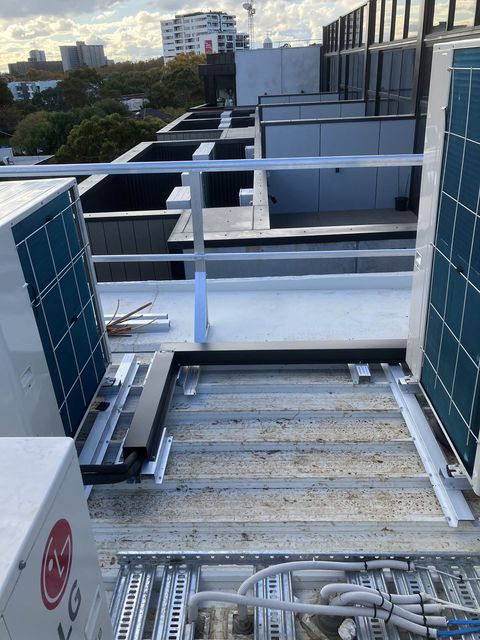
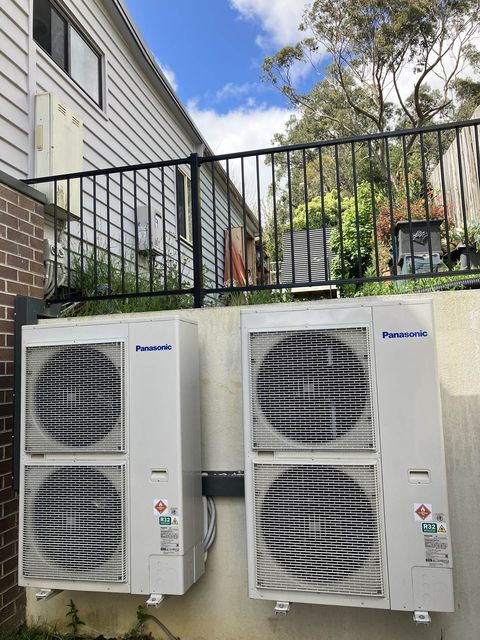
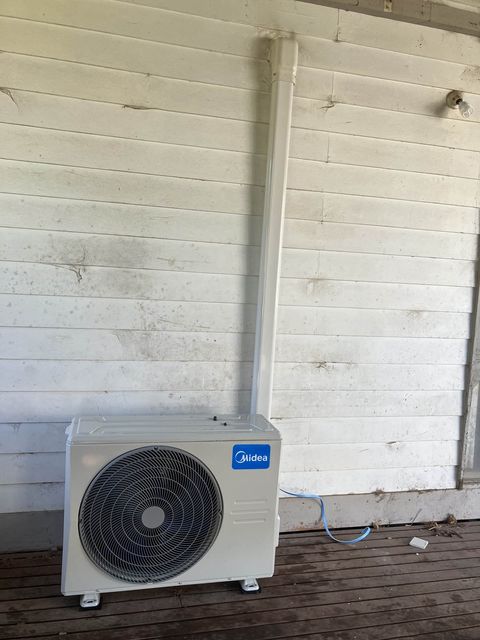
Photos from real jobs in Melbourne, to show what the work looks like. They aren't from an installer near you.
Questions people ask
Do I need heating in Gladstone?
Does evaporative cooling work in Gladstone?
Is there natural gas in Gladstone?
Can I get help with electricity bills for medical cooling?
Ready for the right installer to take a look in Gladstone?
Your postcode and three quick questions. Licence-checked local installers who specialise in your kind of job see it, and the one who takes it gets in touch to quote.
Read next
- 01Reverse cycle air conditioningHow reverse cycle heats and cools, which type suits your home, and what to check for winter.
- 02Air conditioning near the coastSalt, coil coatings, warranty fine print and where the outdoor unit should go near the sea.
- 03Air conditioner leaking waterWhat's normal outside, what isn't inside, and the checks you can do yourself.
- 04Air conditioner warrantiesWhat voids an air conditioner warranty, the paperwork to keep, and who to call first.
- 05Evaporative or refrigerated cooling?How each kind of cooling works, why humidity matters, and what each one needs from your home.
- 06Heating and cooling in QueenslandQueensland's QBCC licence at any value, who does the wiring and gas, and how to read an installer's ad.
Where this information comes from
- Wikipedia (Bureau of Meteorology data) Gladstone, Queensland, 28 October 2026
- Australian Building Codes Board Queensland Climate zone map (National Construction Code, release date Nov 2019, version VC00031.3), 28 October 2026
- Business Queensland (Queensland Government) Building in Queensland's climate zones, 24 July 2025
- Queensland Reconstruction Authority Cyclone Resilient Building Guidance for Queensland Homes (December 2019), 28 October 2026
- Wikipedia Cyclone Oswald, 28 October 2026
- Gladstone Regional Council Disaster Information, 28 October 2026
- Australian Bureau of Statistics 2021 Census QuickStats: Gladstone (LGA33360), 28 October 2026
- Business Queensland (Queensland Government) Your gas supply, 3 June 2025
- ESD News Ergon recruiting next gen of apprentices, 23 July 2019
- Queensland Government Evaporative air coolers, 23 January 2026
- Queensland Government Medical Cooling and Heating Electricity Concession Scheme, 24 June 2025
- Samsung Australia What should I do when water drops fall from my air conditioner?, 28 August 2026
- Daikin Australia Pty Ltd Manufacturer's Warranty card (Split, Multi, SKY, VRV and other products), linked from the Daikin warranty page, 28 October 2026
- Mitsubishi Heavy Industries Air-Conditioners Australia, Pty. Ltd. Warranty Terms and Conditions, Effective 01/2025 MHIAA WTC V13, 28 October 2026
- Queensland Building and Construction Commission Advertising, 30 June 2025
- Queensland Building and Construction Commission Mechanical services licences, 30 August 2021
- Queensland Building and Construction Commission Find a licensed contractor, 12 December 2025
- Blufire Pty Ltd Blufire's lead engine rules (supplied 29 October 2026) and Privacy Policy, 29 October 2026
We don't publish prices. Every home is different, so an installer's written quote is the only real number. How we write and check these pages.